AAC Blocks

AAC blocks: the future of construction

Why Are AAC Blocks the Future of Construction in India?

AAC blocks are becoming the default walling material for modern construction in India because they are up to 50–70% lighter than red clay bricks, insulate far better against heat, absorb less water, and build roughly 30% faster. For most residential, commercial, and institutional projects in 2026, they cut both build time and lifetime running costs — which is why builders across the country are switching away from traditional bricks. Here is a clear, data-backed look at what AAC blocks are, how they compare to red bricks, where the India market is heading, and where a manufacturer like Dlite Blocks fits in. What Are AAC Blocks, and How Are They Made? AAC stands for Autoclaved Aerated Concrete. AAC blocks are precast, lightweight blocks made from fly ash, cement, lime, gypsum, and water, mixed with a small amount of aluminium as an aeration agent, then steam-cured under pressure inside an autoclave. During curing, the mix expands and traps millions of tiny air pockets — and those pockets give the finished block its low weight and strong thermal performance. Because the main raw material is fly ash — an industrial waste product from thermal power plants — AAC blocks reuse waste instead of stripping fertile topsoil the way clay-brick kilns do. Indian brick-making is estimated to consume the top 300 mm of fertile agricultural soil in affected areas over decades, an environmental cost documented by researchers at the MIT Energy Initiative. That single fact is a big reason government and green-building bodies now favour fly-ash-based blocks. Key technical specifications of AAC blocks: These specifications follow the Indian standards published by the Bureau of Indian Standards (BIS). AAC Blocks vs Red Bricks: The Core Differences A single AAC block can replace several red bricks. That one fact drives most of the advantages — fewer joints, less mortar, lower dead load on the structure, and lighter foundations. Parameter Red Clay Bricks AAC Blocks Standard size ~225 × 100 × 75 mm Up to 600 × 200 × 200 mm Dry density 1,600–1,920 kg/m³ 550–650 kg/m³ Thermal conductivity 0.6–1.0 W/mK 0.16–0.42 W/mK Water absorption 15–20% ≤ 10% Construction speed Slower (small units) ~30% faster Raw material Clay + high kiln energy Fly ash, lower energy Where AAC clearly leads is thermal insulation and water resistance. Lower thermal conductivity means interiors stay cooler through the Indian summer, directly cutting air-conditioning load. For raw strength, good-quality units of both materials are adequate for most residential walls — in multi-storey buildings, AAC is typically used as non-load-bearing infill inside an RCC frame. The full engineering trade-offs are documented by references like The Constructor. The India Market in 2026: Why the Shift Is Accelerating The numbers explain the switch. India’s AAC blocks market reached USD 4.0 billion in 2025 and is projected to hit USD 9.1 billion by 2034, growing at a 9.5% CAGR, according to the IMARC Group. Meanwhile, India still produces roughly 250 billion red clay bricks every year — one of the largest such industries in the world — which shows just how much of the market is still open to conversion. Three forces are driving the change: government housing schemes like the Pradhan Mantri Awas Yojana (PMAY), which lists AAC blocks among preferred fast-build materials; rising demand for green building certifications from the Indian Green Building Council; and a GST rate of just 5% on AAC blocks. Add climbing labour and energy costs, and clay-brick economics keep weakening while AAC’s faster builds and lower running costs look stronger every year. Saving Time and Money on Site Cost is where AAC blocks win over the life of a build, not just at the checkout. Because the blocks are much larger than red bricks, masons lay walls faster. You need less cement mortar to join them, and their smooth, dimensionally accurate faces need very little plaster. The bigger saving is structural. Lighter walls mean lower dead load, which can reduce the steel and concrete needed in foundations and columns. And because of their insulation, AAC walls cut the electricity spent on cooling for the entire life of the building. The right comparison is the total cost of ownership — fewer units, less mortar and plaster, lighter foundations, and years of lower power bills — not the price of a single block. Where Dlite Blocks Fits In Dlite Blocks is an AAC fly-ash block manufacturer based in Akola, Maharashtra, supplying dealers and builders across Maharashtra and Madhya Pradesh, with a presence in Indore. Its leadership team brings nearly five decades of combined experience in the AAC industry. At its AAC block factory in Akola, Dlite produces precision-cut AAC fly ash blocks alongside its own AAC block jointing mortar — a thin-bed adhesive that speeds up masonry and improves wall integrity. Its blocks have been used across residential, commercial, healthcare, and institutional projects. For any builder weighing AAC blocks vs red bricks, sourcing from a quality-controlled AAC blocks company is what turns AAC’s theoretical advantages into real on-site performance, because density consistency and dimensional accuracy matter as much as the material itself. Conclusion: Build Smarter For most new construction in India in 2026 — apartments, offices, hospitals, schools, and modern homes — AAC blocks are the smarter choice. They cut structural weight, lower cooling and heating bills through superior insulation, resist fire and moisture better, and build faster. Red bricks still suit tight-budget, small-scale, load-bearing work where upfront cost is the only priority. But as energy costs rise and green-building norms tighten, the long-term case keeps tilting toward AAC. Planning your next project? Talk to the Dlite Blocks team about the right AAC block grade and jointing mortar for your build. Frequently Asked Questions (FAQ)

Why Are AAC Blocks the Future of Construction in India? Read More »

AAC Blocks vs Red Bricks

AAC Blocks vs Red Bricks: Which Is Better for Construction in India?

AAC blocks are better than red bricks for most modern construction in India because they are lighter, offer far superior thermal insulation, absorb less water, and build faster — while red clay bricks remain a low-cost, proven option for small load-bearing structures. The right choice depends on your project type, budget, and how much you value long-term energy savings.If you are choosing a walling material in 2026, this is the single biggest cost-and-comfort decision you will make. Below is a clear, data-backed comparison of AAC blocks vs red bricks, the latest India market picture, and where a manufacturer like Dlite Blocks fits in. What Are AAC Blocks and Red Bricks? Red clay bricks are the traditional walling unit — clay is moulded and fired in kilns at high temperature. They have been used for centuries and are valued for proven strength and low upfront cost.AAC (Autoclaved Aerated Concrete) blocks are precast, lightweight blocks made from fly ash, cement, lime, gypsum, and water, then steam-cured under pressure in an autoclave. Tiny air pockets formed during curing make them strong yet up to 50–70% lighter than bricks. Because they reuseindustrial fly ash, they are also a greener choice. AAC Blocks vs Red Bricks: Full Comparison Table Parameter Red Clay Bricks AAC Blocks Standard size 9″ × 4″ × 3″ (≈ 225×100×75mm) Up to 24″ × 8″ × 8″ (≈600×200×200 mm) Dry density 1,600–1,920 kg/m³ 550–650 kg/m³ Weight Heavier (more units per wall) 50–70% lighter Compressive strength 2.5–3.5 N/mm² 3–4.5 N/mm² Thermal conductivity 0.6–1.0 W/mK (poor insulation) 0.16–0.42 W/mK (excellentinsulation) Water absorption 15–20% ≤ 10% Fire resistance (100 mm wall) Up to 2 hours Up to 4 hours Construction speed Slower (small units, moremortar) ~30% faster (large units, thinbed mortar) Eco-friendliness Clay + high kiln energy Fly-ash based, lower energy A single AAC block replaces several bricks, which means fewer joints, less mortar, lower dead load on the structure, and lighter foundations. For thermal performance and water resistance, AAC clearly leads. For raw compressive strength in good-quality units, both perform well enough for most residential walls — typically AAC is used as non-load-bearing infill in RCC-framed buildings. Specifications follow Indian standards published by the Bureau of Indian Standards, and the engineering trade-offs are documented in detail by references like The Constructor. The India Market in 2026: Why the Shift Is Accelerating The numbers explain why builders are switching. India’s AAC blocks market reached USD 4.0 billion in 2025 and is projected to hit USD 9.1 billion by 2034, growing at a 9.5% CAGR (IMARC Group). Yet AAC still accounts for only about 16–18% of total construction in India —meaning the runway is enormous as the market moves away from clay bricks.Three forces are driving this: government housing schemes like Pradhan Mantri Awas Yojana (PMAY), rising demand for green building certifications, and a GST rate of just 5% on AAC blocks. Add rising labour and energy costs, and clay-brick economics keep weakening while AAC’s faster builds and lower running costs look stronger every year. Where Dlite Blocks Fits In Dlite Blocks is a leading AAC fly-ash block manufacturer in India, operating out of Akola, Maharashtra, with a presence in Indore. The company is led by a leadership team with nearly five decades of combined experience in the AAC industry, including senior production roles at established pioneers of AAC fly-ash blocks in India.Dlite produces precision-cut AAC fly-ash blocks alongside its own AAC block jointing mortar, a thin-bed adhesive that speeds masonry work and improves wall integrity. Its blocks have been used across residential, commercial, healthcare, and institutional projects, including Arwade Infra in Indore and Ganesh Hospital in Amalner. For builders weighing AAC blocks vs red bricks, sourcing from a quality-controlled manufacturer is what turns AAC’s theoretical advantages into real on-site performance. Conclusion: Which Should You Choose? For most new construction in India in 2026 — apartments, offices, hospitals, schools, hotels, and modern homes — AAC blocks are the smarter choice. They cut structural weight, slash cooling and heating bills through superior insulation, resist fire and moisture better, and build faster, which lowers labour costs and shortens project timelines. Over a building’s life, those savings typically outweigh the slightly higher cost per block compared to bricks.Red bricks still make sense for tight-budget, small-scale, or load-bearing work where upfront cost is the only deciding factor and thermal performance is not a priority. But as energy costs rise and green-building norms tighten, the long-term case keeps tilting toward AAC.The practical takeaway: compare total cost of ownership, not just the price per unit. When you factor in fewer units, less mortar, lighter foundations, lower steel requirements, and years of reduced electricity bills, AAC blocks usually win. And the quality of the block — its density consistency, dimensional accuracy, and the jointing mortar used — matters as much as the material itself. That is where partnering with an established manufacturer like Dlite Blocks pays off.Planning your next project? Talk to the Dlite Blocks team about the right AAC block grade andjointing mortar for your build. FAQ

AAC Blocks vs Red Bricks: Which Is Better for Construction in India? Read More »
aac-blocks-residential-vs-commercial_use

Are AAC Blocks Better for Residential or Commercial Construction?

AAC blocks (autoclaved aerated concrete) work for both residential and commercial projects, but the right choice depends on load requirements, budget, and build speed. For homes, AAC blocks offer lightweight construction and better thermal insulation; for commercial buildings, they speed up construction and reduce structural load on high-rise frames. More builders are now switching from traditional red bricks to AAC blocks for exactly these reasons. Below, we compare AAC blocks for residential vs. commercial projects – and show how a leading brand like BuildSmart fits each use case. What are AAC Blocks? AAC stands for Autoclaved Aerated Concrete. These lightweight blocks are made by mixing sand, lime, cement, and a rising agent that creates millions of tiny air pockets inside. Because they are cured under high pressure in a specialised AAC block factory, they become incredibly strong while remaining lightweight. Residential Projects: Comfort and Savings When building a home, your main priorities are comfort, safety, and monthly savings. Here is how AAC blocks deliver on those promises: 1. Superior Thermal Insulation Homes built with these blocks stay cooler in the summer and warmer in the winter. The air pockets inside the blocks act as a natural barrier against heat. This means your air conditioner won’t have to work as hard, leading to much lower electricity bills. 2. Peace and Quiet (Soundproofing) Nobody wants to hear traffic noise or the neighbours’ loud TV while trying to relax. AAC blocks have excellent sound reduction qualities, giving your family the privacy and quiet environment they deserve. 3. Pest and Fire Resistance Homes made with blocks from top AAC block manufacturers are highly safe. They are 100% inorganic, which means termites, rodents, and pests cannot damage them. Plus, they offer amazing fire resistance, keeping your loved ones safe. For residential projects, BuildSmart provides the perfect balance of comfort and long-term durability. Commercial Projects: Speed and Scale Commercial projects—like office towers, hotels, and schools—have different needs. They focus heavily on speed, budget, and structural efficiency. Here is how AAC blocks fit into large-scale builds: 1. Faster Construction Speed Time is money in commercial real estate. AAC blocks are much larger than traditional red bricks. Because they cover more area per block and are easy to cut, workers can build walls up to three times faster. 2. Significant Cost Reductions Since these blocks are lightweight, they reduce the overall dead weight of the building. This means engineers can design a lighter structural frame, saving massive amounts of money on steel and cement. 3. Eco-Friendly and Green Certified Many commercial projects today need to meet strict green building standards. Because an AAC block factory uses non-toxic materials and recycled fly ash, using these blocks helps projects earn valuable green certifications easily. For large-scale commercial developments, partnering with trusted AAC block manufacturers like BuildSmart ensures a steady supply of high-quality materials to keep the project on schedule. Side-by-Side Comparison Feature Residential Projects Commercial Projects Primary Benefit High comfort, lower energy bills, and noise reduction. Faster construction, lower structural weight, and cost savings. Size Preference Standard sizes for easy handling in tight residential spaces. Larger custom blocks to speed up massive wall constructions. Wall Thickness Thicker outer walls for maximum insulation and privacy. Optimised thickness to maximise usable carpet area inside offices. The Verdict: Which is Better? The truth is, AAC blocks are a winning choice for both types of construction, but for different reasons. Homeowners love them for the cosy, quiet, and energy-efficient lifestyle they provide. Commercial builders love them because they speed up project timelines and slash structural costs. When planning your next build, make sure to source your materials from reliable aac block manufacturers. Choosing a premium brand ensures that your autoclaved aerated concrete blocks meet the highest standards of strength and safety. Whether you are building a cosy villa or a 20-storey office plaza, making the smart switch will secure your building’s future for decades to come. FAQ

Are AAC Blocks Better for Residential or Commercial Construction? Read More »

AAC Blocks in India

Why AAC Blocks Are Revolutionizing Home Construction in India

Building a home in India is a big dream for many people. Today, new materials like aac blocks are making this dream easier, faster, and better. Leading brands like Dlite are helping bring this modern solution to homeowners and builders across the country. These blocks are strong, lightweight, and eco-friendly, making them a smart choice. Many builders now prefer them over traditional bricks, and every top aac blocks company is highlighting their advantages. Let’s understand in simple words why AAC blocks are becoming so popular. What Are AAC Blocks? AAC stands for Autoclaved Aerated Concrete. These are lightweight blocks made using cement, lime, sand, and a small amount of aluminum powder. They have tiny air bubbles inside, which makes them light and easy to handle. A good aac block factory uses advanced technology to make these blocks strong and durable. Brands like Dlite are known for providing high-quality AAC blocks in India. 1. Lightweight and Easy to Use One of the biggest advantages of aac blocks is that they are very light compared to red bricks. This makes them easy to carry and install. This helps reduce overall construction time and effort. 2. Faster Construction Time is very important in construction. AAC blocks help complete projects quickly. A reliable aac blocks company like Dlite ensures consistent size and quality, which helps builders work without delays. 3. Better Strength and Durability Even though they are lightweight, AAC blocks are strong. They can handle pressure and last for many years. Many builders trust products from a good aac block factory because of their strength and quality. 4. Energy Efficient Homes AAC blocks help keep homes cool in summer and warm in winter. This makes them perfect for Indian weather conditions. Dlite blocks are specially designed to improve energy efficiency in homes. 5. Eco-Friendly Choice Today, people want to build homes that are safe for the environment. AAC blocks are a green building material. A modern aac blocks company focuses on sustainable production methods, making AAC blocks a smart choice for eco-conscious buyers. 6. Fire and Sound Resistance Safety is very important in any home. AAC blocks offer great protection. Homes built using AAC blocks are quieter and safer compared to traditional brick houses. 7. Cost-Effective in the Long Run AAC blocks may look slightly expensive at first, but they help save money over time. A trusted aac block factory ensures quality blocks that reduce repair costs in the future. Brands like Dlite offer value for money with long-lasting performance. 8. Smooth Finish and Less Plaster AAC blocks have a smooth surface, which reduces the need for heavy plastering. This is another reason why builders prefer AAC blocks for modern homes. Why Choose Dlite? When choosing AAC blocks, quality matters a lot. Dlite is a well-known name that provides strong and reliable blocks. Whether you are building a small home or a big project, Dlite ensures you get the best results. Conclusion AAC blocks are truly changing the way homes are built in India. They are lightweight, strong, eco-friendly, and cost-effective. With the support of a good aac blocks company and a trusted aac block factory, you can build a better and smarter home. As more people learn about their benefits, aac blocks will continue to grow in popularity. Choosing the right brand like Dlite can make your construction journey smooth and stress-free. If you are planning to build your dream home, AAC blocks are definitely worth considering. FAQ

Why AAC Blocks Are Revolutionizing Home Construction in India Read More »

fly-ash-AAC-blocks

What role do fly ash AAC blocks play in passive solar design strategies?

Building a home that stays cool in the summer and warm in the winter without a massive electricity bill is a dream for many. In a country like India, where the sun can be unforgiving, we need smart construction choices. One of the best ways to achieve this is through passive solar design, and a key material making this possible is the fly ash AAC block. If you are looking for modern materials, you might be checking the fly ash brick price to compare costs. However, AAC blocks offer unique benefits for energy savings that traditional bricks simply cannot match. What is Passive Solar Design? Passive solar design is a way of building that uses the sun’s energy and natural breezes to regulate indoor temperatures. Instead of relying solely on heavy machinery like air conditioners or heaters, the building itself does the work. To make this work, you need materials that provide excellent insulation. This is where Dlite AAC blocks come into play. 1. Blocking the Summer Heat The most significant advantage of fly ash AAC blocks is their porous structure. These blocks are filled with tiny air pockets that act as a barrier against heat. In places like Delhi or Mumbai, the external heat often penetrates walls, making interiors feel like an oven. When you use blocks from a reputable aac block manufacturing company, you get a product that traps air and slows down heat transfer. This keeps your rooms naturally cooler. By choosing Dlite, you ensure that your home remains a sanctuary even during a 45°C heatwave, significantly reducing your reliance on expensive AC units. 2. Keeping You Toasty in Winter Passive solar design isn’t just about staying cool; it’s about staying warm when the temperature drops. During winter, these blocks slow down the rate at which heat escapes from your rooms. If your home is oriented to catch the winter sun, the walls will help retain that warmth long after the sun goes down. This “thermal lag” ensures that your living space stays comfortable at night. Leading aac block manufacturers in india focus on this thermal efficiency to help homeowners save on heating costs. 3. The Magic of Thermal Mass Thermal mass refers to a material’s ability to absorb, store, and release heat. While fly ash AAC blocks are lightweight, they possess the perfect balance of thermal mass for residential and commercial buildings. This buffering effect prevents the “temperature spikes” that usually make us reach for the remote to adjust the climate control. Using Dlite blocks ensures this process is consistent throughout the entire structure. 4. Sustainability Meets Savings Many builders check the fly ash brick price because they want an eco-friendly alternative to red clay bricks. Fly ash is a byproduct of power plants, so using it in AAC blocks prevents environmental waste. Furthermore, because these blocks are so easy to cut and install, construction speed increases. When you partner with an established aac block manufacturing company, you aren’t just buying a wall; you are investing in a lifetime of lower energy bills. Why Choose the Right Manufacturer? Not all blocks are created equal. The quality of insulation depends heavily on the manufacturing process. As one of the top aac block manufacturers in india, we take pride in using advanced technology to create blocks with a thermal conductivity range of 0.21 to 0.24 W/m-k. This precision is what makes passive solar design actually work in the real world. Summary of Benefits: Final Thought If you are planning your next project and want a home that breathes with nature, consider the role of high-quality materials. Whether you are comparing the fly ash brick price or looking for the best aac block manufacturers in india, the goal remains the same: a sustainable, comfortable, and cost-effective home. Contact us today to see how our blocks can transform your building’s performance! Frequently Asked Questions (FAQs) 1. How does the fly ash brick price compare to AAC blocks in passive solar construction? While the initial fly ash brick price might seem lower per unit, AAC blocks offer much better value for passive solar design. Because Dlite AAC blocks provide superior thermal insulation, you save more money in the long run through reduced electricity bills and faster construction speeds compared to traditional bricks. 2. Why should I choose Dlite from a professional aac block manufacturing company? Buying from a dedicated aac block manufacturing company ensures that the blocks meet specific thermal conductivity standards. Dlite blocks are engineered to have tiny air pockets that act as natural barriers, which is essential for any building relying on passive solar strategies to stay cool or warm. 3. Are there many reliable aac block manufacturers in india for sustainable projects? Yes, there are several aac block manufacturers in india, but it is important to choose one that uses high-quality fly ash and advanced curing processes. Quality manufacturers provide blocks that help maintain a “thermal lag,” keeping your home’s internal temperature stable even when the weather outside changes drastically. 4. Can fly ash AAC blocks really reduce the need for air conditioning? Absolutely. In cities with extreme heat, like Delhi, the insulation provided by a top aac block manufacturing company prevents outdoor heat from entering the building. This supports passive solar design by keeping the indoors naturally cooler, allowing you to run your AC less frequently. 5. Do aac block manufacturers in india provide materials suitable for cold winters? Yes, the best aac block manufacturers in india design their products to work in all seasons. During winter, these blocks prevent the warmth inside your home from escaping through the walls. When combined with smart window placement to let in sunlight, Dlite blocks help retain that natural heat throughout the night.

What role do fly ash AAC blocks play in passive solar design strategies? Read More »

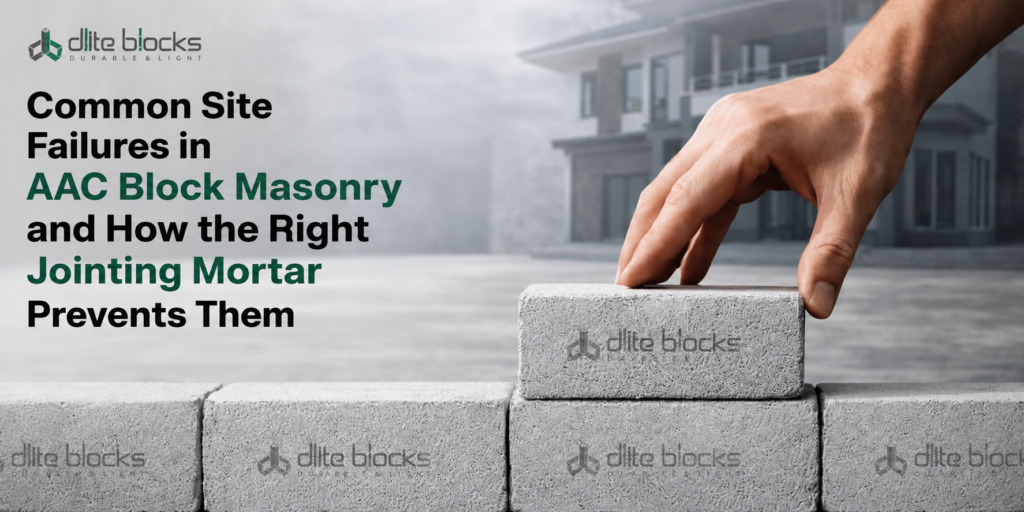
Common Site Failures in AAC Block Masonry and How the Right Jointing Mortar Prevents Them

When building a modern home, AAC blocks (Autoclaved Aerated Concrete) have become the go-to choice for smart homeowners and builders. They are lightweight, eco-friendly, and provide great insulation. However, many people notice cracks in their walls or dampness shortly after moving in. Most of these problems aren’t caused by the blocks themselves, but by how they are joined together. Using traditional sand-cement mortar with these blocks is a recipe for disaster. This is where choosing a specialized aac block jointing mortar makes all the difference. Common Failures in AAC Block Masonry 1. Hairline Cracks in Walls The most common complaint is the appearance of thin, spider-web-like cracks on the plaster. AAC blocks have different thermal properties than red bricks. If you use a thick layer of traditional mortar, it shrinks as it dries, pulling at the blocks and causing cracks. 2. Water Seepage and Dampness Traditional mortar is porous. During the rainy season, water can seep through the thick joints between the blocks. This leads to damp patches on your interior walls, ruining your expensive paint and causing health issues like mold. 3. Poor Bonding (De-bonding) Because AAC blocks are very smooth and porous, they absorb water from traditional wet cement very quickly. This “robs” the cement of the moisture it needs to set properly, resulting in a weak bond. Over time, the blocks can actually become loose. Why the Right Jointing Mortar is the Solution To prevent these failures, experts recommend using a thin-bed adhesive. Leading aac block jointing mortar manufacturers have designed products specifically to match the properties of AAC blocks. One of the most trusted names in the industry is Dlite. Their jointing mortar is engineered to provide a rock-solid bond with a thickness of only 2-3mm, compared to the 12-15mm required by traditional sand-cement. How it Prevents Failures: The Dlite Advantage: Why Quality Matters Using a premium product like Dlite isn’t just about sticking blocks together; it’s about the long-term health of your building. When you source from reputable aac block jointing mortar manufacturers, you get a pre-mixed formula. You don’t need to worry about the quality of local sand or the ratio of cement. You just add water, mix, and apply. This consistency ensures that every square foot of your wall is equally strong. Steps to Ensure a Failure-Free Wall If you want to get the best out of your aac block masonry, follow these simple steps: Summary: Invest in the Right Material Building a house is a once-in-a-lifetime investment. Trying to save a little money by using cheap, traditional mortar for aac blocks can lead to expensive repairs later. By choosing a high-quality aac block jointing mortar, you ensure that your walls remain beautiful, dry, and crack-free for decades. Always look for certified aac block jointing mortar manufacturers to ensure you are getting a product that meets international building standards. Choose Dlite for a home that stands strong against time and weather! FAQ 1. Why should I use specialized AAC block jointing mortar instead of regular cement?  Regular cement-sand mortar requires a thick layer (12–15mm), which leads to shrinkage cracks and poor bonding. A dedicated aac block jointing mortar is designed for thin-bed application (2–3mm). It provides much higher adhesive strength, prevents water seepage, and is specifically engineered to match the properties of aac blocks, ensuring a crack-free wall. 2. How much AAC block jointing mortar do I need for my construction?  The quantity depends on the size of the blocks and the thickness of the joints. Generally, because it is applied so thinly, one bag of mortar covers a much larger area than traditional cement. Most aac block jointing mortar manufacturers provide a coverage calculator or guide on the bag to help you estimate the exact number of bags required for your project. 3. Does using DLite jointing mortar require any special curing?  One of the biggest advantages of DLite is that it is self-curing. Unlike traditional masonry which needs to be kept wet for several days, this advanced aac block jointing mortar retains its own moisture to gain strength. This saves a significant amount of water and labor costs at the construction site. 4.Can I use any brand of mortar with my AAC blocks?  While many options exist, it is important to choose products from trusted aac block jointing mortar manufacturers who follow strict quality standards. Using a high-quality brand like DLite ensures that the chemical additives are correctly balanced to prevent de-bonding and cracks, which are common with low-grade local mixtures. 5. How do AAC blocks help in keeping the house cool?  AAC blocks have a unique cellular structure that acts as a thermal insulator. This structure traps air, preventing heat from the outside from entering your home during summer and keeping it warm during winter. When joined with a thin-bed mortar, the “thermal bridges” (gaps where heat leaks) are minimized, making your home more energy-efficient.

Common Site Failures in AAC Block Masonry and How the Right Jointing Mortar Prevents Them Read More »

products image

The Importance of Proper Curing and Installation for AAC Block in Walls

When building strong walls, using the right method is just as important as using the right material. Many people today prefer AAC Block Suppliers in Maharashtra because AAC blocks are lightweight, strong, and easy to use. But even the best blocks will not perform well if curing and installation are not done properly. AAC blocks are factory-made with perfect size and shape. Because of this, they need careful installation with thin joints instead of thick mortar like bricks. Small mistakes during installation or curing can lead to cracks, weak bonding, and uneven walls. This blog will explain in very simple words why proper curing and installation matter and how you can get the best results. Why Proper Installation of AAC Blocks is Important AAC block walls depend more on correct method than excess material. Unlike traditional bricks, you cannot hide mistakes with thick mortar. Here’s why proper installation is important: In areas like autoclaved aerated concrete blocks in amravati, where construction demand is rising, following proper installation steps helps achieve better quality buildings. Step-by-Step Importance of Correct Installation 1. Base Preparation The surface must be clean and level. If the base is uneven, the whole wall will become tilted. 2. Accurate Layout Marking Marking the wall line properly helps in placing blocks correctly. This reduces cutting and errors. 3. Using the Right Mortar AAC blocks need special adhesive, not regular cement mortar. This ensures better bonding and strength. 4. Laying the First Layer The first row is the most important. If it is not level, the entire wall will be uneven. 5. Maintaining Alignment Tools like spirit level help keep the wall straight. Small mistakes can grow bigger as the wall height increases. 6. Using Reinforcement Where Needed Steel bars or mesh should be added in weak areas like windows and doors to avoid cracks. Companies like Dlite always emphasize following proper installation methods to get the best performance from AAC blocks. Why Proper Curing of AAC Block Walls is Important Curing is the process of adding moisture to help the mortar gain strength. Many people think AAC blocks need heavy curing like bricks, but that is not true. Here’s why curing is important: In regions like autoclaved aerated concrete blocks in jalna, proper curing is especially important due to changing weather conditions. How to Cure AAC Block Walls Correctly AAC block curing is simple but must be done correctly: Unlike brick walls, too much water is harmful for AAC block joints. Dlite recommends controlled and light curing to maintain the strength and quality of AAC walls. Common Mistakes to Avoid Many construction problems happen due to small mistakes. Here are some common ones: Avoiding these mistakes can greatly improve wall quality and life. Benefits of Proper Curing and Installation When AAC blocks are installed and cured properly, you get: This is why experienced builders trust AAC Block Suppliers in Maharashtra and follow correct methods for best results. Conclusion AAC blocks are a modern and smart choice for construction. But their performance depends heavily on how they are installed and cured. Proper installation ensures alignment and strength, while correct curing improves durability. Whether you are building a small home or a big project, following the right steps will save time, money, and future repairs. With trusted brands like Dlite and careful construction practices, AAC block walls can give excellent long-term results. In growing markets like autoclaved aerated concrete blocks in amravati and autoclaved aerated concrete blocks in jalna, understanding these basics is the key to better construction quality. FAQ

The Importance of Proper Curing and Installation for AAC Block in Walls Read More »

How to Test the Compressive Strength of AAC Blocks

When you are building a home or any structure, the strength of materials is very important. AAC blocks are widely used today because they are lightweight, strong, and energy-efficient. But before using them, it is important to test their compressive strength. This test tells us how much load the block can handle without breaking. A trusted AAC blocks company like Dlite always ensures that its blocks meet quality standards. In this blog, we will explain the testing process in very easy and simple words so anyone can understand. Why is Compressive Strength Important? Compressive strength means how much pressure a block can bear before it cracks or fails. This is one of the most important properties of AAC blocks. If the blocks are strong: If the strength is low, it can lead to serious construction problems. That is why every good AAC block factory follows proper testing methods before supplying blocks. Brands like Dlite focus on quality testing to make sure their blocks are reliable and long-lasting. Step-by-Step Guide to Testing Compressive Strength Here is a simple step-by-step method to test the compressive strength of AAC blocks: 1. Sample Selection First, select the blocks that need to be tested. This helps in getting accurate and consistent results. A good AAC blocks company always checks samples from every batch. 2. Conditioning of Blocks Before testing, the blocks need to be prepared. This step ensures that all blocks have the same moisture level, which gives fair test results. 3. Measurement of Dimensions Now measure the size of the blocks. These measurements are needed to calculate the area of the block. The area is used later in the strength calculation. 4. Placing the Block in the Testing Machine Next, place the block in a compression testing machine. If the surface is not smooth, use a thin cement layer or a steel plate to make it level. This helps in applying the load evenly. 5. Applying the Load Now start the machine. The machine will show the maximum load the block can handle. This is the most important value in the test. 6. Calculate Compressive Strength Now, calculate the strength using this simple formula: Compressive Strength = Maximum Load ÷ Area of Block The result will give the compressive strength of the block. 7. Check the Results Compare the result with standard values. A reliable aac block factory ensures that all blocks meet or exceed these standards. 8. Record the Data Finally, write down all the details: This record is useful for quality checks and future reference. Conclusion Testing the compressive strength of aac blocks is very important for safe construction. It helps you make sure that the blocks you are using are strong and durable. By following the simple steps above, you can easily test and understand the quality of AAC blocks. Always choose a trusted aac blocks company like Dlite, which follows strict testing methods and quality standards. Whether you are a builder, engineer, or homeowner, checking compressive strength gives you confidence in your construction. Strong blocks mean a strong and long-lasting building. FAQ 1. What is the compressive strength of AAC blocks?Compressive strength of AAC blocks is the ability of the block to withstand pressure without breaking. It is measured in N/mm². Good quality blocks from a trusted AAC blocks company like Dlite usually meet standard strength requirements, making them suitable for safe and durable construction. 2. Why is testing AAC block strength important?Testing ensures that AAC blocks can handle the load of a building. It helps avoid cracks, damage, or failure in walls. A reliable AAC block factory always tests strength before supplying materials to ensure safety, durability, and long life of the structure. 3. How many AAC blocks should be tested at once?Usually, three AAC blocks are tested from one batch to get accurate results. This sample size helps understand the overall quality. A professional AAC blocks company like Dlite follows this standard method to maintain consistency and ensure reliable performance in construction projects. 4. What is the standard compressive strength for AAC blocks in India?In India, AAC blocks generally have compressive strength ranging from 3 to 5 N/mm², as per IS standards. A good AAC block factory ensures that blocks meet or exceed these values, making them suitable for both residential and commercial construction purposes. 5. Can AAC blocks fail the strength test?Yes, AAC blocks can fail if they are poorly manufactured or not properly cured. This is why choosing a trusted AAC blocks company like Dlite is important. Proper testing helps identify weak blocks and ensures only high-quality materials are used in construction.

How to Test the Compressive Strength of AAC Blocks Read More »

AAC blocks for modern construction – Dlite Blocks

AAC Blocks Explained: Everything Architects and Builders Must Know in 2026

In 2026, aac blocks have become one of the most popular building materials in modern construction. Architects, engineers, and builders prefer them because they are light, strong, and easy to use. Compared to traditional red bricks, AAC blocks help save time, money, and energy. Many trusted brands like Dlite Blocks are helping builders create stronger and smarter buildings using this modern solution. What Are AAC Blocks? AAC stands for Autoclaved Aerated Concrete. These blocks are made using cement, lime, gypsum, fly ash, and water. During the making process, tiny air bubbles form inside the blocks. These air pockets make the blocks lightweight but still strong. Because of this special structure, aac blocks are easy to handle and perfect for fast construction. They are widely used in homes, offices, schools, hospitals, and large commercial buildings. How AAC Blocks Are Made AAC blocks are made inside a modern aac block factory using a special process. First, raw materials like fly ash, cement, and lime are mixed with water. Then a small amount of aluminum powder is added. This creates air bubbles inside the mixture. Next, the mixture is poured into molds and allowed to rise like a cake. After that, the blocks are cut into sizes and placed in a machine called an autoclave. Here, they are cured using high-pressure steam. This makes the blocks strong, durable, and ready for use. Why Builders Prefer AAC Blocks There are many reasons why aac blocks are now the first choice of builders. 1. Lightweight Material AAC blocks are almost three times lighter than normal bricks. This reduces the load on the building structure and makes construction safer. 2. Faster Construction One AAC block is much bigger than a brick. So, fewer blocks are needed to build walls. This saves labor time and speeds up the project. 3. Better Insulation AAC blocks keep rooms cooler in summer and warmer in winter. This helps reduce electricity bills. 4. Fire Resistance AAC blocks can resist fire for many hours, making buildings safer. 5. Eco-Friendly Choice They are made using industrial waste like fly ash. This reduces environmental damage. Role of AAC Block Factories A modern aac block factory plays an important role in maintaining quality. These factories use advanced machines to ensure the blocks are strong, uniform, and safe. Factory-made blocks are better than traditional bricks because they have exact sizes and smooth surfaces. This reduces plaster work and saves extra material. Companies like Dlite Blocks use modern manufacturing technology to produce high-quality AAC blocks that meet industry standards. Choosing the Right Suppliers Selecting trusted AAC Blocks Suppliers is very important for construction success. Good suppliers provide consistent quality, timely delivery, and proper technical support. Reliable AAC Blocks Suppliers also help builders choose the correct block size and type for their project needs. In 2026, many builders will prefer brands like Dlite Blocks because they offer dependable supply, strong quality control, and nationwide availability. AAC Blocks vs Traditional Bricks AAC blocks are much better than traditional bricks in many ways. They are lighter, faster to install, and provide better insulation. Brick walls need more mortar and take longer to build. AAC walls require less plaster and reduce construction costs. Also, AAC blocks produce less waste on site, making them a cleaner and smarter building choice. The Future of Construction In today’s construction world, speed, cost savings, and sustainability are very important. That is why aac blocks are becoming the new standard. As technology improves, more modern aac block factory units are opening across India, making these blocks easily available. With trusted AAC Blocks Suppliers and quality brands like Dlite Blocks, builders can create stronger, safer, and eco-friendly structures. In simple words, AAC blocks are not just a trend — they are the future of construction.  Frequently Asked Questions 1. What are AAC blocks used for? AAC blocks are used to build walls in homes, offices, and commercial buildings. 2. Are AAC blocks stronger than bricks? Yes, they are strong enough for construction and also lighter than bricks. 3. Do AAC blocks save money? Yes, they reduce labor costs, plaster use, and construction time. 4. Are AAC blocks eco-friendly? Yes, they are made from recycled materials and reduce environmental damage. 5. How long do AAC blocks last? AAC blocks are very durable and can last for many decades when used properly.

AAC Blocks Explained: Everything Architects and Builders Must Know in 2026 Read More »

AAC Blocks earthquake safety

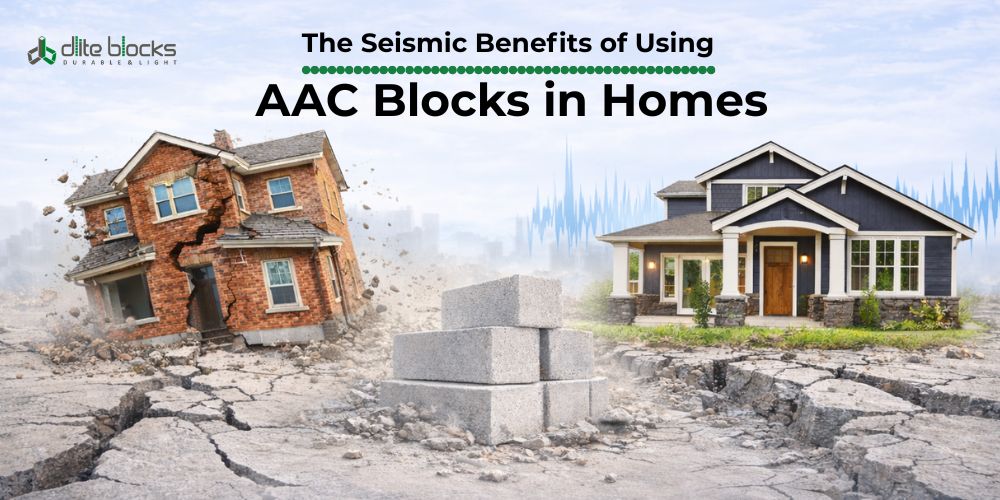
The Seismic Benefits of Using AAC Blocks in Homes

Earthquakes can cause serious damage to buildings, especially when heavy and weak materials are used. That is why choosing the right construction material is very important. Today, many builders prefer aac blocks because they help make homes safer during earthquakes. These modern blocks are strong, lightweight, and long-lasting, making them a smart choice for construction. In this blog, we will explain in very simple words how AAC blocks help protect homes from earthquake damage and why they are becoming popular. What Are AAC Blocks? AAC blocks are lightweight building materials made from cement, lime, sand, water, and a small amount of special expansion material. These blocks are cured in a high-pressure machine called an autoclave, which makes them strong and durable. Compared to traditional red bricks, aac blocks are much lighter, easier to handle, and provide better insulation. They are widely used in modern construction because they improve safety, reduce costs, and speed up building work. Many builders choose trusted brands like Dlite Blocks because they provide high-quality AAC products suitable for safe construction. How Earthquakes Affect Buildings During an earthquake, strong vibrations travel through the ground. These vibrations push and pull buildings in different directions. Heavy buildings suffer more damage because they create higher pressure on their foundation. Traditional bricks are heavy, and this extra weight increases the risk of cracks or collapse during seismic activity. That is why engineers recommend using lightweight materials like aac blocks in earthquake-prone areas. Why Lightweight Materials Improve Safety The lighter a building material is, the less force it experiences during an earthquake. This means: AAC blocks are almost three times lighter than clay bricks, which makes them perfect for earthquake-resistant construction. How AAC Blocks Improve Seismic Performance 1. Lightweight but Strong AAC blocks reduce the overall weight of a building. When an earthquake occurs, lighter structures experience less shaking force. This makes the building more stable. Despite being lightweight, these blocks have excellent strength, which helps walls stay intact. 2. High Strength-to-Weight Ratio One of the biggest benefits of aac block manufacturers’ products is their strength. They can handle high pressure while keeping the building light. This balance helps homes remain safe during earthquakes. 3. Shock Absorption Ability AAC blocks have a porous structure. This allows them to absorb earthquake vibrations instead of transferring them fully to the building structure. As a result, cracks and damage are reduced. 4. Better Bonding and Uniform Shape AAC blocks are made in precise sizes, which helps them fit perfectly. This creates strong wall bonding and reduces weak points in construction. Strong bonding improves the overall stability of buildings during seismic activity. 5. Reduced Structural Stress Because AAC blocks are light, they reduce the load on beams, columns, and foundations. This helps the building withstand shaking more effectively. Additional Benefits of AAC Blocks Besides earthquake safety, AAC blocks offer many other advantages. Energy Efficiency AAC blocks provide excellent thermal insulation. This keeps homes cooler in summer and warmer in winter, reducing electricity bills. Eco-Friendly Construction A trusted aac blocks company like Dlite Blocks produces blocks using environmentally friendly processes. AAC blocks also create less waste during construction. Fire Resistance AAC blocks can resist high temperatures and help slow the spread of fire, improving home safety.  Sound Insulation These blocks reduce outside noise, making homes more peaceful and comfortable. Faster Construction AAC blocks are larger and lighter than traditional bricks. This speeds up construction work and reduces labor costs. Why Builders Prefer Reliable AAC Block Manufacturers Choosing trusted aac block manufacturers is important because quality directly affects safety. Reliable brands ensure proper strength, durability, and consistent size. Companies like Dlite Blocks are known for producing high-quality AAC blocks that meet modern safety standards. Many builders trust Dlite Blocks for safe and long-lasting construction materials. Conclusion AAC blocks have become one of the best materials for earthquake-resistant construction. Their lightweight nature, high strength, and shock-absorbing ability make homes safer during seismic activity. Along with safety, they provide benefits like energy savings, fire resistance, and faster construction. Choosing a trusted aac blocks company like Dlite Blocks ensures better quality and long-term durability. If you want to build a safer and stronger home, AAC blocks are a smart and reliable choice. Frequently Asked Questions 1. Are AAC blocks good for earthquake-prone areas? Yes, AAC blocks are lightweight and strong, which helps buildings resist earthquake damage. 2. Why are AAC blocks safer than traditional bricks? They reduce building weight, absorb vibrations, and create stronger wall bonding. 3. Do AAC blocks last long? Yes, AAC blocks are durable, moisture-resistant, and can last for many years. 4. Can AAC blocks reduce construction costs? Yes, they speed up construction, reduce labor costs, and minimize material waste. 5. How do I choose the best AAC block manufacturer? Always select trusted and experienced aac block manufacturers like Dlite Blocks that provide certified and high-quality products.

The Seismic Benefits of Using AAC Blocks in Homes Read More »

About

Dlite Blocks is a leading manufacturer of high-quality AAC Fly Ash Blocks, redefining construction standards with unwavering commitment to precision and innovation.

Our Certification

Social Links

Copyright © 2026 Dlite Blocks Pvt. Ltd.
Powered By Marketing in Mars
Scroll to Top