
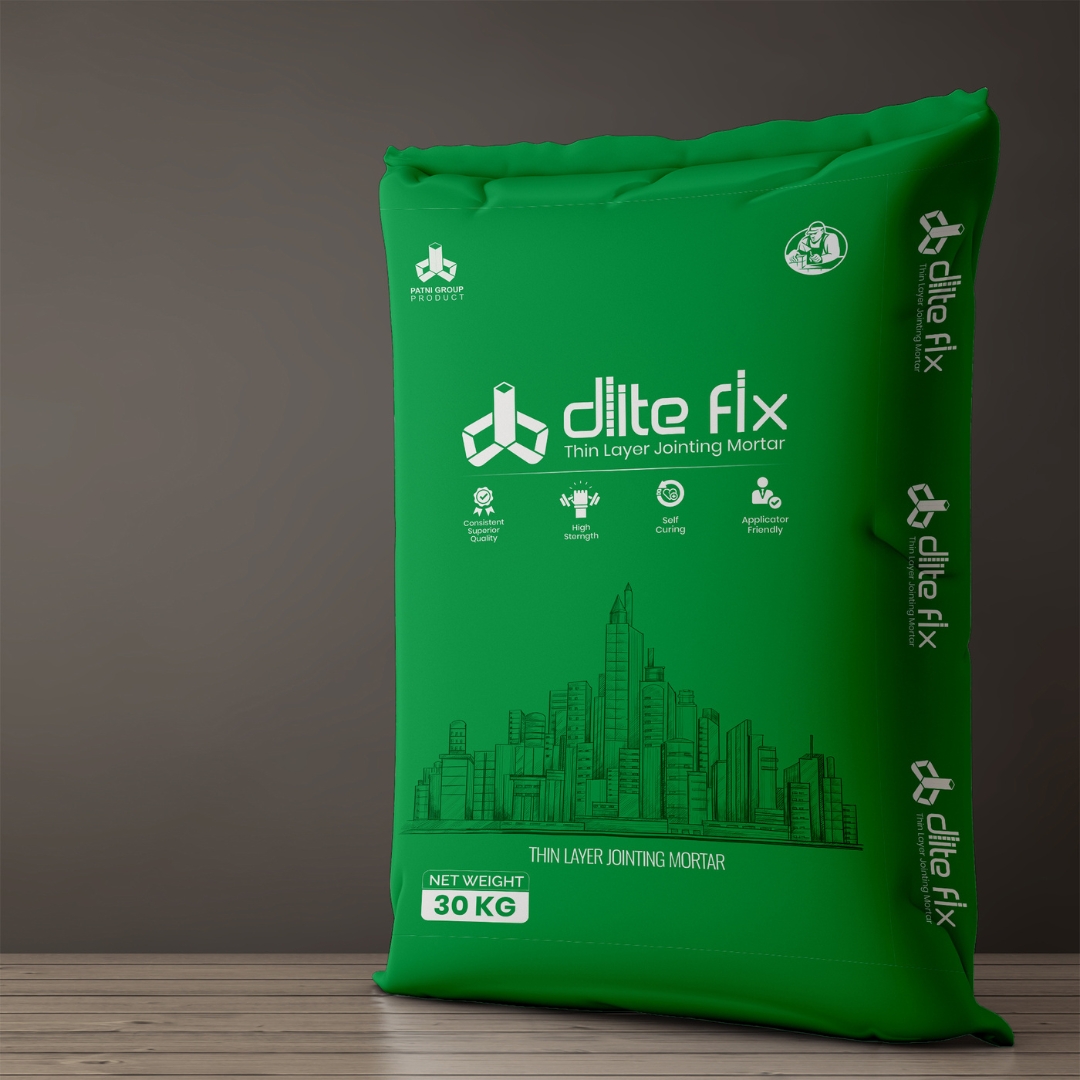




Why Choose Dlite AAC Fly Ash Blocks Jointing Mortar?
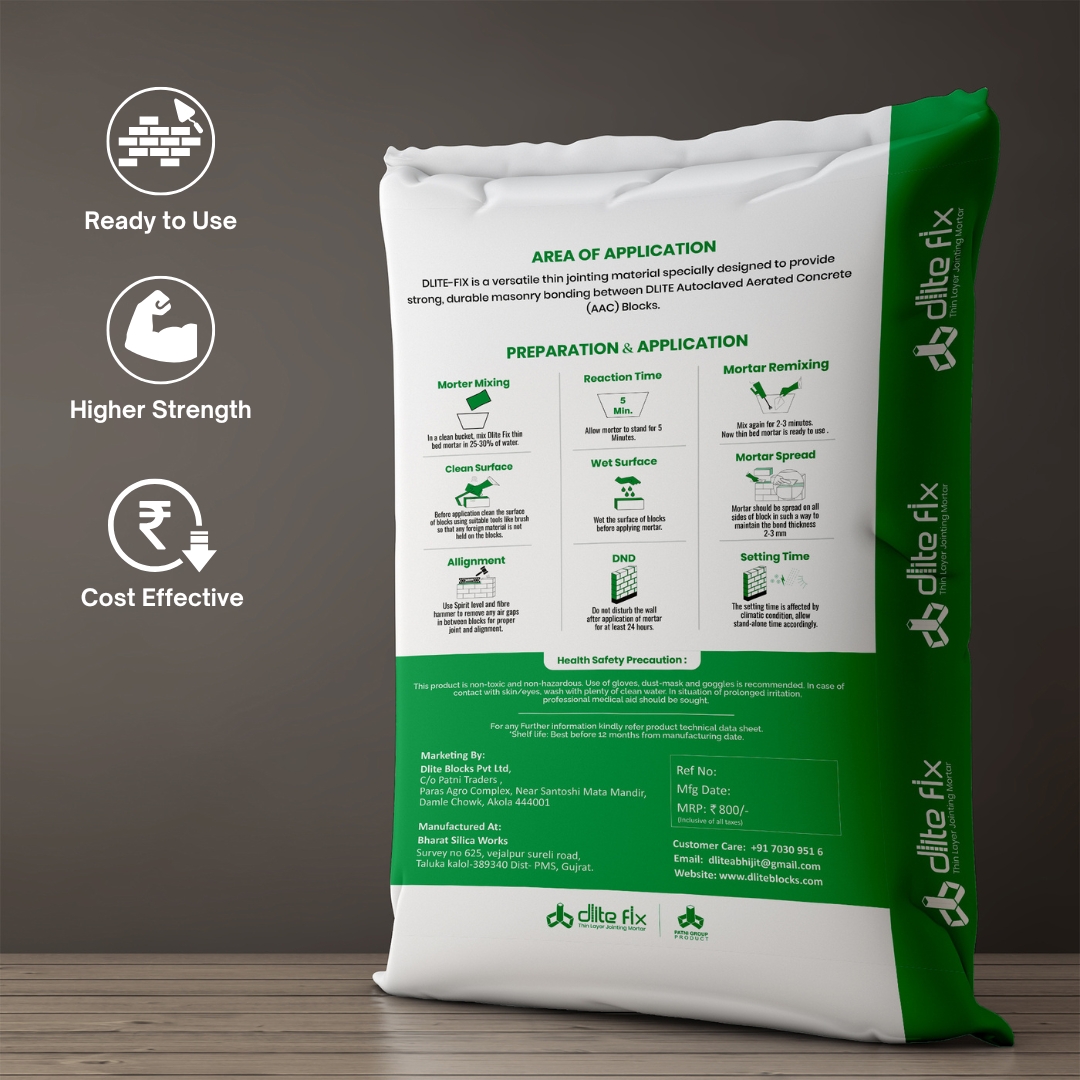
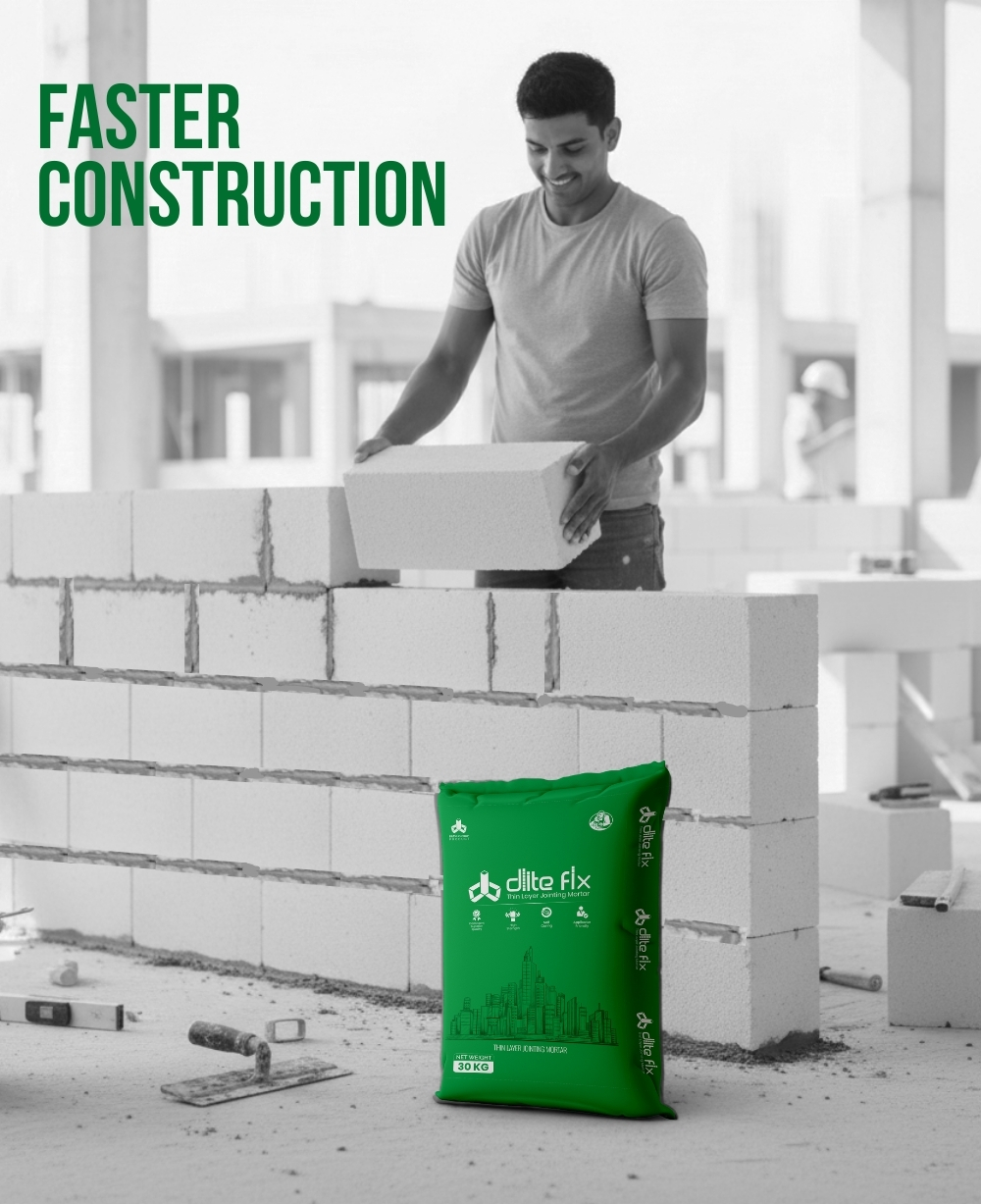
- Ready to Use – No additional mixing required; just add water and apply directly for quick and easy construction.
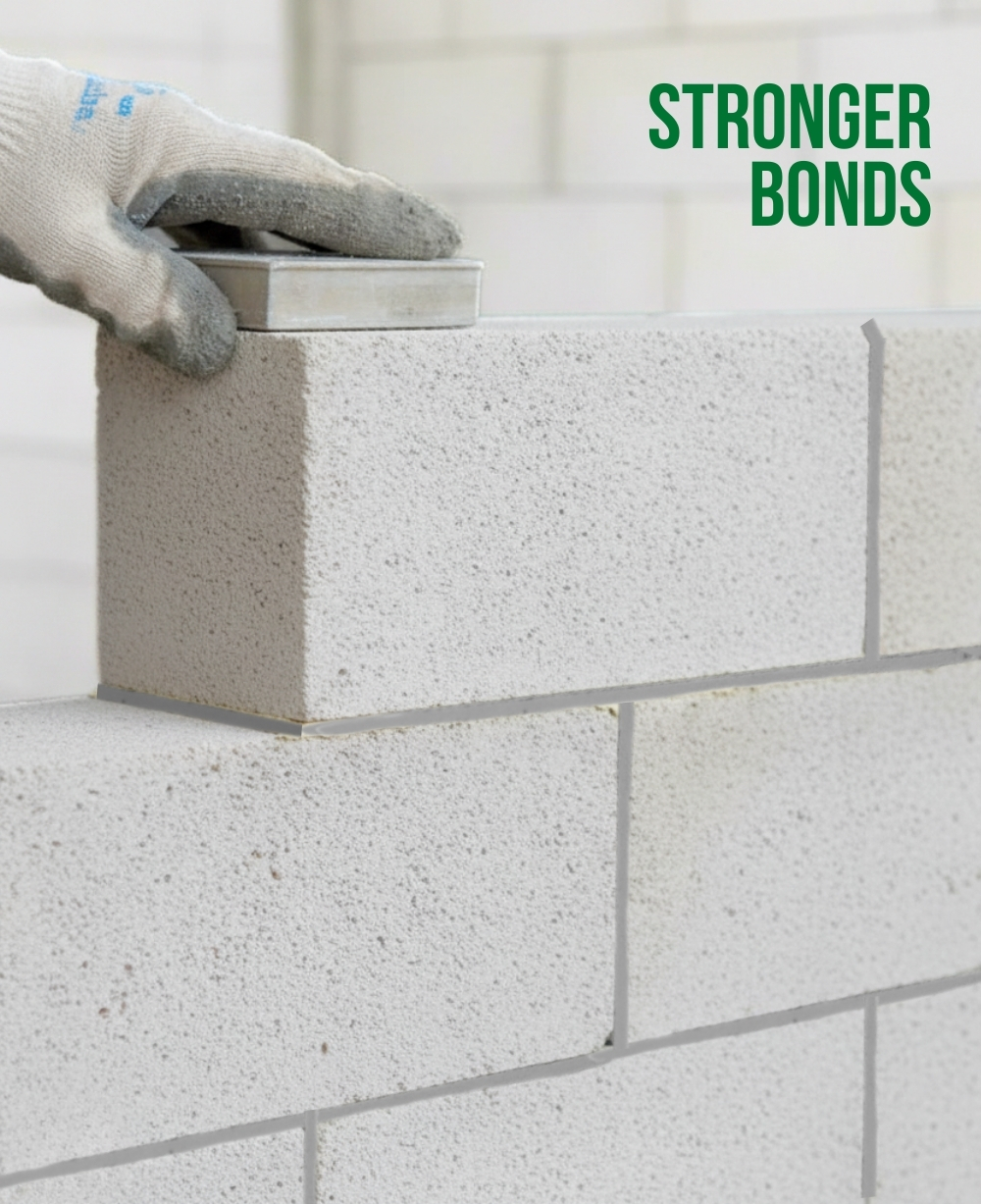
- Higher Strength – Provides excellent adhesion and compressive strength, ensuring stronger and more durable walls.
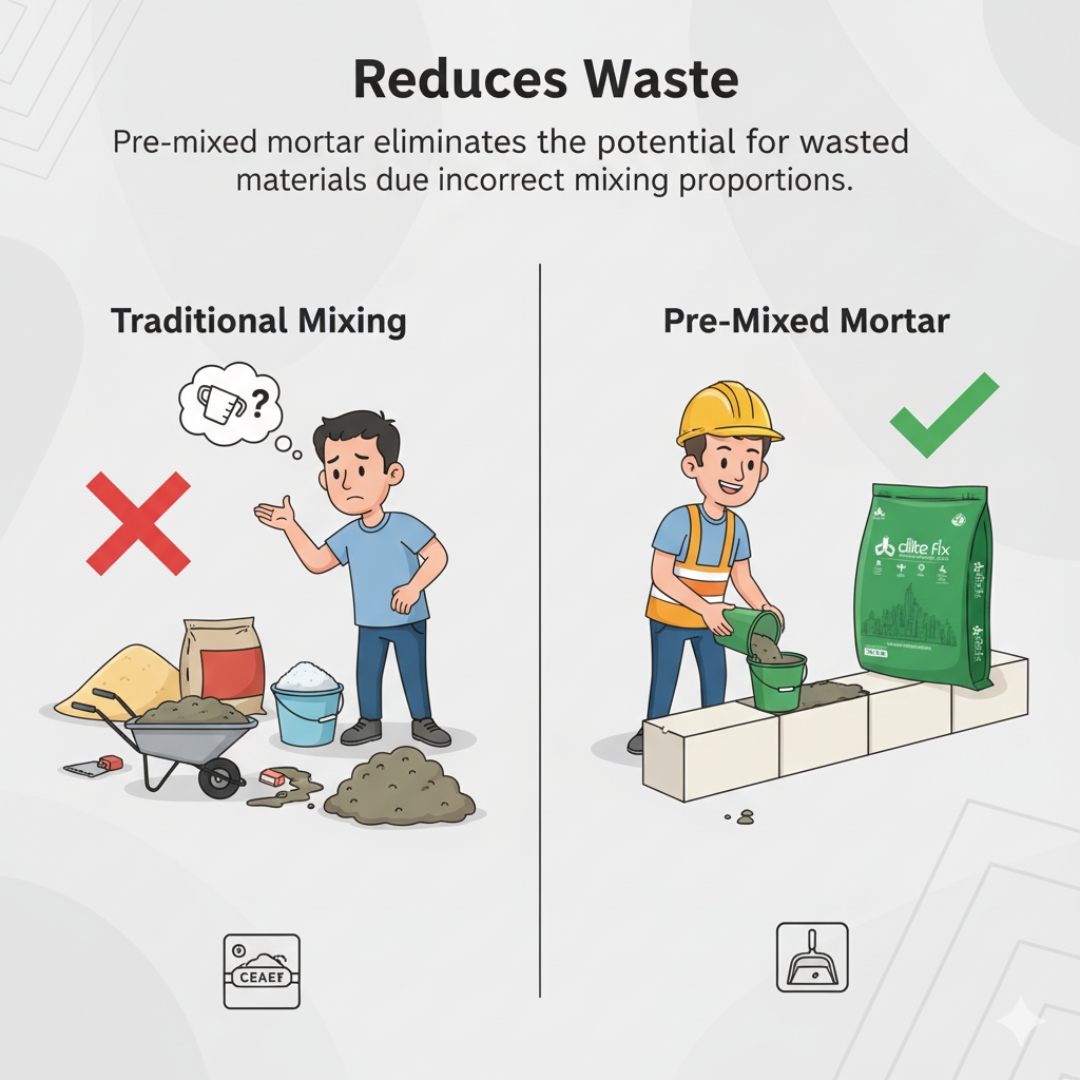
- No Wastage – Comes in a pre-mixed form, reducing material wastage and eliminating errors in proportioning.
- High Coverage – Requires a thin layer (2–3 mm) compared to traditional mortar, covering more area with less material.
- Cost-Effective – Reduces overall construction cost by saving up to 70% of mortar consumption compared to conventional methods.
- Consistent Quality – Factory-made with precision, ensuring uniform strength, performance, and reliability across projects.
Size Options (mm)
600x200x (75 to 300)
Coverage (sq.ft)
65-70 (Considering joint thickness of 2-3 mm)
Compressive Strength in 7 Days
>5 N/mm sq
Curing
Not required
Water required
25 - 30%
Appearance
Free flowing and grey in colour
- Residential Buildings – For strong and uniform bonding in homes and apartment projects.
- Commercial Complexes – Ensures faster construction and higher durability for office spaces and retail projects.
- Educational & Healthcare Institutions – Provides a neat finish and long-lasting bonding, ideal for schools, colleges, and hospitals.
- Industrial Structures & Warehouses – Offers high coverage and durability, making it perfect for large-scale industrial projects.
- Renovation & Repair Works – Can be effectively used for extensions, repairs, and modifications of existing AAC block structures.
Description
Why Choose Dlite AAC Fly Ash Blocks Jointing Mortar?
- Ready to Use – No additional mixing required; just add water and apply directly for quick and easy construction.
- Higher Strength – Provides excellent adhesion and compressive strength, ensuring stronger and more durable walls.
- No Wastage – Comes in a pre-mixed form, reducing material wastage and eliminating errors in proportioning.
- High Coverage – Requires a thin layer (2–3 mm) compared to traditional mortar, covering more area with less material.
- Cost-Effective – Reduces overall construction cost by saving up to 70% of mortar consumption compared to conventional methods.
- Consistent Quality – Factory-made with precision, ensuring uniform strength, performance, and reliability across projects.
Specification
Size Options (mm)
600x200x (75 to 300)
Coverage (sq.ft)
65-70 (Considering joint thickness of 2-3 mm)
Compressive Strength in 7 Days
>5 N/mm sq
Curing
Not required
Water required
25 - 30%
Appearance
Free flowing and grey in colour
Applications
- Residential Buildings – For strong and uniform bonding in homes and apartment projects.
- Commercial Complexes – Ensures faster construction and higher durability for office spaces and retail projects.
- Educational & Healthcare Institutions – Provides a neat finish and long-lasting bonding, ideal for schools, colleges, and hospitals.
- Industrial Structures & Warehouses – Offers high coverage and durability, making it perfect for large-scale industrial projects.
- Renovation & Repair Works – Can be effectively used for extensions, repairs, and modifications of existing AAC block structures.
Key Features
Frequently Asked Questions
What are AAC Fly Ash Blocks and why are they used in construction?
AAC Fly Ash Blocks are lightweight construction blocks made from fly ash, cement, lime, and aluminum powder. These blocks are widely used in modern construction because they reduce building weight, provide better insulation, and improve construction speed compared to traditional materials.
What AAC block sizes are commonly used in construction?
AAC blocks are available in different thickness options depending on the construction requirement. Commonly used sizes include 600 × 200 × 100 mm (4 inch), 600 × 200 × 125 mm (5 inch), 600 × 200 × 150 mm (6 inch), 600 × 200 × 200 mm (8 inch), and 600 × 200 × 230 mm (9 inch). Builders choose the block thickness based on whether the wall is a partition wall or an external wall.
What is the AAC blocks price in India?
The AAC blocks price in India varies depending on the block size, density, order quantity, and delivery location. Since different thickness blocks use different material volumes, the price can change for each size. For the most accurate and updated price, it is recommended to contact the supplier directly.
What is the AAC block cost in India for construction projects?
The AAC block cost in India depends on the block thickness and quantity ordered. Bulk construction projects often receive better pricing from manufacturers, making AAC blocks a cost-effective solution for modern buildings.
Are AAC blocks for house construction a good option?
Yes, AAC blocks for house construction are a great option because they are lightweight, durable, and provide excellent thermal insulation. They also help reduce overall structural load and improve energy efficiency.
What are the main AAC block advantages compared to traditional bricks?
Some important AAC block advantages include lightweight structure, faster construction, better heat insulation, fire resistance, and reduced mortar usage compared to traditional bricks.
AAC blocks vs red bricks – which is better?
When comparing AAC blocks vs red bricks, AAC blocks are usually preferred because they are lighter, provide better insulation, and reduce construction time. Red bricks are heavier and may increase the structural load of the building.
Do AAC fly ash blocks help reduce construction time?
Yes, AAC fly ash blocks are larger and lighter than traditional bricks, which means fewer blocks are required per wall. This helps speed up masonry work and reduces overall construction time.
Are AAC blocks for house construction strong enough for walls?
Yes, AAC blocks for house construction provide good compressive strength and durability. They are widely used for both internal and external walls in residential and commercial buildings.
Why are AAC fly ash blocks becoming popular in modern construction?
AAC fly ash blocks are becoming popular because they are eco-friendly, lightweight, energy-efficient, and reduce the overall construction cost compared to conventional building materials.


Reviews
There are no reviews yet.