Blog

Your blog category

AAC Blocks in India

Why AAC Blocks Are Revolutionizing Home Construction in India

Building a home in India is a big dream for many people. Today, new materials like aac blocks are making this dream easier, faster, and better. Leading brands like Dlite are helping bring this modern solution to homeowners and builders across the country. These blocks are strong, lightweight, and eco-friendly, making them a smart choice. Many builders now prefer them over traditional bricks, and every top aac blocks company is highlighting their advantages. Let’s understand in simple words why AAC blocks are becoming so popular. What Are AAC Blocks? AAC stands for Autoclaved Aerated Concrete. These are lightweight blocks made using cement, lime, sand, and a small amount of aluminum powder. They have tiny air bubbles inside, which makes them light and easy to handle. A good aac block factory uses advanced technology to make these blocks strong and durable. Brands like Dlite are known for providing high-quality AAC blocks in India. 1. Lightweight and Easy to Use One of the biggest advantages of aac blocks is that they are very light compared to red bricks. This makes them easy to carry and install. This helps reduce overall construction time and effort. 2. Faster Construction Time is very important in construction. AAC blocks help complete projects quickly. A reliable aac blocks company like Dlite ensures consistent size and quality, which helps builders work without delays. 3. Better Strength and Durability Even though they are lightweight, AAC blocks are strong. They can handle pressure and last for many years. Many builders trust products from a good aac block factory because of their strength and quality. 4. Energy Efficient Homes AAC blocks help keep homes cool in summer and warm in winter. This makes them perfect for Indian weather conditions. Dlite blocks are specially designed to improve energy efficiency in homes. 5. Eco-Friendly Choice Today, people want to build homes that are safe for the environment. AAC blocks are a green building material. A modern aac blocks company focuses on sustainable production methods, making AAC blocks a smart choice for eco-conscious buyers. 6. Fire and Sound Resistance Safety is very important in any home. AAC blocks offer great protection. Homes built using AAC blocks are quieter and safer compared to traditional brick houses. 7. Cost-Effective in the Long Run AAC blocks may look slightly expensive at first, but they help save money over time. A trusted aac block factory ensures quality blocks that reduce repair costs in the future. Brands like Dlite offer value for money with long-lasting performance. 8. Smooth Finish and Less Plaster AAC blocks have a smooth surface, which reduces the need for heavy plastering. This is another reason why builders prefer AAC blocks for modern homes. Why Choose Dlite? When choosing AAC blocks, quality matters a lot. Dlite is a well-known name that provides strong and reliable blocks. Whether you are building a small home or a big project, Dlite ensures you get the best results. Conclusion AAC blocks are truly changing the way homes are built in India. They are lightweight, strong, eco-friendly, and cost-effective. With the support of a good aac blocks company and a trusted aac block factory, you can build a better and smarter home. As more people learn about their benefits, aac blocks will continue to grow in popularity. Choosing the right brand like Dlite can make your construction journey smooth and stress-free. If you are planning to build your dream home, AAC blocks are definitely worth considering. FAQ

Why AAC Blocks Are Revolutionizing Home Construction in India Read More »

fly-ash-AAC-blocks

What role do fly ash AAC blocks play in passive solar design strategies?

Building a home that stays cool in the summer and warm in the winter without a massive electricity bill is a dream for many. In a country like India, where the sun can be unforgiving, we need smart construction choices. One of the best ways to achieve this is through passive solar design, and a key material making this possible is the fly ash AAC block. If you are looking for modern materials, you might be checking the fly ash brick price to compare costs. However, AAC blocks offer unique benefits for energy savings that traditional bricks simply cannot match. What is Passive Solar Design? Passive solar design is a way of building that uses the sun’s energy and natural breezes to regulate indoor temperatures. Instead of relying solely on heavy machinery like air conditioners or heaters, the building itself does the work. To make this work, you need materials that provide excellent insulation. This is where Dlite AAC blocks come into play. 1. Blocking the Summer Heat The most significant advantage of fly ash AAC blocks is their porous structure. These blocks are filled with tiny air pockets that act as a barrier against heat. In places like Delhi or Mumbai, the external heat often penetrates walls, making interiors feel like an oven. When you use blocks from a reputable aac block manufacturing company, you get a product that traps air and slows down heat transfer. This keeps your rooms naturally cooler. By choosing Dlite, you ensure that your home remains a sanctuary even during a 45°C heatwave, significantly reducing your reliance on expensive AC units. 2. Keeping You Toasty in Winter Passive solar design isn’t just about staying cool; it’s about staying warm when the temperature drops. During winter, these blocks slow down the rate at which heat escapes from your rooms. If your home is oriented to catch the winter sun, the walls will help retain that warmth long after the sun goes down. This “thermal lag” ensures that your living space stays comfortable at night. Leading aac block manufacturers in india focus on this thermal efficiency to help homeowners save on heating costs. 3. The Magic of Thermal Mass Thermal mass refers to a material’s ability to absorb, store, and release heat. While fly ash AAC blocks are lightweight, they possess the perfect balance of thermal mass for residential and commercial buildings. This buffering effect prevents the “temperature spikes” that usually make us reach for the remote to adjust the climate control. Using Dlite blocks ensures this process is consistent throughout the entire structure. 4. Sustainability Meets Savings Many builders check the fly ash brick price because they want an eco-friendly alternative to red clay bricks. Fly ash is a byproduct of power plants, so using it in AAC blocks prevents environmental waste. Furthermore, because these blocks are so easy to cut and install, construction speed increases. When you partner with an established aac block manufacturing company, you aren’t just buying a wall; you are investing in a lifetime of lower energy bills. Why Choose the Right Manufacturer? Not all blocks are created equal. The quality of insulation depends heavily on the manufacturing process. As one of the top aac block manufacturers in india, we take pride in using advanced technology to create blocks with a thermal conductivity range of 0.21 to 0.24 W/m-k. This precision is what makes passive solar design actually work in the real world. Summary of Benefits: Final Thought If you are planning your next project and want a home that breathes with nature, consider the role of high-quality materials. Whether you are comparing the fly ash brick price or looking for the best aac block manufacturers in india, the goal remains the same: a sustainable, comfortable, and cost-effective home. Contact us today to see how our blocks can transform your building’s performance! Frequently Asked Questions (FAQs) 1. How does the fly ash brick price compare to AAC blocks in passive solar construction? While the initial fly ash brick price might seem lower per unit, AAC blocks offer much better value for passive solar design. Because Dlite AAC blocks provide superior thermal insulation, you save more money in the long run through reduced electricity bills and faster construction speeds compared to traditional bricks. 2. Why should I choose Dlite from a professional aac block manufacturing company? Buying from a dedicated aac block manufacturing company ensures that the blocks meet specific thermal conductivity standards. Dlite blocks are engineered to have tiny air pockets that act as natural barriers, which is essential for any building relying on passive solar strategies to stay cool or warm. 3. Are there many reliable aac block manufacturers in india for sustainable projects? Yes, there are several aac block manufacturers in india, but it is important to choose one that uses high-quality fly ash and advanced curing processes. Quality manufacturers provide blocks that help maintain a “thermal lag,” keeping your home’s internal temperature stable even when the weather outside changes drastically. 4. Can fly ash AAC blocks really reduce the need for air conditioning? Absolutely. In cities with extreme heat, like Delhi, the insulation provided by a top aac block manufacturing company prevents outdoor heat from entering the building. This supports passive solar design by keeping the indoors naturally cooler, allowing you to run your AC less frequently. 5. Do aac block manufacturers in india provide materials suitable for cold winters? Yes, the best aac block manufacturers in india design their products to work in all seasons. During winter, these blocks prevent the warmth inside your home from escaping through the walls. When combined with smart window placement to let in sunlight, Dlite blocks help retain that natural heat throughout the night.

What role do fly ash AAC blocks play in passive solar design strategies? Read More »

Common Site Failures in AAC Block Masonry and How the Right Jointing Mortar Prevents Them

When building a modern home, AAC blocks (Autoclaved Aerated Concrete) have become the go-to choice for smart homeowners and builders. They are lightweight, eco-friendly, and provide great insulation. However, many people notice cracks in their walls or dampness shortly after moving in. Most of these problems aren’t caused by the blocks themselves, but by how they are joined together. Using traditional sand-cement mortar with these blocks is a recipe for disaster. This is where choosing a specialized aac block jointing mortar makes all the difference. Common Failures in AAC Block Masonry 1. Hairline Cracks in Walls The most common complaint is the appearance of thin, spider-web-like cracks on the plaster. AAC blocks have different thermal properties than red bricks. If you use a thick layer of traditional mortar, it shrinks as it dries, pulling at the blocks and causing cracks. 2. Water Seepage and Dampness Traditional mortar is porous. During the rainy season, water can seep through the thick joints between the blocks. This leads to damp patches on your interior walls, ruining your expensive paint and causing health issues like mold. 3. Poor Bonding (De-bonding) Because AAC blocks are very smooth and porous, they absorb water from traditional wet cement very quickly. This “robs” the cement of the moisture it needs to set properly, resulting in a weak bond. Over time, the blocks can actually become loose. Why the Right Jointing Mortar is the Solution To prevent these failures, experts recommend using a thin-bed adhesive. Leading aac block jointing mortar manufacturers have designed products specifically to match the properties of AAC blocks. One of the most trusted names in the industry is Dlite. Their jointing mortar is engineered to provide a rock-solid bond with a thickness of only 2-3mm, compared to the 12-15mm required by traditional sand-cement. How it Prevents Failures: The Dlite Advantage: Why Quality Matters Using a premium product like Dlite isn’t just about sticking blocks together; it’s about the long-term health of your building. When you source from reputable aac block jointing mortar manufacturers, you get a pre-mixed formula. You don’t need to worry about the quality of local sand or the ratio of cement. You just add water, mix, and apply. This consistency ensures that every square foot of your wall is equally strong. Steps to Ensure a Failure-Free Wall If you want to get the best out of your aac block masonry, follow these simple steps: Summary: Invest in the Right Material Building a house is a once-in-a-lifetime investment. Trying to save a little money by using cheap, traditional mortar for aac blocks can lead to expensive repairs later. By choosing a high-quality aac block jointing mortar, you ensure that your walls remain beautiful, dry, and crack-free for decades. Always look for certified aac block jointing mortar manufacturers to ensure you are getting a product that meets international building standards. Choose Dlite for a home that stands strong against time and weather! FAQ 1. Why should I use specialized AAC block jointing mortar instead of regular cement?  Regular cement-sand mortar requires a thick layer (12–15mm), which leads to shrinkage cracks and poor bonding. A dedicated aac block jointing mortar is designed for thin-bed application (2–3mm). It provides much higher adhesive strength, prevents water seepage, and is specifically engineered to match the properties of aac blocks, ensuring a crack-free wall. 2. How much AAC block jointing mortar do I need for my construction?  The quantity depends on the size of the blocks and the thickness of the joints. Generally, because it is applied so thinly, one bag of mortar covers a much larger area than traditional cement. Most aac block jointing mortar manufacturers provide a coverage calculator or guide on the bag to help you estimate the exact number of bags required for your project. 3. Does using DLite jointing mortar require any special curing?  One of the biggest advantages of DLite is that it is self-curing. Unlike traditional masonry which needs to be kept wet for several days, this advanced aac block jointing mortar retains its own moisture to gain strength. This saves a significant amount of water and labor costs at the construction site. 4.Can I use any brand of mortar with my AAC blocks?  While many options exist, it is important to choose products from trusted aac block jointing mortar manufacturers who follow strict quality standards. Using a high-quality brand like DLite ensures that the chemical additives are correctly balanced to prevent de-bonding and cracks, which are common with low-grade local mixtures. 5. How do AAC blocks help in keeping the house cool?  AAC blocks have a unique cellular structure that acts as a thermal insulator. This structure traps air, preventing heat from the outside from entering your home during summer and keeping it warm during winter. When joined with a thin-bed mortar, the “thermal bridges” (gaps where heat leaks) are minimized, making your home more energy-efficient.

Common Site Failures in AAC Block Masonry and How the Right Jointing Mortar Prevents Them Read More »

products image

The Importance of Proper Curing and Installation for AAC Block in Walls

When building strong walls, using the right method is just as important as using the right material. Many people today prefer AAC Block Suppliers in Maharashtra because AAC blocks are lightweight, strong, and easy to use. But even the best blocks will not perform well if curing and installation are not done properly. AAC blocks are factory-made with perfect size and shape. Because of this, they need careful installation with thin joints instead of thick mortar like bricks. Small mistakes during installation or curing can lead to cracks, weak bonding, and uneven walls. This blog will explain in very simple words why proper curing and installation matter and how you can get the best results. Why Proper Installation of AAC Blocks is Important AAC block walls depend more on correct method than excess material. Unlike traditional bricks, you cannot hide mistakes with thick mortar. Here’s why proper installation is important: In areas like autoclaved aerated concrete blocks in amravati, where construction demand is rising, following proper installation steps helps achieve better quality buildings. Step-by-Step Importance of Correct Installation 1. Base Preparation The surface must be clean and level. If the base is uneven, the whole wall will become tilted. 2. Accurate Layout Marking Marking the wall line properly helps in placing blocks correctly. This reduces cutting and errors. 3. Using the Right Mortar AAC blocks need special adhesive, not regular cement mortar. This ensures better bonding and strength. 4. Laying the First Layer The first row is the most important. If it is not level, the entire wall will be uneven. 5. Maintaining Alignment Tools like spirit level help keep the wall straight. Small mistakes can grow bigger as the wall height increases. 6. Using Reinforcement Where Needed Steel bars or mesh should be added in weak areas like windows and doors to avoid cracks. Companies like Dlite always emphasize following proper installation methods to get the best performance from AAC blocks. Why Proper Curing of AAC Block Walls is Important Curing is the process of adding moisture to help the mortar gain strength. Many people think AAC blocks need heavy curing like bricks, but that is not true. Here’s why curing is important: In regions like autoclaved aerated concrete blocks in jalna, proper curing is especially important due to changing weather conditions. How to Cure AAC Block Walls Correctly AAC block curing is simple but must be done correctly: Unlike brick walls, too much water is harmful for AAC block joints. Dlite recommends controlled and light curing to maintain the strength and quality of AAC walls. Common Mistakes to Avoid Many construction problems happen due to small mistakes. Here are some common ones: Avoiding these mistakes can greatly improve wall quality and life. Benefits of Proper Curing and Installation When AAC blocks are installed and cured properly, you get: This is why experienced builders trust AAC Block Suppliers in Maharashtra and follow correct methods for best results. Conclusion AAC blocks are a modern and smart choice for construction. But their performance depends heavily on how they are installed and cured. Proper installation ensures alignment and strength, while correct curing improves durability. Whether you are building a small home or a big project, following the right steps will save time, money, and future repairs. With trusted brands like Dlite and careful construction practices, AAC block walls can give excellent long-term results. In growing markets like autoclaved aerated concrete blocks in amravati and autoclaved aerated concrete blocks in jalna, understanding these basics is the key to better construction quality. FAQ 1. Why is curing important for AAC block walls?Curing helps improve the strength of joints in AAC walls. Proper curing ensures durability and reduces cracks. Builders working with AAC Block Suppliers in Maharashtra always follow light curing methods to maintain wall quality and long-lasting performance. 2. How are AAC blocks different from traditional bricks?AAC blocks are lightweight, larger, and require thin jointing mortar. Unlike bricks, they need precise installation. In regions using autoclaved aerated concrete blocks in amravati, these blocks help speed up construction while improving insulation and reducing overall structural load. 3. What is the correct way to install AAC blocks?AAC blocks should be installed using special adhesive, proper alignment tools, and thin joints. The first layer must be level. Experts using AAC Block Suppliers in Maharashtra recommend regular level checks to ensure straight and strong walls. 4. How much curing is needed for AAC block walls?AAC block walls need light curing for 2–3 days after 24 hours of installation. Over-curing should be avoided. Projects using autoclaved aerated concrete blocks in jalna follow controlled water spraying to maintain proper bonding and wall strength. 5. What are the benefits of using AAC blocks in construction?AAC blocks offer better insulation, faster construction, and reduced load on the structure. They also minimize cracks when installed correctly. Builders working with autoclaved aerated concrete blocks in amravati prefer them for modern and cost-effective construction solutions.

The Importance of Proper Curing and Installation for AAC Block in Walls Read More »

How to Test the Compressive Strength of AAC Blocks

When you are building a home or any structure, the strength of materials is very important. AAC blocks are widely used today because they are lightweight, strong, and energy-efficient. But before using them, it is important to test their compressive strength. This test tells us how much load the block can handle without breaking. A trusted AAC blocks company like Dlite always ensures that its blocks meet quality standards. In this blog, we will explain the testing process in very easy and simple words so anyone can understand. Why is Compressive Strength Important? Compressive strength means how much pressure a block can bear before it cracks or fails. This is one of the most important properties of AAC blocks. If the blocks are strong: If the strength is low, it can lead to serious construction problems. That is why every good AAC block factory follows proper testing methods before supplying blocks. Brands like Dlite focus on quality testing to make sure their blocks are reliable and long-lasting. Step-by-Step Guide to Testing Compressive Strength Here is a simple step-by-step method to test the compressive strength of AAC blocks: 1. Sample Selection First, select the blocks that need to be tested. This helps in getting accurate and consistent results. A good AAC blocks company always checks samples from every batch. 2. Conditioning of Blocks Before testing, the blocks need to be prepared. This step ensures that all blocks have the same moisture level, which gives fair test results. 3. Measurement of Dimensions Now measure the size of the blocks. These measurements are needed to calculate the area of the block. The area is used later in the strength calculation. 4. Placing the Block in the Testing Machine Next, place the block in a compression testing machine. If the surface is not smooth, use a thin cement layer or a steel plate to make it level. This helps in applying the load evenly. 5. Applying the Load Now start the machine. The machine will show the maximum load the block can handle. This is the most important value in the test. 6. Calculate Compressive Strength Now, calculate the strength using this simple formula: Compressive Strength = Maximum Load ÷ Area of Block The result will give the compressive strength of the block. 7. Check the Results Compare the result with standard values. A reliable aac block factory ensures that all blocks meet or exceed these standards. 8. Record the Data Finally, write down all the details: This record is useful for quality checks and future reference. Conclusion Testing the compressive strength of aac blocks is very important for safe construction. It helps you make sure that the blocks you are using are strong and durable. By following the simple steps above, you can easily test and understand the quality of AAC blocks. Always choose a trusted aac blocks company like Dlite, which follows strict testing methods and quality standards. Whether you are a builder, engineer, or homeowner, checking compressive strength gives you confidence in your construction. Strong blocks mean a strong and long-lasting building. FAQ 1. What is the compressive strength of AAC blocks?Compressive strength of AAC blocks is the ability of the block to withstand pressure without breaking. It is measured in N/mm². Good quality blocks from a trusted AAC blocks company like Dlite usually meet standard strength requirements, making them suitable for safe and durable construction. 2. Why is testing AAC block strength important?Testing ensures that AAC blocks can handle the load of a building. It helps avoid cracks, damage, or failure in walls. A reliable AAC block factory always tests strength before supplying materials to ensure safety, durability, and long life of the structure. 3. How many AAC blocks should be tested at once?Usually, three AAC blocks are tested from one batch to get accurate results. This sample size helps understand the overall quality. A professional AAC blocks company like Dlite follows this standard method to maintain consistency and ensure reliable performance in construction projects. 4. What is the standard compressive strength for AAC blocks in India?In India, AAC blocks generally have compressive strength ranging from 3 to 5 N/mm², as per IS standards. A good AAC block factory ensures that blocks meet or exceed these values, making them suitable for both residential and commercial construction purposes. 5. Can AAC blocks fail the strength test?Yes, AAC blocks can fail if they are poorly manufactured or not properly cured. This is why choosing a trusted AAC blocks company like Dlite is important. Proper testing helps identify weak blocks and ensures only high-quality materials are used in construction.

How to Test the Compressive Strength of AAC Blocks Read More »

product image

Common monsoon home construction challenges and how to overcome them

Building a home during the rainy season in India is not easy. Heavy rains, humidity, and sudden weather changes can slow down work and damage materials. That is why many experts, including leading aac block manufacturers in india, suggest careful planning before starting construction in the monsoon. In this blog, we will explain the most common problems and simple solutions to help you continue construction smoothly. 1. Site Preparation and Foundation Problems Challenge:During the monsoon, the construction site often becomes muddy and waterlogged. This makes digging and laying the foundation very difficult. Wet soil can also weaken the base of the building. Solution:Start by preparing proper drainage at the site. Make small channels so water can flow away easily. Use pumps to remove excess water. Cover the area with temporary sheds to keep it dry. Also, use strong and moisture-resistant materials from trusted aac block manufacturers like Dlite to ensure a solid foundation. 2. Delays Due to Weather Conditions Challenge:Rainfall in India can be unpredictable. Sudden showers can stop work anytime, causing delays and increasing costs. Solution:Always check weather forecasts before planning daily tasks. Keep extra buffer days in your construction schedule. Try to complete important work during dry spells. Choosing reliable materials from a good aac block manufacturing company like Dlite can also help reduce delays, as these materials are easier to handle in wet conditions. 3. Water Damage to Building Materials Challenge:Construction materials like cement, sand, steel, and wood can get damaged if exposed to rain for long periods. This leads to wastage and extra expenses. Solution:Store all materials in a covered and raised area. Use plastic sheets or waterproof covers to protect them. Avoid placing materials directly on the ground. You can also choose modern building materials from aac block manufacturers in india, as they are more resistant to moisture and perform better during the monsoon. 4. High Humidity and Mould Growth Challenge:Monsoon brings high humidity, which can cause mould and fungus on walls and materials. This affects both the building strength and indoor air quality. Solution:Ensure proper airflow at the construction site. Keep windows and openings for ventilation. Use anti-fungal coatings on walls and surfaces. Adding moisture barriers in floors and walls is also helpful. Using quality products from brands like Dlite can reduce the chances of mould formation. 5. Labour Availability and Safety Issues Challenge:Heavy rains can reduce worker availability. At the same time, slippery surfaces and wet conditions increase the risk of accidents. Solution:Plan labour work wisely. Schedule heavy tasks on days with less rain. Provide workers with raincoats, boots, and safety gear. Make sure the site is not too slippery and follows safety rules. A safe environment helps workers stay confident and productive. 6. Transportation and Accessibility Problems Challenge:Rain can damage roads and create traffic issues. This delays the delivery of materials and affects the overall construction timeline. Solution:Plan your material supply in advance. Keep an extra stock of important items at the site. Try to work with local suppliers to reduce delays. Good planning ensures that work does not stop due to a lack of materials. Conclusion Monsoon construction may seem difficult, but it is not impossible. With proper planning, the right materials, and safety measures, you can continue building your dream home without major problems. Always focus on good drainage, safe storage, and weather planning. Using high-quality materials from trusted aac block manufacturers and brands like Dlite can make a big difference. These materials are strong, durable, and suitable for Indian weather conditions. In the end, smart planning and the right choices will help you complete your home smoothly, even during the rainy season. FAQs 1. Is it safe to do construction during the monsoon with materials from aac block manufacturers?Yes, construction can be done during the monsoon if proper precautions are taken. Using quality materials from trusted aac block manufacturers helps improve durability. Planning work based on weather and ensuring safety can reduce risks and delays. 2. How can I protect materials from aac block manufacturers in india during rain?Materials should be stored in covered and elevated spaces. Products from reliable aac block manufacturers in india are more moisture-resistant, but still need protection using waterproof sheets and proper storage to avoid damage. 3. What materials are best from an aac block manufacturing company for monsoon construction?Moisture-resistant materials like AAC blocks are ideal. Choosing products from a trusted aac block manufacturing company ensures better strength, durability, and resistance to rain, making them suitable for monsoon construction. 4. How do aac block manufacturers in india help prevent water damage at sites?The top AACblock manufacturers in india produce blocks that absorb less water and dry faster. Combined with proper drainage and storage methods, these materials help reduce water damage during heavy rains. 5. Why choose aac block manufacturers for monsoon home construction?Leading aac block manufacturers offer lightweight, durable, and moisture-resistant materials. These blocks are easy to handle even in wet conditions, making them a smart choice for safe and efficient construction during the monsoon.

Common monsoon home construction challenges and how to overcome them Read More »

AAC blocks for modern construction – Dlite Blocks

AAC Blocks Explained: Everything Architects and Builders Must Know in 2026

In 2026, aac blocks have become one of the most popular building materials in modern construction. Architects, engineers, and builders prefer them because they are light, strong, and easy to use. Compared to traditional red bricks, AAC blocks help save time, money, and energy. Many trusted brands like Dlite Blocks are helping builders create stronger and smarter buildings using this modern solution. What Are AAC Blocks? AAC stands for Autoclaved Aerated Concrete. These blocks are made using cement, lime, gypsum, fly ash, and water. During the making process, tiny air bubbles form inside the blocks. These air pockets make the blocks lightweight but still strong. Because of this special structure, aac blocks are easy to handle and perfect for fast construction. They are widely used in homes, offices, schools, hospitals, and large commercial buildings. How AAC Blocks Are Made AAC blocks are made inside a modern aac block factory using a special process. First, raw materials like fly ash, cement, and lime are mixed with water. Then a small amount of aluminum powder is added. This creates air bubbles inside the mixture. Next, the mixture is poured into molds and allowed to rise like a cake. After that, the blocks are cut into sizes and placed in a machine called an autoclave. Here, they are cured using high-pressure steam. This makes the blocks strong, durable, and ready for use. Why Builders Prefer AAC Blocks There are many reasons why aac blocks are now the first choice of builders. 1. Lightweight Material AAC blocks are almost three times lighter than normal bricks. This reduces the load on the building structure and makes construction safer. 2. Faster Construction One AAC block is much bigger than a brick. So, fewer blocks are needed to build walls. This saves labor time and speeds up the project. 3. Better Insulation AAC blocks keep rooms cooler in summer and warmer in winter. This helps reduce electricity bills. 4. Fire Resistance AAC blocks can resist fire for many hours, making buildings safer. 5. Eco-Friendly Choice They are made using industrial waste like fly ash. This reduces environmental damage. Role of AAC Block Factories A modern aac block factory plays an important role in maintaining quality. These factories use advanced machines to ensure the blocks are strong, uniform, and safe. Factory-made blocks are better than traditional bricks because they have exact sizes and smooth surfaces. This reduces plaster work and saves extra material. Companies like Dlite Blocks use modern manufacturing technology to produce high-quality AAC blocks that meet industry standards. Choosing the Right Suppliers Selecting trusted AAC Blocks Suppliers is very important for construction success. Good suppliers provide consistent quality, timely delivery, and proper technical support. Reliable AAC Blocks Suppliers also help builders choose the correct block size and type for their project needs. In 2026, many builders will prefer brands like Dlite Blocks because they offer dependable supply, strong quality control, and nationwide availability. AAC Blocks vs Traditional Bricks AAC blocks are much better than traditional bricks in many ways. They are lighter, faster to install, and provide better insulation. Brick walls need more mortar and take longer to build. AAC walls require less plaster and reduce construction costs. Also, AAC blocks produce less waste on site, making them a cleaner and smarter building choice. The Future of Construction In today’s construction world, speed, cost savings, and sustainability are very important. That is why aac blocks are becoming the new standard. As technology improves, more modern aac block factory units are opening across India, making these blocks easily available. With trusted AAC Blocks Suppliers and quality brands like Dlite Blocks, builders can create stronger, safer, and eco-friendly structures. In simple words, AAC blocks are not just a trend — they are the future of construction.  Frequently Asked Questions 1. What are AAC blocks used for? AAC blocks are used to build walls in homes, offices, and commercial buildings. 2. Are AAC blocks stronger than bricks? Yes, they are strong enough for construction and also lighter than bricks. 3. Do AAC blocks save money? Yes, they reduce labor costs, plaster use, and construction time. 4. Are AAC blocks eco-friendly? Yes, they are made from recycled materials and reduce environmental damage. 5. How long do AAC blocks last? AAC blocks are very durable and can last for many decades when used properly.

AAC Blocks Explained: Everything Architects and Builders Must Know in 2026 Read More »

AAC Blocks earthquake safety

The Seismic Benefits of Using AAC Blocks in Homes

Earthquakes can cause serious damage to buildings, especially when heavy and weak materials are used. That is why choosing the right construction material is very important. Today, many builders prefer aac blocks because they help make homes safer during earthquakes. These modern blocks are strong, lightweight, and long-lasting, making them a smart choice for construction. In this blog, we will explain in very simple words how AAC blocks help protect homes from earthquake damage and why they are becoming popular. What Are AAC Blocks? AAC blocks are lightweight building materials made from cement, lime, sand, water, and a small amount of special expansion material. These blocks are cured in a high-pressure machine called an autoclave, which makes them strong and durable. Compared to traditional red bricks, aac blocks are much lighter, easier to handle, and provide better insulation. They are widely used in modern construction because they improve safety, reduce costs, and speed up building work. Many builders choose trusted brands like Dlite Blocks because they provide high-quality AAC products suitable for safe construction. How Earthquakes Affect Buildings During an earthquake, strong vibrations travel through the ground. These vibrations push and pull buildings in different directions. Heavy buildings suffer more damage because they create higher pressure on their foundation. Traditional bricks are heavy, and this extra weight increases the risk of cracks or collapse during seismic activity. That is why engineers recommend using lightweight materials like aac blocks in earthquake-prone areas. Why Lightweight Materials Improve Safety The lighter a building material is, the less force it experiences during an earthquake. This means: AAC blocks are almost three times lighter than clay bricks, which makes them perfect for earthquake-resistant construction. How AAC Blocks Improve Seismic Performance 1. Lightweight but Strong AAC blocks reduce the overall weight of a building. When an earthquake occurs, lighter structures experience less shaking force. This makes the building more stable. Despite being lightweight, these blocks have excellent strength, which helps walls stay intact. 2. High Strength-to-Weight Ratio One of the biggest benefits of aac block manufacturers’ products is their strength. They can handle high pressure while keeping the building light. This balance helps homes remain safe during earthquakes. 3. Shock Absorption Ability AAC blocks have a porous structure. This allows them to absorb earthquake vibrations instead of transferring them fully to the building structure. As a result, cracks and damage are reduced. 4. Better Bonding and Uniform Shape AAC blocks are made in precise sizes, which helps them fit perfectly. This creates strong wall bonding and reduces weak points in construction. Strong bonding improves the overall stability of buildings during seismic activity. 5. Reduced Structural Stress Because AAC blocks are light, they reduce the load on beams, columns, and foundations. This helps the building withstand shaking more effectively. Additional Benefits of AAC Blocks Besides earthquake safety, AAC blocks offer many other advantages. Energy Efficiency AAC blocks provide excellent thermal insulation. This keeps homes cooler in summer and warmer in winter, reducing electricity bills. Eco-Friendly Construction A trusted aac blocks company like Dlite Blocks produces blocks using environmentally friendly processes. AAC blocks also create less waste during construction. Fire Resistance AAC blocks can resist high temperatures and help slow the spread of fire, improving home safety.  Sound Insulation These blocks reduce outside noise, making homes more peaceful and comfortable. Faster Construction AAC blocks are larger and lighter than traditional bricks. This speeds up construction work and reduces labor costs. Why Builders Prefer Reliable AAC Block Manufacturers Choosing trusted aac block manufacturers is important because quality directly affects safety. Reliable brands ensure proper strength, durability, and consistent size. Companies like Dlite Blocks are known for producing high-quality AAC blocks that meet modern safety standards. Many builders trust Dlite Blocks for safe and long-lasting construction materials. Conclusion AAC blocks have become one of the best materials for earthquake-resistant construction. Their lightweight nature, high strength, and shock-absorbing ability make homes safer during seismic activity. Along with safety, they provide benefits like energy savings, fire resistance, and faster construction. Choosing a trusted aac blocks company like Dlite Blocks ensures better quality and long-term durability. If you want to build a safer and stronger home, AAC blocks are a smart and reliable choice. Frequently Asked Questions 1. Are AAC blocks good for earthquake-prone areas? Yes, AAC blocks are lightweight and strong, which helps buildings resist earthquake damage. 2. Why are AAC blocks safer than traditional bricks? They reduce building weight, absorb vibrations, and create stronger wall bonding. 3. Do AAC blocks last long? Yes, AAC blocks are durable, moisture-resistant, and can last for many years. 4. Can AAC blocks reduce construction costs? Yes, they speed up construction, reduce labor costs, and minimize material waste. 5. How do I choose the best AAC block manufacturer? Always select trusted and experienced aac block manufacturers like Dlite Blocks that provide certified and high-quality products.

The Seismic Benefits of Using AAC Blocks in Homes Read More »

Fly Ash Bricks vs Red Bricks

Fly Ash Bricks Vs. Red Bricks: Making the Right Choice for Your Home

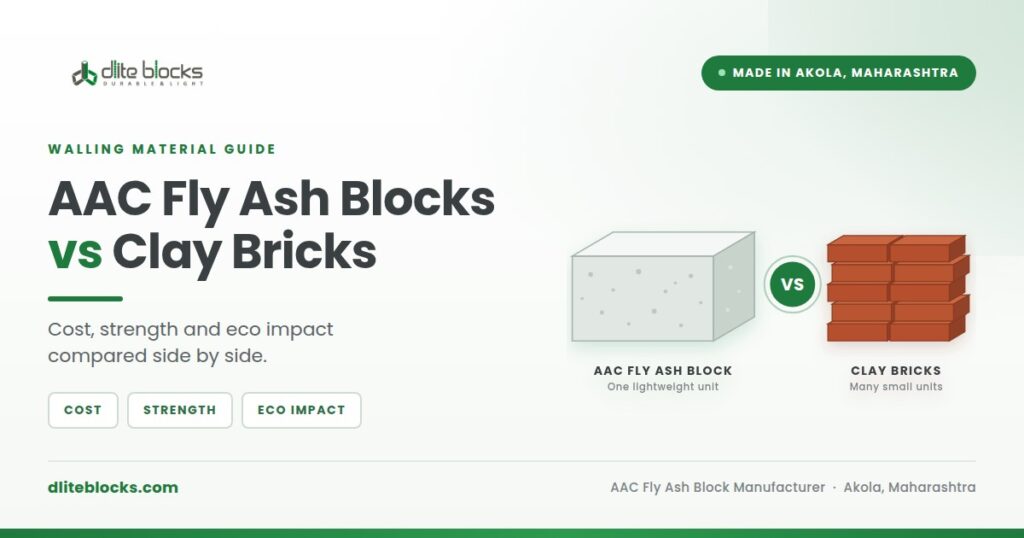
Building a home is a very big decision. Most people build a house only once in their lifetime. That is why every choice you make during construction is important. One of the biggest decisions is choosing the right type of bricks. Bricks decide how strong, safe, and comfortable your home will be for many years, and understanding fly ash brick price can also help you plan your budget better. Today, the two most common choices are red bricks and fly ash bricks. Both are widely used in construction, but they are very different from each other. Understanding their differences can help you make the right choice for your dream home. What Are Red Bricks? Red bricks are also called clay bricks. They have been used for hundreds of years. They are made from natural clay that is shaped and then baked in a kiln at high temperatures. Many builders still rely on aac block manufacturers in India for alternative modern materials, but red bricks remain a traditional choice. Many people still prefer red bricks because they are traditional and easily available. They also give a natural and classic look to buildings, especially when left exposed. However, there are some disadvantages. Red bricks are not always uniform in size, which means walls may need more plaster and mortar. They also absorb more water, which can sometimes lead to dampness problems. Another issue is that they use topsoil, which harms the environment. What Are Fly Ash Bricks? Fly ash bricks are a modern construction material. They are made using fly ash (a waste product from coal plants), along with cement, sand, and water. Instead of being baked, they are cured, which makes them more eco-friendly. Many homeowners today also compare products from a trusted aac block manufacturing company while choosing building materials. These bricks are stronger, more uniform, and more durable than traditional clay bricks. They also absorb less water, which helps reduce moisture and dampness in walls. Many modern builders and companies like Dlite Blocks recommend fly ash bricks because they are cost-effective and environmentally friendly. Strength and Durability One of the biggest differences between fly ash bricks vs red bricks is strength. Fly ash bricks are much stronger. They can handle more load and pressure, which makes them ideal for modern buildings. Red bricks have moderate strength, which is still good for small construction projects. But for long-lasting and strong structures, fly ash bricks are usually a better choice. Fly ash bricks are also more resistant to damage, erosion, and pests. This makes them last longer and require less maintenance. Size, Shape, and Finish Fly ash bricks have a uniform size and smooth surface. This helps builders create straight and neat walls. Because of this, less mortar and plaster are needed, which reduces construction costs. Red bricks, on the other hand, often vary in size and shape. This can make construction slower and may increase the need for plastering. Environmental Impact Red bricks use natural soil and require high energy during manufacturing. This makes them less eco-friendly. Fly ash bricks are made from industrial waste material. They help reduce pollution and save natural resources. This is why they are considered a green building material. Cost and Savings Many people compare fly ash brick price with red brick cost before making a decision. At first, red bricks may seem cheaper. But in the long run, fly ash bricks save money because they need less plaster, less mortar, and have lower transport damage. So overall, fly ash bricks are more cost-efficient for modern construction. Understanding fly ash brick price also helps homeowners plan their budget better. Which Brick Should You Choose? The right choice depends on your needs. ·       You can choose red bricks if you prefer traditional materials, want a natural look, or live in an area where they are easily available. ·       You should choose fly ash bricks if you want stronger walls, lower construction costs, and an eco-friendly home. Many homeowners today also explore options from aac block manufacturers in india and trusted aac block manufacturing company suppliers because they provide advanced building materials for modern homes. Leading aac block manufacturers in india are helping builders shift toward stronger and lighter materials. Final Thoughts Your home is a lifetime investment. The bricks you choose today will stay inside your walls forever. That is why it is important to make a smart decision. Both red bricks and fly ash bricks have their benefits. But if you want strength, durability, cost savings, and eco-friendliness, fly ash bricks are becoming the preferred choice for modern homeowners. Comparing fly ash brick price and checking a reliable aac block manufacturing company can help you make an informed decision. Choosing quality materials from trusted brands ensures your home stays safe and strong for years to come. Frequently Asked Questions 1. Which is better: fly ash bricks or red bricks? Fly ash bricks are stronger, more uniform, and eco-friendly. Red bricks are traditional and easily available. 2. Is fly ash brick price higher than red bricks? fly ash brick price may seem similar or slightly higher initially, but they save money on plaster, mortar, and maintenance. 3. Do fly ash bricks absorb water? No, they absorb less water than red bricks, which helps reduce dampness in walls. 4. Are fly ash bricks environmentally friendly? Yes, they are made from industrial waste and help save natural soil resources. 5. Are AAC blocks better than bricks? AAC blocks are lightweight and provide good insulation. Many aac block manufacturers in India and a trusted aac block manufacturing company offer them as a modern construction option.

Fly Ash Bricks Vs. Red Bricks: Making the Right Choice for Your Home Read More »

Applying AAC block jointing mortar on wall

Why AAC Block Jointing Mortar Is Essential for Strong Blockwork

When people plan a modern building today they often focus on choosing the right blocks but forget one equally important element that holds everything together. The choice of AAC block jointing mortar plays a huge role in the strength, durability and finish of any AAC block wall. Many construction issues like wall cracks, uneven surfaces and weak bonding happen not because of poor blocks but because the wrong mortar was used. In this detailed guide we will talk about why AAC block jointing mortar is not optional but essential for strong blockwork. We will also explain how it solves real site problems, saves cost, improves wall life and gives better results than traditional cement mortar. If you are a builder, contractor architect or even a home owner this guide will help you make the right decision. Understanding AAC Blocks and Why Regular Mortar Fails AAC blocks are lightweight porous and precision made blocks designed for modern construction. Unlike red bricks these blocks have smooth surfaces and accurate dimensions. Because of this nature they need a bonding material that matches their structure. Using regular cement sand mortar with AAC blocks creates several problems. The thick joints do not match the block design. Shrinkage cracks appear after curing. Extra water absorption weakens the bond. Over time the wall starts showing visible defects. This is where AAC block jointing mortar becomes important. It is specially made to work with AAC blocks and gives consistent bonding without stressing the blocks. What Is AAC Block Jointing Mortar and How It Works AAC block jointing mortar is a ready mix dry mortar designed for thin bed application. It is made with carefully graded sand cement and performance additives that improve bonding strength and flexibility. Unlike traditional mortar which needs thick joints this mortar works perfectly with thin joints usually around three to four millimeters. Thin joints reduce material usage, improve wall alignment and increase overall wall strength. Because it is factory manufactured the quality remains consistent at every site. This consistency plays a big role in maintaining construction standards especially in large projects. Stronger Bonding Means Longer Wall Life One of the main reasons builders prefer AAC block jointing mortar is its superior bonding strength. AAC blocks are lightweight and porous so they need a mortar that penetrates the surface and grips the block firmly. This mortar forms a strong chemical and mechanical bond with AAC blocks. The result is a wall that behaves like one solid structure instead of individual blocks stacked together. This strength reduces chances of cracks seepage and structural weakness over time. For areas exposed to temperature changes and moisture this strong bonding becomes even more important. Thin Joints Improve Structural Stability Traditional mortar joints are thick and uneven. These joints become weak points in the wall. In contrast AAC block jointing mortar uses thin joints that distribute load evenly across the wall. Thin joints also reduce thermal bridges which improves insulation. This means the building stays cooler in summer and warmer in winter. Better insulation directly impacts energy savings and indoor comfort. Because the joints are thin the wall surface becomes smooth and even reduces plaster thickness later. Faster Construction and Lower Labor Cost Speed is a big factor in modern construction. AAC block jointing mortar helps complete masonry work much faster than traditional mortar. Since it is a ready mix product there is no need to measure sand and cement on site. Workers just add water and start application. The thin layer spreads easily and blocks align quickly due to precise dimensions. Faster work means lower labor cost and timely project completion. This is one of the biggest reasons contractors prefer this mortar for large residential and commercial projects. Reduced Material Wastage and Better Cost Control Using thick cement mortar leads to high material wastage. Excess mortar falls during application and unused mix often gets discarded. AAC block jointing mortar requires much less quantity per square meter. Thin joints use less material and almost no wastage occurs. This helps control material cost and improves overall project budgeting. Over the entire project this saving becomes significant especially in multi floor construction. Improved Finish and Less Plaster Consumption A common complaint in masonry work is uneven walls that require heavy plastering. Thick joints cause level differences which increase plaster thickness. With AAC block jointing mortar the wall surface remains even and smooth. This reduces plaster thickness and sometimes allows direct putty application. Less plaster means lower material cost, faster finishing work and reduced load on the structure. It also improves the final look of the building. Better Water Resistance and Crack Control Water seepage and cracks are major concerns in any building. Poor quality mortar absorbs water and expands which leads to cracks. AAC block jointing mortar contains additives that improve water resistance and flexibility. This reduces shrinkage cracks and protects the wall from moisture damage. In bathrooms, kitchens and external walls this feature plays a very important role in maintaining wall health. Why Builders Trust AAC Block Jointing Mortar Over Cement Mortar Builders who switch to AAC block jointing mortar rarely go back to traditional methods. The reasons are clear. Better bonding, faster work, cleaner sites and predictable results. Traditional mortar depends heavily on site mixing water quality and worker skill. In contrast jointing mortar offers consistent quality every time. This reliability builds confidence among contractors and engineers who want fewer complaints and rework after project completion. Choosing the Right AAC Block Jointing Mortar for Your Project Not all jointing mortars are the same. Quality matters a lot. Always choose a product from a trusted manufacturer who understands AAC block behavior. A good AAC block jointing mortar should have high adhesive strength, good workability and proper setting time. It should spread easily without slipping and hold blocks firmly in position. Brands like Dlite Blocks understand the complete AAC ecosystem. Their experience with AAC blocks helps ensure compatibility between blocks and mortar which improves overall wall performance. Common Site Problems Solved

Why AAC Block Jointing Mortar Is Essential for Strong Blockwork Read More »

About

Dlite Blocks is a leading manufacturer of high-quality AAC Fly Ash Blocks, redefining construction standards with unwavering commitment to precision and innovation.

Our Certification

Social Links

Copyright © 2026 Dlite Blocks Pvt. Ltd.
Powered By Marketing in Mars
Scroll to Top