
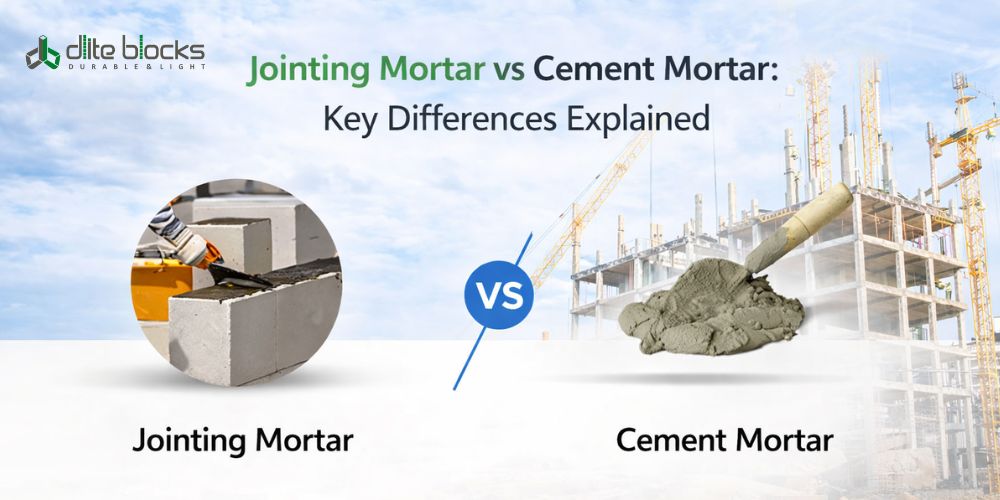
jointing mortar

Jointing mortar vs cement mortar comparison for construction

Jointing Mortar vs Cement Mortar: Key Differences Explained

Building a home or any structure requires the right materials to ensure strength and durability. Two of the most common materials used in masonry are jointing mortar and cement mortar. While they may seem similar, understanding their differences is important to use them correctly. Using the wrong type can affect the stability and lifespan of your structure. Trusted brands like Dlite provide high-quality mortar to ensure your construction is safe and long-lasting. When choosing materials, always check with jointing mortar suppliers for the best quality options. What is Jointing Mortar? Jointing mortar is a type of mortar specifically made for filling gaps or joints between bricks, stones, or blocks. Its main role is not to provide structural strength but to bind building elements together neatly. This mortar is usually softer than cement mortar, allowing it to fill uneven gaps and create a smooth finish. Many builders prefer aac block jointing mortar for lightweight blocks as it provides excellent adhesion and finish. Benefits of Jointing Mortar Jointing mortar is ideal for finishing walls and pointing gaps to give a polished look. Many builders prefer high-quality brands like Dlite Blocks because their mortars ensure durability and better adhesion, and top jointing mortar suppliers can guide you on the right type for your project. What is Cement Mortar? Cement mortar is a mix of cement, sand, and water, sometimes with additives to improve strength. Unlike jointing mortar, it is mainly used as a structural material for laying bricks or blocks. Cement mortar hardens over time, giving walls and structures strength and stability. When constructing walls with AAC blocks, using a compatible aac block jointing mortar alongside cement mortar ensures maximum durability. Benefits of Cement Mortar Cement mortar is widely used in constructing walls, pillars, and even for plastering surfaces. Choosing a good quality cement mortar, such as the ones offered by Dlite, ensures your walls remain strong and long-lasting. Top block jointing mortar manufacturers also provide guidance on using cement mortar correctly with AAC or clay blocks. Key Differences Between Jointing Mortar and Cement Mortar Feature Jointing Mortar Cement Mortar Purpose Fills gaps and joints, mainly for finishing with aac block jointing mortar Provides strength, used for building walls and structures Composition Cement, sand, and water (sometimes lime for smoothness) from trusted jointing mortar suppliers Cement, sand, and water (can include additives for strength) Strength Softer, less load-bearing Stronger, can support structural loads Flexibility Flexible, fills uneven joints easily Hardens into solid structure, less flexible Use Pointing, sealing, finishing walls Brick/block laying, plaster base, wall construction Workability Easy to spread and smooth Slightly stiffer, requires careful mixing Weather Resistance Offers moderate protection High resistance to weather and water When to Use Each Type Using the right mortar at the right place is essential for building safely: By understanding these uses, builders can avoid mistakes that may compromise the stability of walls and buildings. Always consult jointing mortar suppliers or block jointing mortar manufacturers for the best combination of mortars for your construction needs. Conclusion Both jointing mortar and cement mortar play crucial roles in construction. While jointing mortar focuses on bonding and finishing, cement mortar ensures strength and durability. Brands like Dlite Blocks provide high-quality options for both types, helping builders achieve better results with longer-lasting structures. Choosing the right mortar not only improves the safety and strength of your building but also enhances its appearance. Always match the mortar type with the purpose of the construction and consult jointing mortar suppliers or block jointing mortar manufacturers to get the best results.

Jointing Mortar vs Cement Mortar: Key Differences Explained Read More »
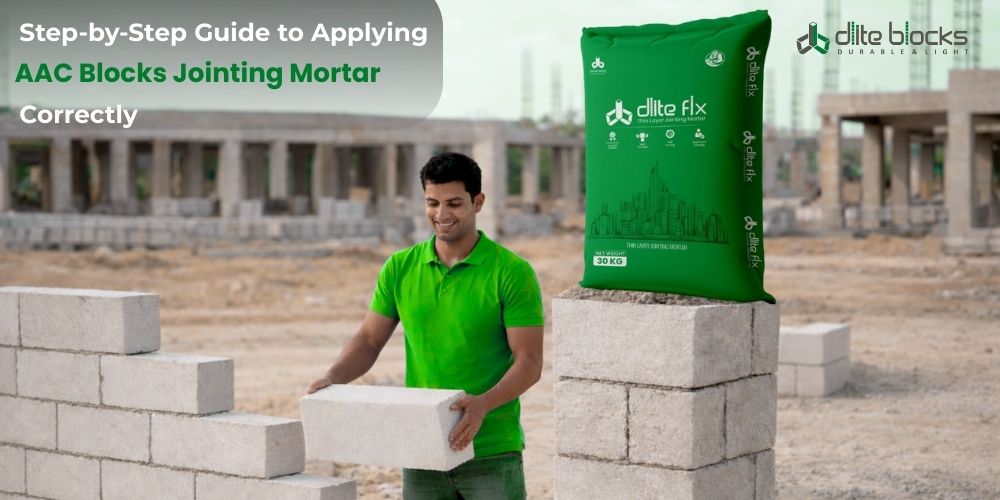
AAC blocks jointing mortar application

Step-by-Step Guide to Applying AAC Blocks Jointing Mortar Correctly

Building strong and durable walls requires the right materials and proper techniques. When working with Dlite Blocks, using the correct aac block jointing mortar is key to achieving a stable, long-lasting structure. Unlike traditional cement mortar, aac block jointing mortar is applied in thin layers, ensures strong adhesion and speeds up construction. This guide will take you step by step on how to apply Dlite Blocks jointing mortar correctly for the best results. What is AAC Block Jointing Mortar? AAC block jointing mortar is a ready-to-use adhesive specially designed for Autoclaved Aerated Concrete (AAC) blocks. Unlike conventional cement mortar that requires thick layers of 10–12 mm, this mortar is applied in thin layers of 3–5 mm. It provides better bonding, reduces material waste, and ensures a smooth finish. Benefits of AAC Block Jointing Mortar Materials and Tools Needed Before starting, gather all materials and tools: Materials: Tools: Step 1: Surface Preparation Clean the AAC blocks to remove dust, dirt, and loose particles. Slightly moisten the blocks to prevent rapid absorption of water from the mortar. This ensures better adhesion. Step 2: Mixing the Mortar Tip: Only mix as much mortar as you can use in 1–2 hours. Step 3: Applying the Mortar Step 4: Cleaning and Alignment Immediately remove excess mortar that squeezes out from joints. Check each block for proper alignment before continuing to the next layer. Repeat the process until the wall is complete. Step 5: Curing Unlike traditional cement mortar, aac block jointing mortar requires minimal curing. Light water sprinkling after 24 hours can improve durability, but generally, it sets quickly on its own. Best Practices Common Mistakes to Avoid Conclusion Using Dlite Blocks with high-quality aac block jointing mortar ensures strong, durable, and thermally efficient walls. By following this step-by-step guide, you can build walls that are crack-free, aligned, and long-lasting. Always source your materials from trusted aac block jointing mortar manufacturers or jointing mortar suppliers for consistent results. Strong walls begin with the right bond, and the correct mortar makes all the difference. With proper preparation, careful application, and attention to detail, Dlite Blocks and aac block jointing mortar provide a reliable solution for modern masonry construction. Frequently Asked Questions! 1. What is AAC block jointing mortar?AAC block jointing mortar is a ready-to-use adhesive designed for joining AAC blocks. It forms thin, strong joints, reduces material waste, and gives smooth, durable walls. 2. How thick should the mortar layer be for Dlite Blocks? The mortar layer should be thin, usually 3–5 mm, to ensure strong bonding and prevent cracks. 3. Can I use regular cement mortar instead of AAC block jointing mortar?Regular cement mortar can be used, but it requires thicker layers, more curing time, and may result in weaker joints. AAC block jointing mortar is faster, stronger, and more efficient. 4. How do I mix AAC block jointing mortar correctly?Mix the mortar with clean water in a 3:1 ratio (three parts mortar, one part water) until smooth. Let it rest for 5 minutes, then re-mix before applying. Avoid adding extra water. 5. Do I need to water-cure AAC block jointing mortar? Minimal curing is needed. A light sprinkling of water after 24 hours can help, but most modern mortars set quickly on their own.

Step-by-Step Guide to Applying AAC Blocks Jointing Mortar Correctly Read More »

aac block jointing mortar manufacturers

How AAC Block Jointing Mortar Reduces Cracks and Increases Structural Integrity

When it comes to construction, the strength and durability of buildings matter a lot. One product that plays an important role in ensuring the quality of buildings is AAC block jointing mortar. Dlite, a trusted name among AAC block jointing mortar manufacturers, offers a high-quality solution that reduces cracks and increases the overall strength of buildings. Dlite, one of the leading block jointing mortar manufacturers in India, provides high-quality jointing mortar that ensures buildings stay strong and crack-free. In this blog, we will discuss how jointing mortar works, its benefits, and why Dlite’s product stands out. How Does It Reduce Cracks? Cracks in buildings are a common problem, but with the right jointing mortar, this issue can be greatly reduced. Dlite’s AAC block jointing mortar has special properties that prevent cracks from forming. Here is how it works: How Does It Increase Structural Integrity? Structural integrity means how well a building can hold up against stress, wear, and tear over time. Using the right jointing mortar, like Dlite’s, can make a significant difference in this area. Here are a few reasons why: Why Choose Dlite? As one of the top AAC block jointing mortar manufacturers, Dlite offers high-quality products that you can trust. Whether you are working on small projects or large-scale construction, Dlite’s jointing mortar ensures strength, durability, and safety. With years of experience, Dlite has become a preferred choice among block jointing mortar manufacturers in India, known for its commitment to quality. Conclusion Choosing the right jointing mortar is essential for the long-lasting health of any building. Dlite’s AAC block jointing mortar reduces cracks and increases the structural integrity of your construction projects. With its water resistance, flexible bonding, and strong durability, Dlite’s mortar ensures that your buildings remain strong and secure for years to come. If you are looking for reliable AAC block jointing mortar manufacturers in India, Dlite is the name you can trust. With quality products and excellent customer service, Dlite is here to help your projects succeed.

How AAC Block Jointing Mortar Reduces Cracks and Increases Structural Integrity Read More »

About

Dlite Blocks is a leading manufacturer of high-quality AAC Fly Ash Blocks, redefining construction standards with unwavering commitment to precision and innovation.

Our Certification

Social Links

Copyright © 2026 Dlite Blocks Pvt. Ltd.
Powered By Marketing in Mars
Scroll to Top