Blog

Your blog category

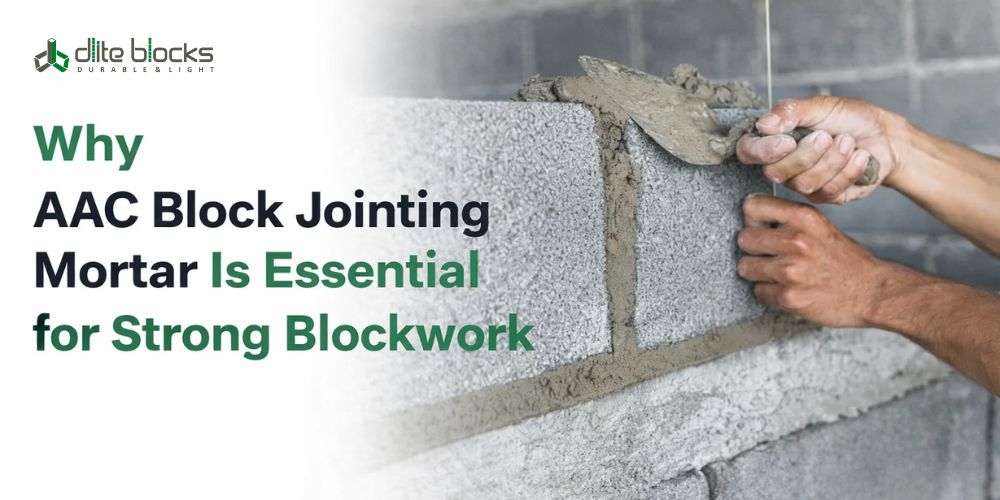
Applying AAC block jointing mortar on wall

Why AAC Block Jointing Mortar Is Essential for Strong Blockwork

When people plan a modern building today they often focus on choosing the right blocks but forget one equally important element that holds everything together. The choice of AAC block jointing mortar plays a huge role in the strength, durability and finish of any AAC block wall. Many construction issues like wall cracks, uneven surfaces and weak bonding happen not because of poor blocks but because the wrong mortar was used. In this detailed guide we will talk about why AAC block jointing mortar is not optional but essential for strong blockwork. We will also explain how it solves real site problems, saves cost, improves wall life and gives better results than traditional cement mortar. If you are a builder, contractor architect or even a home owner this guide will help you make the right decision. Understanding AAC Blocks and Why Regular Mortar Fails AAC blocks are lightweight porous and precision made blocks designed for modern construction. Unlike red bricks these blocks have smooth surfaces and accurate dimensions. Because of this nature they need a bonding material that matches their structure. Using regular cement sand mortar with AAC blocks creates several problems. The thick joints do not match the block design. Shrinkage cracks appear after curing. Extra water absorption weakens the bond. Over time the wall starts showing visible defects. This is where AAC block jointing mortar becomes important. It is specially made to work with AAC blocks and gives consistent bonding without stressing the blocks. What Is AAC Block Jointing Mortar and How It Works AAC block jointing mortar is a ready mix dry mortar designed for thin bed application. It is made with carefully graded sand cement and performance additives that improve bonding strength and flexibility. Unlike traditional mortar which needs thick joints this mortar works perfectly with thin joints usually around three to four millimeters. Thin joints reduce material usage, improve wall alignment and increase overall wall strength. Because it is factory manufactured the quality remains consistent at every site. This consistency plays a big role in maintaining construction standards especially in large projects. Stronger Bonding Means Longer Wall Life One of the main reasons builders prefer AAC block jointing mortar is its superior bonding strength. AAC blocks are lightweight and porous so they need a mortar that penetrates the surface and grips the block firmly. This mortar forms a strong chemical and mechanical bond with AAC blocks. The result is a wall that behaves like one solid structure instead of individual blocks stacked together. This strength reduces chances of cracks seepage and structural weakness over time. For areas exposed to temperature changes and moisture this strong bonding becomes even more important. Thin Joints Improve Structural Stability Traditional mortar joints are thick and uneven. These joints become weak points in the wall. In contrast AAC block jointing mortar uses thin joints that distribute load evenly across the wall. Thin joints also reduce thermal bridges which improves insulation. This means the building stays cooler in summer and warmer in winter. Better insulation directly impacts energy savings and indoor comfort. Because the joints are thin the wall surface becomes smooth and even reduces plaster thickness later. Faster Construction and Lower Labor Cost Speed is a big factor in modern construction. AAC block jointing mortar helps complete masonry work much faster than traditional mortar. Since it is a ready mix product there is no need to measure sand and cement on site. Workers just add water and start application. The thin layer spreads easily and blocks align quickly due to precise dimensions. Faster work means lower labor cost and timely project completion. This is one of the biggest reasons contractors prefer this mortar for large residential and commercial projects. Reduced Material Wastage and Better Cost Control Using thick cement mortar leads to high material wastage. Excess mortar falls during application and unused mix often gets discarded. AAC block jointing mortar requires much less quantity per square meter. Thin joints use less material and almost no wastage occurs. This helps control material cost and improves overall project budgeting. Over the entire project this saving becomes significant especially in multi floor construction. Improved Finish and Less Plaster Consumption A common complaint in masonry work is uneven walls that require heavy plastering. Thick joints cause level differences which increase plaster thickness. With AAC block jointing mortar the wall surface remains even and smooth. This reduces plaster thickness and sometimes allows direct putty application. Less plaster means lower material cost, faster finishing work and reduced load on the structure. It also improves the final look of the building. Better Water Resistance and Crack Control Water seepage and cracks are major concerns in any building. Poor quality mortar absorbs water and expands which leads to cracks. AAC block jointing mortar contains additives that improve water resistance and flexibility. This reduces shrinkage cracks and protects the wall from moisture damage. In bathrooms, kitchens and external walls this feature plays a very important role in maintaining wall health. Why Builders Trust AAC Block Jointing Mortar Over Cement Mortar Builders who switch to AAC block jointing mortar rarely go back to traditional methods. The reasons are clear. Better bonding, faster work, cleaner sites and predictable results. Traditional mortar depends heavily on site mixing water quality and worker skill. In contrast jointing mortar offers consistent quality every time. This reliability builds confidence among contractors and engineers who want fewer complaints and rework after project completion. Choosing the Right AAC Block Jointing Mortar for Your Project Not all jointing mortars are the same. Quality matters a lot. Always choose a product from a trusted manufacturer who understands AAC block behavior. A good AAC block jointing mortar should have high adhesive strength, good workability and proper setting time. It should spread easily without slipping and hold blocks firmly in position. Brands like Dlite Blocks understand the complete AAC ecosystem. Their experience with AAC blocks helps ensure compatibility between blocks and mortar which improves overall wall performance. Common Site Problems Solved

Why AAC Block Jointing Mortar Is Essential for Strong Blockwork Read More »

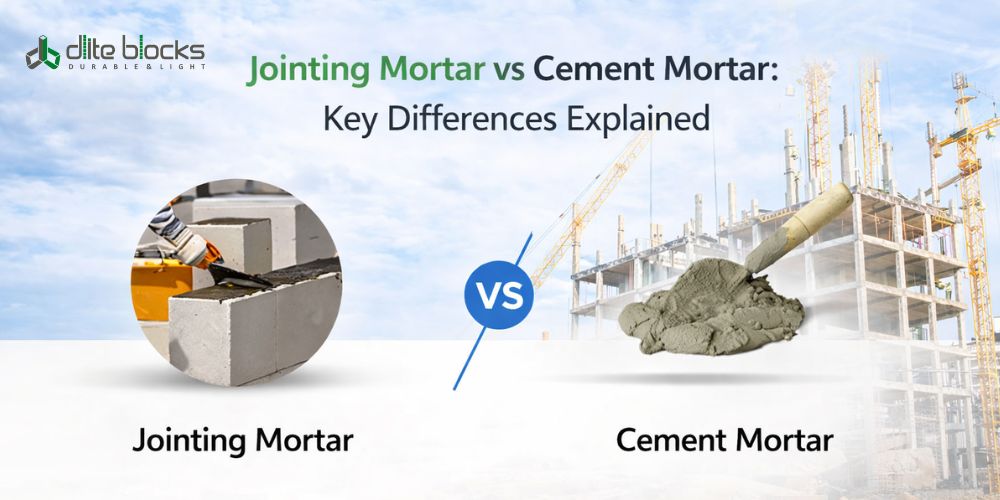
Jointing mortar vs cement mortar comparison for construction

Jointing Mortar vs Cement Mortar: Key Differences Explained

Building a home or any structure requires the right materials to ensure strength and durability. Two of the most common materials used in masonry are jointing mortar and cement mortar. While they may seem similar, understanding their differences is important to use them correctly. Using the wrong type can affect the stability and lifespan of your structure. Trusted brands like Dlite provide high-quality mortar to ensure your construction is safe and long-lasting. When choosing materials, always check with jointing mortar suppliers for the best quality options. What is Jointing Mortar? Jointing mortar is a type of mortar specifically made for filling gaps or joints between bricks, stones, or blocks. Its main role is not to provide structural strength but to bind building elements together neatly. This mortar is usually softer than cement mortar, allowing it to fill uneven gaps and create a smooth finish. Many builders prefer aac block jointing mortar for lightweight blocks as it provides excellent adhesion and finish. Benefits of Jointing Mortar Jointing mortar is ideal for finishing walls and pointing gaps to give a polished look. Many builders prefer high-quality brands like Dlite Blocks because their mortars ensure durability and better adhesion, and top jointing mortar suppliers can guide you on the right type for your project. What is Cement Mortar? Cement mortar is a mix of cement, sand, and water, sometimes with additives to improve strength. Unlike jointing mortar, it is mainly used as a structural material for laying bricks or blocks. Cement mortar hardens over time, giving walls and structures strength and stability. When constructing walls with AAC blocks, using a compatible aac block jointing mortar alongside cement mortar ensures maximum durability. Benefits of Cement Mortar Cement mortar is widely used in constructing walls, pillars, and even for plastering surfaces. Choosing a good quality cement mortar, such as the ones offered by Dlite, ensures your walls remain strong and long-lasting. Top block jointing mortar manufacturers also provide guidance on using cement mortar correctly with AAC or clay blocks. Key Differences Between Jointing Mortar and Cement Mortar Feature Jointing Mortar Cement Mortar Purpose Fills gaps and joints, mainly for finishing with aac block jointing mortar Provides strength, used for building walls and structures Composition Cement, sand, and water (sometimes lime for smoothness) from trusted jointing mortar suppliers Cement, sand, and water (can include additives for strength) Strength Softer, less load-bearing Stronger, can support structural loads Flexibility Flexible, fills uneven joints easily Hardens into solid structure, less flexible Use Pointing, sealing, finishing walls Brick/block laying, plaster base, wall construction Workability Easy to spread and smooth Slightly stiffer, requires careful mixing Weather Resistance Offers moderate protection High resistance to weather and water When to Use Each Type Using the right mortar at the right place is essential for building safely: By understanding these uses, builders can avoid mistakes that may compromise the stability of walls and buildings. Always consult jointing mortar suppliers or block jointing mortar manufacturers for the best combination of mortars for your construction needs. Conclusion Both jointing mortar and cement mortar play crucial roles in construction. While jointing mortar focuses on bonding and finishing, cement mortar ensures strength and durability. Brands like Dlite Blocks provide high-quality options for both types, helping builders achieve better results with longer-lasting structures. Choosing the right mortar not only improves the safety and strength of your building but also enhances its appearance. Always match the mortar type with the purpose of the construction and consult jointing mortar suppliers or block jointing mortar manufacturers to get the best results.

Jointing Mortar vs Cement Mortar: Key Differences Explained Read More »

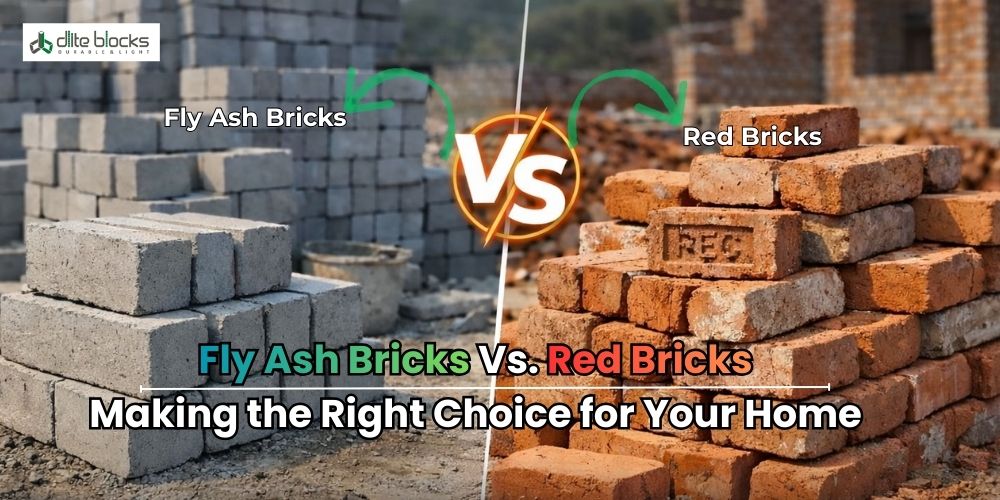
Fly ash bricks at construction site

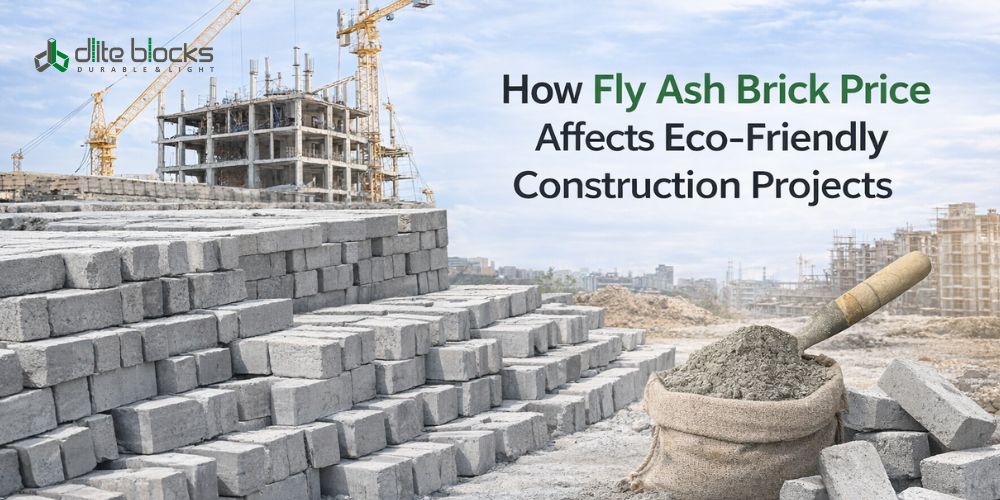
How Fly Ash Brick Price Affects Eco-Friendly Construction Projects

Eco-friendly construction is becoming very popular today. Builders, architects, and homeowners are looking for materials that are strong, affordable, and good for the environment. One such material is the fly ash brick, which is often compared with aac blocks for modern green buildings. These bricks are made using waste from thermal power plants and are known for their durability and eco benefits. But one important question always comes up: how does the fly ash brick price affect eco-friendly construction projects? What Are Fly Ash Bricks? Fly ash bricks are building blocks made from fly ash, which is a fine powder left after burning coal. Just like autoclaved aerated concrete blocks, they are produced using industrial by-products instead of natural soil. Instead of throwing this waste into landfills, it is reused to make bricks. This helps reduce pollution and saves natural resources like clay and soil. Why Price Matters in Eco-Friendly Construction In any construction project, cost plays a big role. Eco-friendly construction aims to protect nature, but it also needs to stay within budget. If the cost of materials is too high, builders may avoid using sustainable options, such as fly ash brick price-based alternatives. The fly ash brick price directly affects the total project cost. When prices are reasonable, builders are more likely to choose fly ash bricks over traditional clay bricks. This helps promote green building practices on a larger scale. Fly Ash Brick Price vs Traditional Brick Price In many regions, fly ash bricks are priced similarly to or slightly lower than clay bricks. Compared to aac blocks, they are often easier to source locally. This is because fly ash is a waste material and easily available. Also, the manufacturing process consumes less energy compared to firing clay bricks in kilns. Even if the fly ash brick price is sometimes a bit higher, it often balances out in the long run. These bricks reduce plastering costs due to their smooth surface and lower mortar usage because of their uniform size. Long-Term Cost Benefits Eco-friendly construction is not just about initial cost. It is also about long-term savings. Fly ash bricks, like autoclaved aerated concrete blocks, are strong and absorb less water. This means fewer cracks, less repair work, and longer building life. Because of better insulation, buildings made with the fly ash bricks can stay cooler in summer and warmer in winter. This can reduce electricity bills over time. So, even if the fly ash brick price feels slightly higher at the start, it can save money in the future. Impact on Sustainable Projects Affordable fly ash brick price encourages more eco-friendly projects. When builders see that green materials fit their budget alongside options like aac blocks, they are more confident in choosing them. This leads to reduced use of natural clay, lower carbon emissions, and less damage to agricultural land. Large housing projects, commercial buildings, and government construction programs often prefer fly ash bricks for this reason. Brands like Dlite Blocks offer quality fly ash bricks that meet construction standards while supporting sustainable building goals. Availability and Transportation Costs Another factor that affects fly ash brick price is location. If fly ash bricks are manufactured close to the construction site, transportation costs are low, similar to sourcing autoclaved aerated concrete blocks locally. This keeps the price affordable and makes eco-friendly construction more practical. Local manufacturers and trusted brands such as Dlite Blocks help maintain stable pricing and consistent quality, which is important for large-scale green projects. Government Support and Awareness In many places, governments promote the use of fly ash bricks by offering guidelines and support for eco-friendly materials along with aac blocks. This increases demand and helps stabilize prices. As awareness grows, production increases, and costs can become even more competitive. When the fly ash brick price remains fair, it supports the overall growth of green construction and helps protect the environment. Final Thoughts The fly ash brick price plays a key role in eco-friendly construction projects. Affordable pricing makes sustainable building materials more accessible and attractive to builders and homeowners, just like autoclaved aerated concrete blocks. With benefits like durability, cost savings, and environmental protection, fly ash bricks are a smart choice for modern construction. Choosing reliable suppliers like Dlite Blocks ensures quality, value for money, and a step toward a greener future. By understanding pricing and long-term benefits, eco-friendly construction can become both practical and profitable.

How Fly Ash Brick Price Affects Eco-Friendly Construction Projects Read More »

AAC blocks for offsite construction by Dlite Blocks

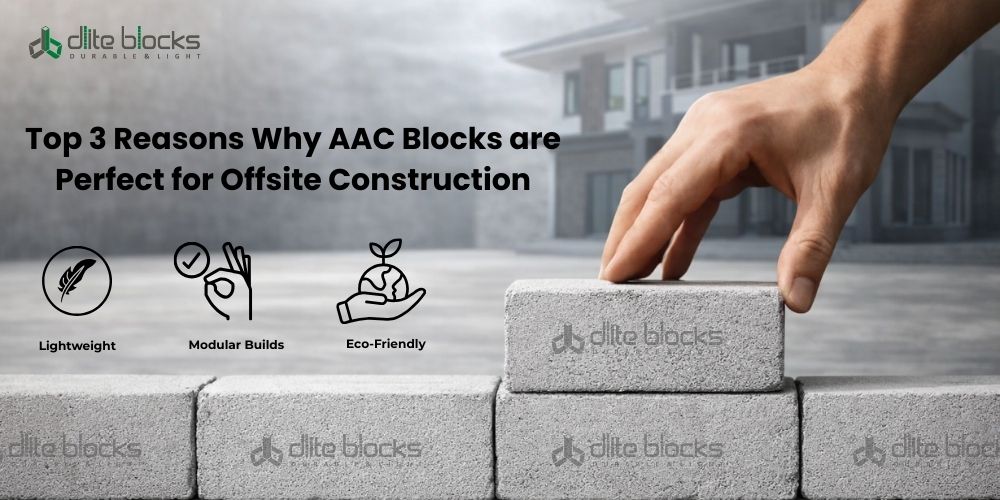
Top 3 Reasons Why AAC Blocks are Perfect for Offsite Construction

Offsite construction is becoming very popular in today’s construction industry. In this method, many building parts are made in a factory and then brought to the site for quick assembly. This helps save time, reduce waste, and improve overall building quality. To make offsite construction successful, choosing the right material is very important. This is where aac blocks come in. These modern building blocks are strong, lightweight, and easy to use. Dlite AAC Blocks are specially designed to support offsite and prefabricated construction methods. Made from Autocrate aerated concrete, these blocks help builders complete projects faster and more efficiently. Let us understand the top 3 reasons why AAC blocks are the perfect choice for offsite construction. 1. Lightweight and Easy to Transport One of the biggest benefits of AAC blocks is their lightweight nature. Compared to traditional red bricks or concrete blocks, aac blocks are much lighter. This makes them easy to lift, move, and transport from the factory to the construction site. Dlite Blocks are simple to handle, which reduces worker fatigue and makes installation faster. Since the blocks are light, they can be stacked and shifted easily during offsite construction. This saves both time and labor cost. Lightweight blocks also reduce the total load on the building structure. This means less pressure on the foundation and support columns. It is especially helpful for high-rise buildings, prefabricated structures, and buildings constructed on weak soil. In earthquake-prone areas, lighter materials provide better safety and performance. Many builders prefer sourcing materials from a reliable aac block factory in Maharashtra because factories follow strict quality checks and ensure consistent block strength and size. This makes transportation and installation smoother for offsite projects. 2. Perfect for Prefabrication and Modular Construction Offsite construction mainly depends on prefabrication. Walls, panels, and sections of buildings are prepared in advance at a factory and then assembled at the site. AAC blocks are ideal for this method. Dlite Blocks are uniform in size and shape, making them perfect for modular construction. Blocks made from Autocrate aerated concrete can be easily used to create wall panels that fit perfectly during installation. This reduces errors and improves construction speed. Prefabrication in a controlled factory environment ensures better quality control. There is less material wastage, fewer mistakes, and better finishing. Since most of the work is done before reaching the site, construction becomes faster and cleaner. Another major advantage is reduced onsite waste. Traditional construction creates dust, broken bricks, and excess material. With prefabricated AAC block panels, waste is minimized, making the process eco-friendly and site-friendly. By using high-quality aac blocks from a trusted factory, builders can complete more projects in less time without compromising on quality. 3. Versatile, Eco-Friendly, and Energy Efficient AAC blocks are known for their flexibility and versatility. They can be easily cut, shaped, and modified to suit different design needs. This makes them suitable for homes, offices, schools, hospitals, and commercial buildings. Dlite Blocks allow architects and builders to create both simple and complex designs. Since the blocks are easy to work with, construction becomes smoother and more creative. AAC blocks are also an eco-friendly building material. They use fewer natural resources and help reduce environmental impact. Blocks made from Autocrate aerated concrete offer excellent thermal insulation. Buildings stay cooler in summer and warmer in winter, reducing the need for air conditioning and heating. They also provide good sound insulation, making indoor spaces quieter and more comfortable. These features help save energy and reduce electricity bills over time. For builders and homeowners who prefer sustainable construction, AAC blocks are a smart choice. Many projects today choose materials from an aac block factory in Maharashtra because of reliable supply, consistent quality, and eco-friendly production practices. Conclusion Offsite construction focuses on speed, efficiency, and quality. AAC blocks meet all these needs perfectly. Their lightweight nature, suitability for prefabrication, and eco-friendly features make them an excellent choice for modern construction. With Dlite Blocks, builders can enjoy faster construction, reduced waste, lower costs, and long-lasting performance. Made from Autocrate aerated concrete, these aac blocks support sustainable and smart building practices. If you are planning an offsite construction project, choosing high-quality AAC blocks will help you build stronger, faster, and better. Frequently Asked Questions! 1. What are AAC blocks? AAC blocks are lightweight building blocks made from Autocrate aerated concrete. They are strong, durable, and widely used in modern construction, especially for offsite and prefabricated buildings. 2. Why are AAC blocks good for offsite construction? AAC blocks are lightweight, easy to transport, and ideal for prefabrication. These qualities help reduce construction time, lower labor costs, and improve overall building quality in offsite construction projects. 3. Are Dlite AAC Blocks suitable for all types of buildings? Yes, Dlite AAC Blocks can be used for homes, apartments, offices, schools, hospitals, and commercial buildings. Their versatility and easy handling make them suitable for many construction needs. 4. How do AAC blocks help in saving energy? AAC blocks provide excellent thermal insulation. Buildings made with AAC blocks stay cooler in summer and warmer in winter, which reduces the need for air conditioning and heating and helps save energy. 5. Why should builders choose an AAC block factory in Maharashtra? An aac block factory in Maharashtra ensures consistent quality, reliable supply, and eco-friendly production. This makes it easier for builders to plan and complete offsite construction projects efficiently.

Top 3 Reasons Why AAC Blocks are Perfect for Offsite Construction Read More »

AAC blocks jointing mortar application

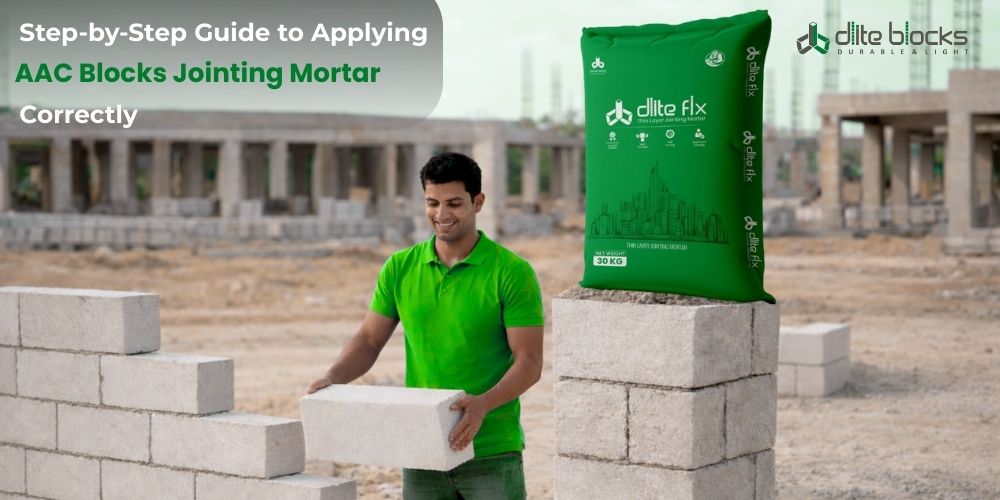
Step-by-Step Guide to Applying AAC Blocks Jointing Mortar Correctly

Building strong and durable walls requires the right materials and proper techniques. When working with Dlite Blocks, using the correct aac block jointing mortar is key to achieving a stable, long-lasting structure. Unlike traditional cement mortar, aac block jointing mortar is applied in thin layers, ensures strong adhesion and speeds up construction. This guide will take you step by step on how to apply Dlite Blocks jointing mortar correctly for the best results. What is AAC Block Jointing Mortar? AAC block jointing mortar is a ready-to-use adhesive specially designed for Autoclaved Aerated Concrete (AAC) blocks. Unlike conventional cement mortar that requires thick layers of 10–12 mm, this mortar is applied in thin layers of 3–5 mm. It provides better bonding, reduces material waste, and ensures a smooth finish. Benefits of AAC Block Jointing Mortar Materials and Tools Needed Before starting, gather all materials and tools: Materials: Tools: Step 1: Surface Preparation Clean the AAC blocks to remove dust, dirt, and loose particles. Slightly moisten the blocks to prevent rapid absorption of water from the mortar. This ensures better adhesion. Step 2: Mixing the Mortar Tip: Only mix as much mortar as you can use in 1–2 hours. Step 3: Applying the Mortar Step 4: Cleaning and Alignment Immediately remove excess mortar that squeezes out from joints. Check each block for proper alignment before continuing to the next layer. Repeat the process until the wall is complete. Step 5: Curing Unlike traditional cement mortar, aac block jointing mortar requires minimal curing. Light water sprinkling after 24 hours can improve durability, but generally, it sets quickly on its own. Best Practices Common Mistakes to Avoid Conclusion Using Dlite Blocks with high-quality aac block jointing mortar ensures strong, durable, and thermally efficient walls. By following this step-by-step guide, you can build walls that are crack-free, aligned, and long-lasting. Always source your materials from trusted aac block jointing mortar manufacturers or jointing mortar suppliers for consistent results. Strong walls begin with the right bond, and the correct mortar makes all the difference. With proper preparation, careful application, and attention to detail, Dlite Blocks and aac block jointing mortar provide a reliable solution for modern masonry construction. Frequently Asked Questions! 1. What is AAC block jointing mortar?AAC block jointing mortar is a ready-to-use adhesive designed for joining AAC blocks. It forms thin, strong joints, reduces material waste, and gives smooth, durable walls. 2. How thick should the mortar layer be for Dlite Blocks? The mortar layer should be thin, usually 3–5 mm, to ensure strong bonding and prevent cracks. 3. Can I use regular cement mortar instead of AAC block jointing mortar?Regular cement mortar can be used, but it requires thicker layers, more curing time, and may result in weaker joints. AAC block jointing mortar is faster, stronger, and more efficient. 4. How do I mix AAC block jointing mortar correctly?Mix the mortar with clean water in a 3:1 ratio (three parts mortar, one part water) until smooth. Let it rest for 5 minutes, then re-mix before applying. Avoid adding extra water. 5. Do I need to water-cure AAC block jointing mortar? Minimal curing is needed. A light sprinkling of water after 24 hours can help, but most modern mortars set quickly on their own.

Step-by-Step Guide to Applying AAC Blocks Jointing Mortar Correctly Read More »

AAC blocks for schools and hospitals

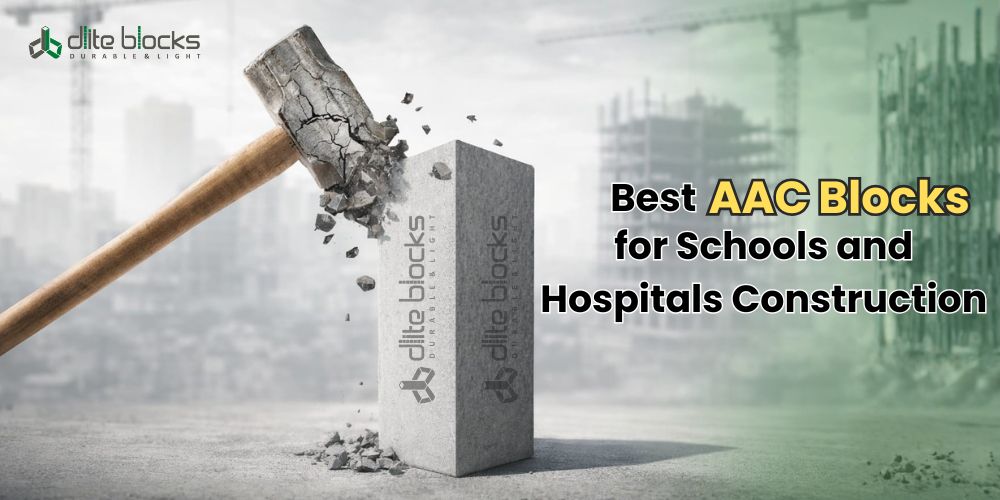
Best AAC Blocks for Schools and Hospitals Construction

Choosing the right building material is one of the most important decisions when planning school construction or hospital construction. These spaces are not just buildings. They are environments where children learn and patients heal. Safety, comfort, durability and cost efficiency all matter equally. This is why many architects, builders and contractors now prefer AAC blocks for educational and healthcare projects. In this detailed guide we will explain why best AAC blocks for schools and hospitals construction are becoming the first choice across India. We will also address common concerns that buyers have and help you understand how this material solves real construction problems while meeting modern building standards. What Are AAC Blocks and Why They Matter AAC blocks also known as Autoclaved Aerated Concrete blocks are lightweight precast building blocks made using cement fly ash lime and aluminum powder. During manufacturing millions of tiny air pockets are formed inside the block. These air pockets give AAC blocks their unique properties. For projects like schools and hospitals where long term performance matters more than short term savings AAC blocks offer a strong balance of safety comfort and efficiency. Builders searching for lightweight blocks for construction or eco-friendly building materials often choose AAC because it meets both structural and environmental requirements. Why AAC Blocks Are Ideal for School Buildings School buildings require a calm and safe environment. Noise heat and safety risks can directly affect students and staff. Better Thermal Comfort for Classrooms AAC blocks provide excellent thermal insulation. This means classrooms stay cooler in summer and warmer in winter. Schools built with AAC blocks for school buildings often reduce their air conditioning and heating costs. Comfortable classrooms improve focus and reduce fatigue among students and teachers. Noise Reduction for Better Learning One of the biggest problems in school buildings is noise. AAC blocks have strong sound insulation properties. They help reduce noise from outside traffic playgrounds and neighboring classrooms. This makes soundproof blocks for schools an important reason why AAC blocks are widely used. Fire Safety for Children Fire safety is non-negotiable in schools. AAC blocks are fire resistant and can withstand high temperatures for several hours. They do not emit toxic gases during fire exposure. For anyone searching fire resistant blocks for schools AAC blocks clearly stand out. Why Hospitals Prefer AAC Blocks Hospitals have stricter requirements than any other type of building. Hygiene, patient comfort and safety are critical. Clean and Hygienic Walls AAC blocks have a smooth surface that reduces dust accumulation. This helps maintain hygiene standards inside hospitals. The blocks are also resistant to pests and mold. This makes AAC blocks for hospital construction a practical choice for long term healthcare facilities. Sound Control for Patient Recovery Silence is essential for patient recovery. AAC blocks reduce noise between wards corridors and treatment rooms. This creates a peaceful environment for patients and medical staff. Many builders look specifically for soundproof AAC blocks for hospitals because of this benefit. Structural Safety with Lightweight Design AAC blocks are lightweight compared to traditional bricks. This reduces the overall dead load on the structure. Hospitals often have multiple floors, heavy equipment and continuous movement. Using lightweight AAC blocks improves seismic performance and structural safety. Cost Efficiency and Faster Construction Budget control is a major concern in large institutional projects. AAC blocks help in multiple ways: Larger size reduces the number of joints, speeding up construction. Faster construction lowers labor costs. Lightweight nature reduces foundation and steel requirements. Builders searching for cost-effective building materials for schools and hospitals often find AAC blocks to be a smart investment. Energy Efficiency and Sustainability Educational and healthcare institutions are increasingly focusing on sustainability. AAC blocks are manufactured using fly ash which is an industrial waste product. This makes them an eco-friendly building material. Their thermal insulation reduces energy consumption for cooling and heating. Over time this lowers operational costs and carbon footprint. For projects aiming for green building certifications AAC blocks support sustainable construction goals. Durability and Low Maintenance AAC blocks do not rot, corrode or decay. They maintain strength and shape for decades. This is especially important for public buildings like schools and hospitals where renovation costs can be high. Walls built with AAC blocks require less maintenance and fewer repairs over time. People searching for long lasting construction blocks or low maintenance building materials often choose AAC blocks for this reason. Choosing the Best AAC Blocks for Institutional Projects Not all AAC blocks are the same. Quality, consistency, and technical support matter. When selecting the best AAC blocks in India, consider: Compressive strength Density Dimensional accuracy Supplier reliability Brands like Dlite Blocks are known for maintaining quality standards while supporting builders with technical guidance. This ensures smoother execution on site without unnecessary material waste. Frequently Asked Questions! 1. Are AAC blocks strong enough for multi storey hospitals Yes AAC blocks have sufficient compressive strength for multi storey buildings when used with proper structural design and reinforcement. 2. Do AAC blocks reduce construction time Yes due to their larger size and easy handling AAC blocks significantly reduce construction time compared to traditional bricks. 3. Are AAC blocks safe for children and patients AAC blocks are non toxic fire resistant and do not release harmful substances making them safe for sensitive environments. 4. Can AAC blocks handle heavy hospital equipment loads Yes when combined with proper structural planning AAC block walls can support fixtures and equipment safely. 5. Are AAC blocks suitable for seismic zones Yes, their lightweight nature improves earthquake resistance and reduces structural stress. 6. Do AAC blocks require special plaster or finish AAC blocks work well with standard plaster systems and also allow smooth finishing with minimal material usage. A Practical Step Toward Smarter Construction Choices If you are planning a school or hospital project and want a balance of safety, comfort, durability and cost control, choosing the right AAC blocks makes a real difference. Materials that support better learning environments and faster patient recovery are not just technical choices, they are

Best AAC Blocks for Schools and Hospitals Construction Read More »

Block Jointing Mortar for Home Renovation Projects: Why It is the Best Choice?

When you are renovating your home, one of the most important things to think about is the materials you use. One such material that is becoming very popular is AAC Block Jointing Mortar. It is a great choice for home renovation projects, and here is why it should be at the top of your list. What is AAC Block Jointing Mortar? AAC block jointing mortar is a specially made mixture that is used to join AAC blocks together. AAC stands for Autoclaved Aerated Concrete, which is a type of lightweight block used in construction. This mortar is different from regular cement because it is designed to provide a stronger bond, better insulation, and faster application. It is made to work perfectly with AAC blocks and makes the entire construction or renovation process easier. Why AAC Block Jointing Mortar is the Best Choice ? Where Can You Use AAC Block Jointing Mortar? Why Choose Dlite AAC Block Jointing Mortar Manufacturers? Dlite is one of the best AAC block jointing mortar manufacturers in India. They are known for their quality products that make home renovation projects easier and more efficient. When you choose AAC block jointing mortar from Dlite, you are choosing a trusted brand that is committed to helping you achieve the best results. Conclusion If you are planning a home renovation project, Dlite AAC block jointing mortar is the right choice. It is strong, cost-effective, and helps complete your project faster. Its excellent bonding properties, resistance to cracks, and ability to work in different areas of your home make it the best option. So, when you are looking for block jointing mortar manufacturers in India, Dlite should be your go-to brand. Reach out to them today to make your renovation smoother and more durable!

Block Jointing Mortar for Home Renovation Projects: Why It is the Best Choice? Read More »

Block jointing mortar manufacturers in India

Ways to Maximize Construction Efficiency with Dlite’s AAC Block Jointing Mortar

When it comes to construction, efficiency is key. Every builder wants to complete projects faster, while also ensuring that the work is strong and durable. One way to achieve this is by using AAC Block Jointing Mortar. This special type of mortar is designed to help you build better and quicker. Dlite’s AAC Block Jointing Mortar is perfect for improving construction efficiency.  Here is how it can make a difference. 1. Easy to Use and Mix Dlite’s AAC Block Jointing Mortar is very easy to use. Unlike traditional mortars, you do not have to spend much time mixing it. All you need to do is add water, which is ready to go. This saves time and energy on the construction site. Using a ready-made mix, you can focus more on the building process than preparing the mortar. Many jointing mortar suppliers recommend it because it is convenient and quick to prepare. 2. Strong and Durable Bond One of the best things about Dlite’s AAC Block Jointing Mortar is the strong bond it creates between the blocks. The blocks stick together firmly when you use it, making the structure more stable and durable. This is especially important in tall buildings where the strength of the walls is crucial. Block jointing mortar manufacturers in India ensure that their products meet high standards of quality to ensure a strong bond. 3. Reduces Construction Time Time is money in construction. The faster you can complete a project, the better it is for everyone involved. By using Dlite’s AAC Block Jointing Mortar, you can significantly reduce the time it takes to finish the walls. Since the mortar is easy to apply and bonds quickly, you can move on to the next stage of construction without delays. This is why many builders prefer using products from trusted jointing mortar suppliers. 4. Minimizes Waste Using Dlite’s AAC Block Jointing Mortar helps in reducing waste on the construction site. Traditional mortars often require a lot of material, some of which is wasted. However, with Dlite’s mortar, you can use just the amount needed for each block. This saves money and makes the construction process more environmentally friendly. Block jointing mortar manufacturers in India focus on creating products that help minimize waste and promote sustainable building practices. 5. Improves Thermal Insulation Dlite’s AAC Block Jointing Mortar also improves the thermal insulation of the building. This means that it helps keep the inside of the building cooler in summer and warmer in winter. Good insulation is important because it makes the building more energy-efficient, reducing the need for heating and cooling. Jointing mortar suppliers highlight this benefit as it adds value to the construction process. ConclusionDlite’s AAC Block Jointing Mortar is a game-changer for anyone looking to maximize construction efficiency. It is easy to use, creates a strong bond, saves time, reduces waste, and improves thermal insulation. Whether you are a builder or a contractor, choosing the right mortar can make a big difference in the success of your project. With Block jointing mortar manufacturers in India like Dlite, you can be confident that you are using a high-quality product that will help you achieve the best results.

Ways to Maximize Construction Efficiency with Dlite’s AAC Block Jointing Mortar Read More »

aac blocks

Fire Safety You Can Trust: The Fire Resistance of Dlite AAC Blocks

In the construction industry, fire safety is paramount. The ability of building materials to withstand and contain fire is critical for occupant safety and asset protection. AAC (Autoclaved Aerated Concrete) blocks are at the forefront of this critical area of construction safety, thanks to their exceptional fire resistance. Dlite AAC Blocks is a leading AAC block manufacturer, supplying high-quality blocks with unrivalled fire safety, dependability, and peace of mind. Dlite Blocks, a reputable AAC block manufacturer  in Maharashtra and Madhya Pradesh, is a shining example of excellence in the building business. Our ongoing commitment to precision, innovation, and sustainability assures that each Dlite Block not only meets, but surpasses, industry fire resistant standards.  In this blog, we will look at the fire resistance of Dlite AAC Blocks, examining the aspects that lead to their outstanding performance and emphasising their relevance in guaranteeing the safety and security of buildings and residents. 1. Understanding Fire Resistance in Construction Materials: To comprehend the fire resistance of Dlite AAC blocks, it’s important to first define what makes a construction material fire resistant. Fire resistance is defined as a material’s or assembly’s capacity to survive fire exposure while preventing the spread of flames and smoke. Building codes and regulations frequently require materials to fulfil specific fire resistance ratings, which are obtained using standardised testing methods. 2. The Composition of Dlite AAC Blocks: Dlite AAC Blocks are made from a specific blend of cement, sand, lime, and aluminium powder, which is autoclaved to create a porous structure with superior thermal insulation qualities. This unique composition significantly improves Dlite Blocks’ fire resistance, making them an excellent choice for fire-rated walls, partitions, and facades. 3. Fire Testing and Ratings: Dlite blocks are rigorously tested to ensure their fire resistant qualities. These tests often entail exposing the blocks to high temperatures for a set period of time in order to replicate fire conditions. The performance of the blocks is then evaluated using parameters such as flame spread, smoke output, and structural integrity. Dlite AAC Blocks consistently receive good fire resistance ratings, giving builders and developers confidence in their ability to withstand fire occurrences. Benefits of Fire-Resistant AAC Blocks: Dlite, the AAC Blocks manufacture are fire-resistant, providing several benefits for building projects. First, it improves occupant safety by restricting the spread of fire and smoke, giving more time for escape and firefighting activities. Additionally, fire-resistant AAC blocks help to preserve property and assets by minimising damage and maintaining business continuity in the case of a fire. Furthermore, structures designed using fire-resistant materials may be eligible for insurance discounts and incentives, emphasising the economic advantages of using Dlite AAC Blocks. Applications of Fire-Resistant AAC Blocks: Dlite AAC Blocks can be used for fire-rated walls, partitions, and enclosures, among other applications. Fire-resistant AAC blocks are used in commercial buildings such as offices, hospitals, and hotels to safeguard occupants and assets from fire. In industrial settings where fire dangers are more common, Dlite Blocks provide dependable fire protection for structural elements and enclosures. Residential buildings can also benefit from AAC blocks’ fire resistance, providing the safety and security of homeowners and their families. Conclusion: Finally, Dlite AAC Blocks provide reliable fire safety, providing unrivalled fire resistant properties that improve building safety, security, and resilience. As a leading manufacturer in Maharashtra and Madhya Pradesh, Dlite Blocks continues to redefine construction standards, providing builders, architects, and developers with high-quality AAC blocks that prioritise safety and sustainability.Builders and developers may use Dlite AAC Blocks with confidence, knowing that their structures will have effective fire protection, assuring the safety of occupants and assets. Experience the peace of mind that comes from reliable fire safety. Select Dlite AAC Blocks for your next construction project and build with confidence.

Fire Safety You Can Trust: The Fire Resistance of Dlite AAC Blocks Read More »

AAC Blocks

Application of Dlite AAC Blocks: The versatile choice for building anything you imagine

In the ever-changing face of construction, AAC (autoclaved aerated concrete) blocks have emerged as a game changer, providing the ideal balance of adaptability, durability, and sustainability. Dlite Blocks, a leader in AAC block excellence, is at the forefront of this disruptive trend. Dlite Blocks, a reputable AAC block manufacturer with a strong presence in Maharashtra and Madhya Pradesh, exemplifies the union of innovation with dependability. Dlite Blocks has changed construction standards through an uncompromising commitment to precision and quality, giving builders and developers an exceptional, confident, and sustainable construction experience. AAC blocks serve as the foundation for a variety of projects, including residential buildings, business complexes, industrial structures, and infrastructure projects. Let’s look at the various applications of Dlite, the AAC Blocks in Maharashtra, demonstrating how these lightweight marvels enable architects, builders, and developers to realise their most ambitious projects with simplicity and efficiency. Dlite Blocks, with their remarkable thermal insulation capabilities and versatility in specialised applications, provide limitless possibilities for building anything the imagination can think of.  Join us as we explore the revolutionary potential of AAC blocks and learn why Dlite Blocks is the preferred manufacturer for construction projects in Maharashtra, Madhya Pradesh, and beyond. 1. Residential Construction: Dlite AAC Blocks are transforming residential construction, providing a superior alternative to standard materials. From single-family homes to multi-story apartments, Dlite Blocks offer the strength, durability, and thermal insulation required to create comfortable living environments. Dlite AAC Blocks are versatile and reliable for load-bearing walls, partition walls, and exterior facades, ensuring long-lasting dwellings. 2. Commercial Buildings: Dlite AAC Blocks are an excellent alternative for commercial structures, including offices, retail spaces, and institutions. Their lightweight design and ease of installation make them perfect for projects with short timeframes and budgets. Furthermore, Dlite Blocks’ superior thermal insulation capabilities improve energy efficiency, lowering operational costs and environmental impact throughout the building’s lifecycle. 3. Industrial Structures: Dlite AAC Blocks are the preferred choice for creating strong industrial structures, including warehouses and manufacturing facilities. Their great compressive strength and dimensional stability make them ideal for handling big loads and adverse climatic conditions. Dlite Blocks allow builders to create industrial buildings that prioritise safety, efficiency, and longevity, ensuring peak performance for years to come. 4. Innovative Architectural Designs: Dlite AAC Blocks provide architects with unprecedented freedom to explore unique design concepts and push creative boundaries. Their lightweight and versatile qualities enable the design of one-of-a-kind architectural features such as curving walls, complicated facades, and spatial dividers. Dlite Blocks allow architects to turn their thoughts into reality, creating buildings that are as physically appealing as they are useful. 5. Infrastructure Projects: Dlite AAC Blocks are used in infrastructure projects including bridges, retaining walls and traffic barriers, in addition to building construction. Their durability, stability, and resilience to environmental variables make them an excellent choice for infrastructure projects requiring dependability and longevity. Dlite Blocks enable infrastructure developers to build resilient structures that improve connection, safety, and sustainability in communities. 6. Specialised Applications: Dlite AAC Blocks are utilised in a variety of applications, including fire-rated walls, sound barriers, and thermal insulation panels. Their versatility and adaptability make them appropriate for a variety of applications, allowing builders to handle specific needs with simplicity and speed. Dlite Blocks is a testament to brilliance, creativity, and dependability in the field of AAC block manufacture. As a major manufacturer with a strong presence in Maharashtra and Madhya Pradesh, we have driven improvements in building technology, allowing builders, architects, and developers to realise their ambitions with confidence and inventiveness. Throughout this blog, we’ve looked at how Dlite AAC Blocks may be used for a variety of construction projects due to their lightweight design. From residential buildings to commercial complexes, industrial structures, and infrastructure projects, Dlite Blocks provide unrivalled versatility, durability, and sustainability. In residential buildings, Dlite AAC Blocks provide comfortable living spaces that prioritise energy efficiency and long-term durability. In commercial structures, these blocks help to provide efficient, cost-effective construction solutions that fulfil the needs of modern enterprises. In industrial applications, Dlite Blocks assure the safety and dependability of buildings that can handle large loads and extreme weather conditions. In addition, Dlite AAC Blocks play an important role in infrastructure projects by improving community connectivity, safety, and sustainability. Beyond their practical applications, Dlite AAC Blocks provide limitless opportunities for architectural creativity and innovation. With its lightweight features and versatility, architects may push the boundaries of design, creating buildings that are both visually appealing and functional. As we look to the future, Dlite Blocks remains committed to improving construction techniques and fostering sustainable development. Builders and developers that choose Dlite AAC Blocks not only profit from exceptional construction materials but also help to create a stronger, more robust future for future generations.Experience the Dlite difference today and see why we are the preferred AAC block manufacturer for construction projects throughout Maharashtra, Madhya Pradesh, and beyond. Let’s work together to create a brighter tomorrow using Dlite AAC blocks.

Application of Dlite AAC Blocks: The versatile choice for building anything you imagine Read More »

About

Dlite Blocks is a leading manufacturer of high-quality AAC Fly Ash Blocks, redefining construction standards with unwavering commitment to precision and innovation.

Our Certification

Social Links

Copyright © 2026 Dlite Blocks Pvt. Ltd.
Powered By Marketing in Mars
Scroll to Top