
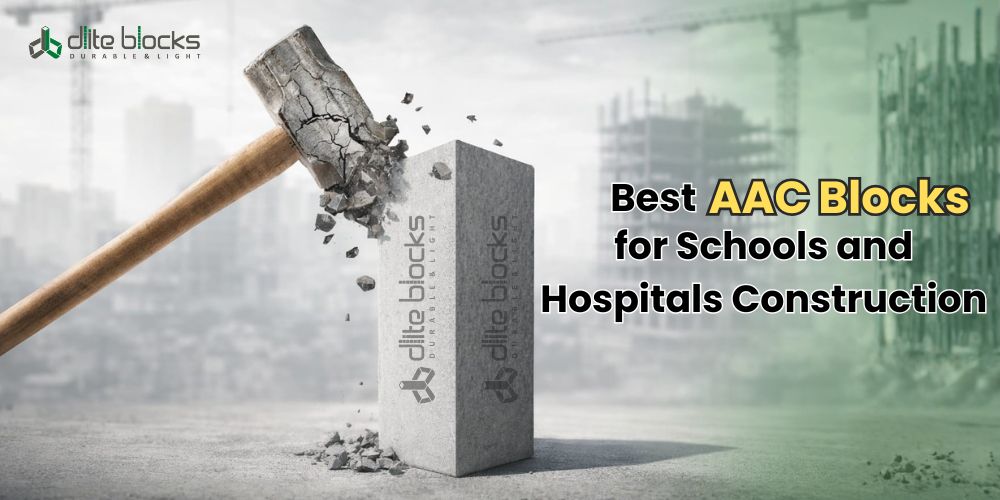
Choosing the right building material is one of the most important decisions when planning school construction or hospital construction. These spaces are not just buildings. They are environments where children learn and patients heal. Safety, comfort, durability and cost efficiency all matter equally. This is why many architects, builders and contractors now prefer AAC blocks for educational and healthcare projects.
In this detailed guide we will explain why best AAC blocks for schools and hospitals construction are becoming the first choice across India. We will also address common concerns that buyers have and help you understand how this material solves real construction problems while meeting modern building standards.
What Are AAC Blocks and Why They Matter
AAC blocks also known as Autoclaved Aerated Concrete blocks are lightweight precast building blocks made using cement fly ash lime and aluminum powder. During manufacturing millions of tiny air pockets are formed inside the block. These air pockets give AAC blocks their unique properties.
For projects like schools and hospitals where long term performance matters more than short term savings AAC blocks offer a strong balance of safety comfort and efficiency.
Builders searching for lightweight blocks for construction or eco-friendly building materials often choose AAC because it meets both structural and environmental requirements.
Why AAC Blocks Are Ideal for School Buildings
School buildings require a calm and safe environment. Noise heat and safety risks can directly affect students and staff.
Better Thermal Comfort for Classrooms
AAC blocks provide excellent thermal insulation. This means classrooms stay cooler in summer and warmer in winter. Schools built with AAC blocks for school buildings often reduce their air conditioning and heating costs.
Comfortable classrooms improve focus and reduce fatigue among students and teachers.
Noise Reduction for Better Learning
One of the biggest problems in school buildings is noise. AAC blocks have strong sound insulation properties. They help reduce noise from outside traffic playgrounds and neighboring classrooms.
This makes soundproof blocks for schools an important reason why AAC blocks are widely used.
Fire Safety for Children
Fire safety is non-negotiable in schools. AAC blocks are fire resistant and can withstand high temperatures for several hours. They do not emit toxic gases during fire exposure.
For anyone searching fire resistant blocks for schools AAC blocks clearly stand out.
Why Hospitals Prefer AAC Blocks
Hospitals have stricter requirements than any other type of building. Hygiene, patient comfort and safety are critical.
Clean and Hygienic Walls
AAC blocks have a smooth surface that reduces dust accumulation. This helps maintain hygiene standards inside hospitals. The blocks are also resistant to pests and mold.
This makes AAC blocks for hospital construction a practical choice for long term healthcare facilities.
Sound Control for Patient Recovery
Silence is essential for patient recovery. AAC blocks reduce noise between wards corridors and treatment rooms. This creates a peaceful environment for patients and medical staff.
Many builders look specifically for soundproof AAC blocks for hospitals because of this benefit.
Structural Safety with Lightweight Design
AAC blocks are lightweight compared to traditional bricks. This reduces the overall dead load on the structure. Hospitals often have multiple floors, heavy equipment and continuous movement.
Using lightweight AAC blocks improves seismic performance and structural safety.
Cost Efficiency and Faster Construction
Budget control is a major concern in large institutional projects. AAC blocks help in multiple ways:
-
Larger size reduces the number of joints, speeding up construction.
-
Faster construction lowers labor costs.
-
Lightweight nature reduces foundation and steel requirements.
Builders searching for cost-effective building materials for schools and hospitals often find AAC blocks to be a smart investment.
Energy Efficiency and Sustainability
Educational and healthcare institutions are increasingly focusing on sustainability. AAC blocks are manufactured using fly ash which is an industrial waste product. This makes them an eco-friendly building material.
Their thermal insulation reduces energy consumption for cooling and heating. Over time this lowers operational costs and carbon footprint.
For projects aiming for green building certifications AAC blocks support sustainable construction goals.
Durability and Low Maintenance
AAC blocks do not rot, corrode or decay. They maintain strength and shape for decades. This is especially important for public buildings like schools and hospitals where renovation costs can be high.
Walls built with AAC blocks require less maintenance and fewer repairs over time.
People searching for long lasting construction blocks or low maintenance building materials often choose AAC blocks for this reason.
Choosing the Best AAC Blocks for Institutional Projects
Not all AAC blocks are the same. Quality, consistency, and technical support matter.
When selecting the best AAC blocks in India, consider:
- Compressive strength
- Density
- Dimensional accuracy
- Supplier reliability
Brands like Dlite Blocks are known for maintaining quality standards while supporting builders with technical guidance. This ensures smoother execution on site without unnecessary material waste.
Frequently Asked Questions!
1. Are AAC blocks strong enough for multi storey hospitals
Yes AAC blocks have sufficient compressive strength for multi storey buildings when used with proper structural design and reinforcement.
2. Do AAC blocks reduce construction time
Yes due to their larger size and easy handling AAC blocks significantly reduce construction time compared to traditional bricks.
3. Are AAC blocks safe for children and patients
AAC blocks are non toxic fire resistant and do not release harmful substances making them safe for sensitive environments.
4. Can AAC blocks handle heavy hospital equipment loads
Yes when combined with proper structural planning AAC block walls can support fixtures and equipment safely.
5. Are AAC blocks suitable for seismic zones
Yes, their lightweight nature improves earthquake resistance and reduces structural stress.
6. Do AAC blocks require special plaster or finish
AAC blocks work well with standard plaster systems and also allow smooth finishing with minimal material usage.
A Practical Step Toward Smarter Construction Choices
If you are planning a school or hospital project and want a balance of safety, comfort, durability and cost control, choosing the right AAC blocks makes a real difference. Materials that support better learning environments and faster patient recovery are not just technical choices, they are responsible ones.
For builders, architects and project planners looking for dependable guidance and quality supply Dlite Blocks offers experience backed support. If you want to understand how AAC blocks can fit into your specific project requirements feel free to contact us for a simple conversation and practical insights.