
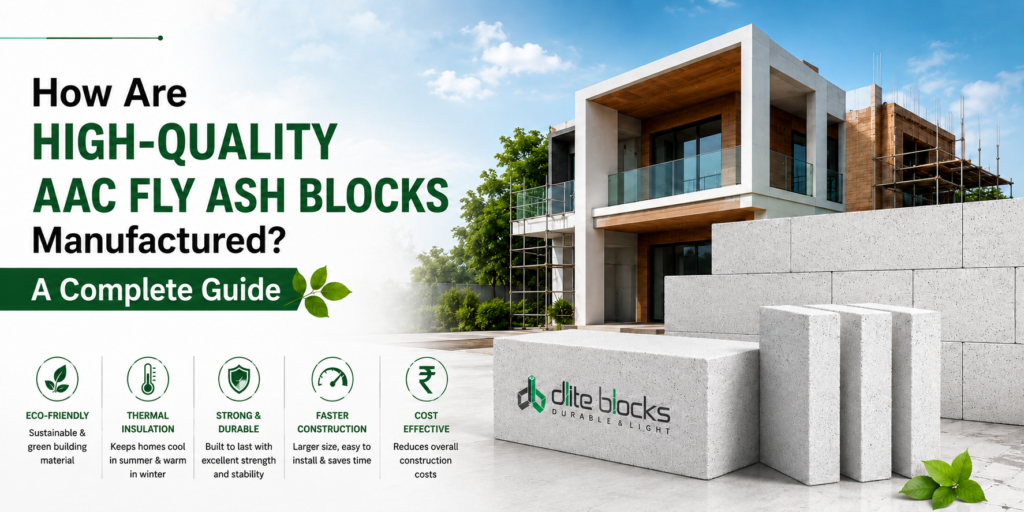
If you have seen a modern building going up recently, you have probably noticed large, lightweight, light-grey blocks being used instead of traditional red clay bricks. These are autoclaved aerated concrete blocks (AAC blocks). They are eco-friendly, highly durable, and excellent at keeping buildings cool.
But have you ever wondered how an AAC block factory turns simple raw materials into these high-tech building blocks? Let’s break down the manufacturing process into simple, easy-to-understand steps.
What Goes Into the Mix? (Raw Materials)
Before the magic happens inside the factory, the right ingredients must be gathered. High-quality manufacturers, like the top-tier AAC block manufacturing company brands, use precise recipes. The main ingredients include:
- Fly Ash: A byproduct from thermal power plants, making these blocks highly sustainable.
- Lime and Cement: The binding agents that give the blocks their strength.
- Gypsum: Adds long-term durability to the blocks.
- Aluminum Powder: The secret ingredient that creates millions of tiny air bubbles.
- Water: To bind everything together into a smooth slurry.
The Step-by-Step Manufacturing Process
A premier AAC block factory follows a highly automated, scientific process to ensure every block comes out perfect.
1. Raw Material Preparation & Slurry Making
First, the fly ash is mixed with water in a massive container to create a thick mixture called slurry. This slurry is then pumped into a dosing system where cement, lime, and gypsum are accurately weighed and mixed in.
2. Aeration and Curing (The “Rising” Stage)
Once the main mixture is ready, a tiny amount of aluminium powder is added. The mixture is quickly poured into large iron moulds.
Inside the mould, a chemical reaction takes place between the aluminium, lime, and water. This reaction releases hydrogen gas, which creates millions of microscopic air pockets inside the mix. The mixture expands to twice its original volume – just like bread dough rising in an oven! Within a few hours, the mix solidifies into a soft, cake-like texture.
3. Precision Cutting
Once the green cake (soft block mixture) is stiff enough to hold its shape, it is removed from the mould. It is then moved to a high-precision cutting machine. Using thin, strong steel wires, the giant cake is sliced vertically and horizontally into exact block sizes. Brands like Dlite use advanced cutting lines to ensure that every single block has razor-sharp, uniform edges, which helps builders save on mortar during construction.
4. Autoclaving (Steam Curing)
This is the most crucial step in AAC block manufacturing. The cut blocks are loaded into a massive, tube-like pressure vessel called an autoclave.
Inside the autoclave, the blocks are baked under high-pressure steam at temperatures reaching around 180°C to 190°C for 10 to 12 hours. This intensive steam-curing process triggers a chemical reaction that gives the autoclaved aerated concrete blocks their ultimate strength, structural stability, and lightweight properties.
5. Sorting and Packaging
After cooling down, the blocks are pulled out of the autoclave. Quality inspectors check them for cracks, weight, and strength. The approved blocks are then carefully stacked on wooden pallets, wrapped in protective plastic, and prepared for dispatch.
Why Choose High-Quality Blocks Like Dlite?
Not all blocks are created equal. Choosing premium AAC block manufacturers like Dlite ensures you get consistent quality. Dlite blocks offer:
- Superb Thermal Insulation: The tiny air pockets lock out heat, keeping interiors cool in summer and warm in winter.
- Earthquake Resistance: Being lightweight reduces the overall load on a building’s structure.
- Cost Savings: Because Dlite blocks are perfectly uniform, they require less plaster and cement jointing, drastically cutting construction costs.
Conclusion
The journey from industrial fly ash to a high-performing building material is a fascinating blend of chemistry and engineering. By utilising advanced automated technology, a modern AAC block factory transforms simple raw materials into strong, sustainable, and lightweight building solutions. Sourcing your materials from reliable AAC block manufacturers like Dlite ensures your structure is energy-efficient, safe, and cost-effective. Investing in premium autoclaved aerated concrete blocks is the smartest way to build a strong foundation for future generations.
FAQ
1. What are the main ingredients used by an AAC block manufacturing company?
An AAC block manufacturing company uses a precise mix of fly ash (an eco-friendly byproduct of power plants), cement, lime, gypsum, water, and a tiny amount of aluminium powder. The aluminium powder reacts chemically with the lime, causing the mixture to rise and form the microscopic air bubbles that make autoclaved aerated concrete blocks so lightweight and insulated.
2. How does an AAC block factory make the blocks so lightweight?
Inside an AAC block factory, the secret to the lightweight design is the aeration process. When aluminium powder is added to the wet mixture, it triggers a chemical reaction that releases hydrogen gas. This causes the mixture to expand like bread dough, creating millions of tiny internal air pockets. These pockets ensure that autoclaved aerated concrete blocks are up to 3 to 4 times lighter than traditional red bricks.
3. Why is the steam-curing process crucial for AAC block manufacturers?
For leading AAC block manufacturers like Dlite, the steam-curing stage – known as autoclaving – is the most critical step. After the blocks are cut to size, they are baked under intense pressure and high-temperature steam inside a massive vessel for 10 to 12 hours. This process locks in the structural integrity, ensuring the blocks achieve their maximum strength and durability before leaving the AAC block factory.
4. Are autoclaved aerated concrete blocks environmentally friendly?
Yes! Working with a reliable AAC block manufacturing company is highly sustainable. The primary ingredient is fly ash, which recycles waste material that would otherwise end up in landfills. Additionally, the manufacturing process uses less energy compared to baking red clay bricks, and the finished autoclaved aerated concrete blocks provide excellent thermal insulation, saving building owners money on heating and cooling energy.
5. How do blocks from top AAC block manufacturers save construction costs?
Top AAC block manufacturers use high-precision wire-cutting technology to ensure every block has identical dimensions and smooth surfaces. Because Dlite blocks are perfectly uniform, builders need significantly less mortar and plaster to join them together. Their large size also allows workers to build walls much faster than using traditional bricks, drastically reducing labour costs at the construction site.