
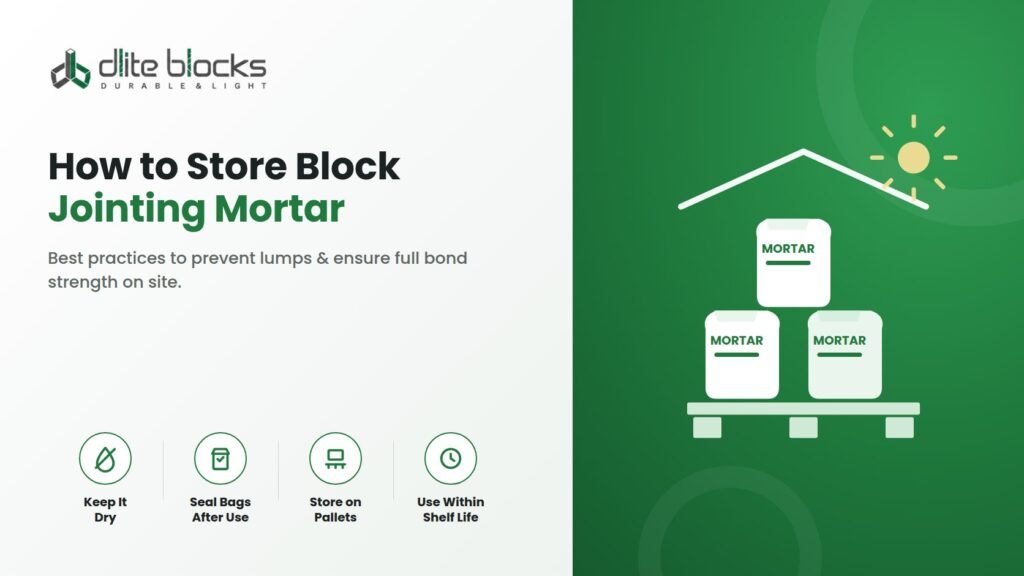
When building a house or a commercial property, using high-quality AAC blocks is only half the battle. The real strength of your walls lies in the glue that holds them together: the AAC block jointing mortar.
If you choose a premium product like Dlite block jointing mortar, you are already on the right track. However, even the best materials can lose their strength if they are not stored correctly. Poor storage leads to moisture absorption, which creates hard lumps and ruins the bond strength.
To help you get the most out of your construction materials, we have put together the ultimate guide on how to store your mortar properly.
Why Proper Storage Matters
Before jumping into the tips, let’s understand the enemy: moisture.
AAC block jointing mortar contains cement and special polymers. The moment moisture or humidity touches the powder, a chemical reaction starts. This results in hard lumps. If you try to break these lumps and use the mortar anyway, it will not stick properly, leading to weak joints and cracks in your walls. By following the right storage rules, you protect your investment and ensure your walls stay rock-solid.
Best Practices for Storing Block Jointing Mortar
1. Keep It Off the Ground (Use Wooden Pallets)
Never stack your mortar bags directly on a concrete or dirt floor. Floors absorb moisture from the ground, which easily transfers to the bags.
The Fix: Always stack your Dlite mortar bags on raised wooden pallets or planks. Keep them at least 6 to 8 inches off the ground to allow air to circulate underneath.
2. Stay Away from the Walls
Just like floors, external walls can sweat and trap moisture, especially during the rainy season.
- The Fix: Store your bags in the centre of the room or at least 1 foot away from any walls. This prevents dampness from seeping into the outer layers of the bags.
3. Use the “First In, First Out” (FIFO) Rule
Mortar has a shelf life, usually around 6 to 12 months from the manufacturing date. Older bags should always be used first. When buying from trusted block jointing mortar manufacturers, check the packaging dates and arrange your stock so that the oldest bags are right at the front.
4. Stack Bags in a Criss-Cross Pattern
Do not just pile bags on top of each other in a single straight tower. High stacks can easily topple over, tearing the bags open.
- The Fix: Stack the bags in an interlocking, criss-cross pattern. Keep the maximum height to about 7 or 8 bags. Stacking them too high can also cause “warehouse pack”, where the weight of the top bags compresses the bottom ones into hard lumps.
5. Protect the Site from Weather
If you are storing materials directly on the construction site, weather protection is non-negotiable.
- The Fix: Keep the bags inside a dry, fully enclosed shed. If a shed isn’t available, wrap the entire stack tightly in heavy-duty plastic tarpaulins. Secure the edges of the tarp with bricks so the wind cannot blow it away.
What to Do If You Spot Lumps?
Before mixing your next batch, do a quick quality check. Roll the bag gently on the floor before opening it. When you open a bag of Dlite mortar, the powder should feel completely dry and free-flowing.
If you find small lumps that easily turn to powder when you squeeze them with your fingers, the mortar is still safe to use. However, if the lumps are hard like stones, the material has already set. Throw those lumps away—they will reduce the bond strength of your wall.
Conclusion
Perfect storage is the secret to a successful, crack-free wall. By keeping your bags dry, elevated, and well-ventilated, you ensure that the mortar retains its maximum stickiness and strength.
Always source your materials from reliable AAC block jointing mortar manufacturers to ensure you get fresh, high-grade products from day one. Buying from leading AAC block jointing mortar brands guarantees peace of mind, but storing it right guarantees a structure that lasts a lifetime. Keep these simple tips in mind for your next project!