
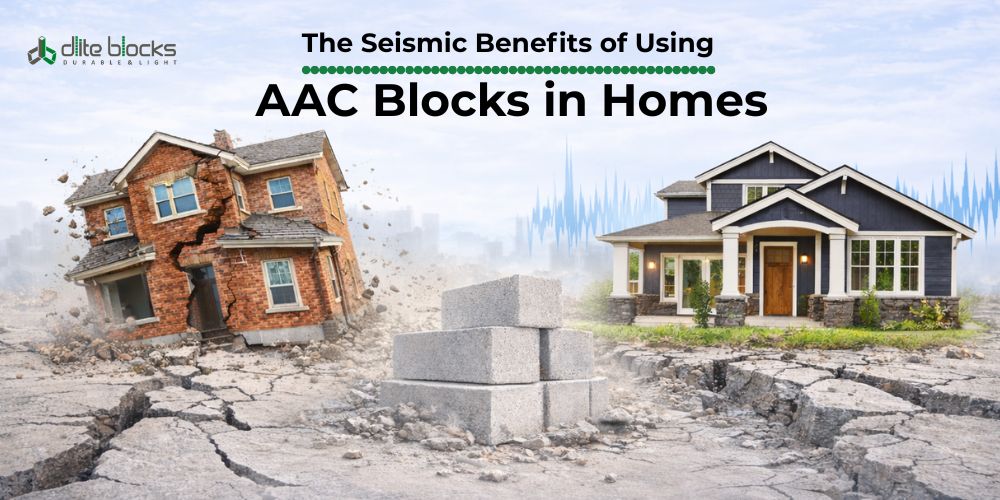
Earthquakes can cause serious damage to buildings, especially when heavy and weak materials are used. That is why choosing the right construction material is very important. Today, many builders prefer AAC blocks because of the seismic benefits of AAC Blocks, which help make homes safer during earthquakes. These modern blocks are strong, lightweight, and long-lasting, making them a smart choice for construction.
In this blog, we will explain in very simple words how AAC blocks help protect homes from earthquake damage and why they are becoming popular.
What Are AAC Blocks?
AAC blocks are lightweight building materials made from cement, lime, sand, water, and a small amount of special expansion material. These blocks are cured in a high-pressure machine called an autoclave, which makes them strong and durable.
Compared to traditional red bricks, AAC blocks are much lighter, easier to handle, and provide better insulation. They are widely used in modern construction because they improve safety, reduce costs, and speed up building work.
Many builders choose trusted brands like Dlite Blocks because they provide high-quality AAC products suitable for safe construction.
How Earthquakes Affect Buildings
During an earthquake, strong vibrations travel through the ground. These vibrations push and pull buildings in different directions. Heavy buildings suffer more damage because they create higher pressure on their foundation.
Traditional bricks are heavy, and this extra weight increases the risk of cracks or collapse during seismic activity.
That is why engineers recommend using lightweight materials like AAC blocks in earthquake-prone areas.
Why Lightweight Materials Improve Safety
The lighter a building material is, the less force it experiences during an earthquake. This means:
- Less pressure on the foundation
- Reduced structural damage
- Better ability to absorb vibrations
AAC blocks are almost three times lighter than clay bricks, which makes them perfect for earthquake-resistant construction.
How AAC Blocks Improve Seismic Performance
1. Lightweight but Strong
AAC blocks reduce the overall weight of a building. When an earthquake occurs, lighter structures experience less shaking force. This makes the building more stable.
Despite being lightweight, these blocks have excellent strength, which helps walls stay intact.
2. High Strength-to-Weight Ratio
One of the biggest benefits of AAC block manufacturers’ products is their strength. They can handle high pressure while keeping the building light. This balance helps homes remain safe during earthquakes.
3. Shock Absorption Ability
AAC blocks have a porous structure. This allows them to absorb earthquake vibrations instead of transferring them fully to the building structure. As a result, cracks and damage are reduced.
4. Better Bonding and Uniform Shape
AAC blocks are made in precise sizes, which helps them fit perfectly. This creates strong wall bonding and reduces weak points in construction.
Strong bonding improves the overall stability of buildings during seismic activity.
5. Reduced Structural Stress
Because AAC blocks are light, they reduce the load on beams, columns, and foundations. This helps the building withstand shaking more effectively.
Additional Seismic Benefits of AAC Blocks
Besides earthquake safety, AAC blocks offer many other advantages.
Energy Efficiency
AAC blocks provide excellent thermal insulation. This keeps homes cooler in summer and warmer in winter, reducing electricity bills.
Eco-Friendly Construction
A trusted AAC blocks company like Dlite Blocks produces blocks using environmentally friendly processes. AAC blocks also create less waste during construction.
Fire Resistance
AAC blocks can resist high temperatures and help slow the spread of fire, improving home safety.
Sound Insulation
These blocks reduce outside noise, making homes more peaceful and comfortable.
Faster Construction
AAC blocks are larger and lighter than traditional bricks. This speeds up construction work and reduces labor costs.
Why Builders Prefer Reliable AAC Block Manufacturers
Choosing trusted AAC block manufacturers is important because quality directly affects safety. Reliable brands ensure proper strength, durability, and consistent size.
Companies like Dlite Blocks are known for producing high-quality AAC blocks that meet modern safety standards. Many builders trust Dlite Blocks for safe and long-lasting construction materials.
Conclusion
AAC blocks have become one of the best materials for earthquake-resistant construction. Their lightweight nature, high strength, and shock-absorbing ability make homes safer during seismic activity.
Along with safety, they provide benefits like energy savings, fire resistance, and faster construction. Choosing a trusted AAC blocks company like Dlite Blocks ensures better quality and long-term durability.
If you want to build a safer and stronger home, AAC blocks are a smart and reliable choice.
Frequently Asked Questions
1. Are AAC blocks good for earthquake-prone areas?
Yes, AAC blocks are lightweight and strong, which helps buildings resist earthquake damage.
2. Why are AAC blocks safer than traditional bricks?
They reduce building weight, absorb vibrations, and create stronger wall bonding.
3. Do AAC blocks last long?
Yes, AAC blocks are durable, moisture-resistant, and can last for many years.
4. Can AAC blocks reduce construction costs?
Yes, they speed up construction, reduce labour costs, and minimise material waste.
5. How do I choose the best AAC block manufacturer?
Always select trusted and experienced AAC block manufacturers like Dlite Blocks that provide certified and high-quality products.