
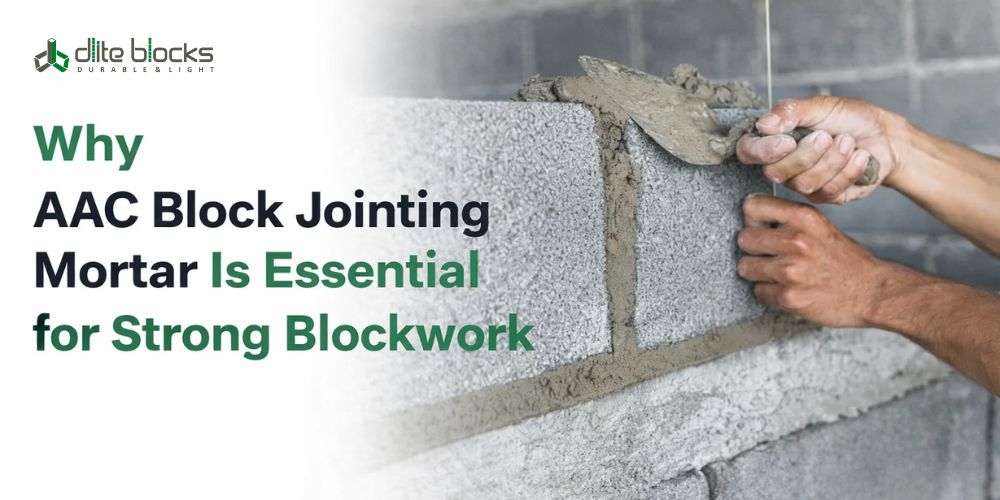
When people plan a modern building today they often focus on choosing the right blocks but forget one equally important element that holds everything together. The choice of AAC block jointing mortar plays a huge role in the strength, durability and finish of any AAC block wall. Many construction issues like wall cracks, uneven surfaces and weak bonding happen not because of poor blocks but because the wrong mortar was used.
In this detailed guide we will talk about why AAC block jointing mortar is not optional but essential for strong blockwork. We will also explain how it solves real site problems, saves cost, improves wall life and gives better results than traditional cement mortar. If you are a builder, contractor architect or even a home owner this guide will help you make the right decision.
Understanding AAC Blocks and Why Regular Mortar Fails
AAC blocks are lightweight porous and precision made blocks designed for modern construction. Unlike red bricks these blocks have smooth surfaces and accurate dimensions. Because of this nature they need a bonding material that matches their structure.
Using regular cement sand mortar with AAC blocks creates several problems. The thick joints do not match the block design. Shrinkage cracks appear after curing. Extra water absorption weakens the bond. Over time the wall starts showing visible defects.
This is where AAC block jointing mortar becomes important. It is specially made to work with AAC blocks and gives consistent bonding without stressing the blocks.
What Is AAC Block Jointing Mortar and How It Works
AAC block jointing mortar is a ready mix dry mortar designed for thin bed application. It is made with carefully graded sand cement and performance additives that improve bonding strength and flexibility.
Unlike traditional mortar which needs thick joints this mortar works perfectly with thin joints usually around three to four millimeters. Thin joints reduce material usage, improve wall alignment and increase overall wall strength.
Because it is factory manufactured the quality remains consistent at every site. This consistency plays a big role in maintaining construction standards especially in large projects.
Stronger Bonding Means Longer Wall Life
One of the main reasons builders prefer AAC block jointing mortar is its superior bonding strength. AAC blocks are lightweight and porous so they need a mortar that penetrates the surface and grips the block firmly.
This mortar forms a strong chemical and mechanical bond with AAC blocks. The result is a wall that behaves like one solid structure instead of individual blocks stacked together. This strength reduces chances of cracks seepage and structural weakness over time.
For areas exposed to temperature changes and moisture this strong bonding becomes even more important.
Thin Joints Improve Structural Stability
Traditional mortar joints are thick and uneven. These joints become weak points in the wall. In contrast AAC block jointing mortar uses thin joints that distribute load evenly across the wall.
Thin joints also reduce thermal bridges which improves insulation. This means the building stays cooler in summer and warmer in winter. Better insulation directly impacts energy savings and indoor comfort.
Because the joints are thin the wall surface becomes smooth and even reduces plaster thickness later.
Faster Construction and Lower Labor Cost
Speed is a big factor in modern construction. AAC block jointing mortar helps complete masonry work much faster than traditional mortar.
Since it is a ready mix product there is no need to measure sand and cement on site. Workers just add water and start application. The thin layer spreads easily and blocks align quickly due to precise dimensions.
Faster work means lower labor cost and timely project completion. This is one of the biggest reasons contractors prefer this mortar for large residential and commercial projects.
Reduced Material Wastage and Better Cost Control
Using thick cement mortar leads to high material wastage. Excess mortar falls during application and unused mix often gets discarded.
AAC block jointing mortar requires much less quantity per square meter. Thin joints use less material and almost no wastage occurs. This helps control material cost and improves overall project budgeting.
Over the entire project this saving becomes significant especially in multi floor construction.
Improved Finish and Less Plaster Consumption
A common complaint in masonry work is uneven walls that require heavy plastering. Thick joints cause level differences which increase plaster thickness.
With AAC block jointing mortar the wall surface remains even and smooth. This reduces plaster thickness and sometimes allows direct putty application.
Less plaster means lower material cost, faster finishing work and reduced load on the structure. It also improves the final look of the building.
Better Water Resistance and Crack Control
Water seepage and cracks are major concerns in any building. Poor quality mortar absorbs water and expands which leads to cracks.
AAC block jointing mortar contains additives that improve water resistance and flexibility. This reduces shrinkage cracks and protects the wall from moisture damage.
In bathrooms, kitchens and external walls this feature plays a very important role in maintaining wall health.
Why Builders Trust AAC Block Jointing Mortar Over Cement Mortar
Builders who switch to AAC block jointing mortar rarely go back to traditional methods. The reasons are clear. Better bonding, faster work, cleaner sites and predictable results.
Traditional mortar depends heavily on site mixing water quality and worker skill. In contrast jointing mortar offers consistent quality every time.
This reliability builds confidence among contractors and engineers who want fewer complaints and rework after project completion.
Choosing the Right AAC Block Jointing Mortar for Your Project
Not all jointing mortars are the same. Quality matters a lot. Always choose a product from a trusted manufacturer who understands AAC block behavior.
A good AAC block jointing mortar should have high adhesive strength, good workability and proper setting time. It should spread easily without slipping and hold blocks firmly in position.
Brands like Dlite Blocks understand the complete AAC ecosystem. Their experience with AAC blocks helps ensure compatibility between blocks and mortar which improves overall wall performance.
Common Site Problems Solved by AAC Block Jointing Mortar
Many site level issues disappear when the right mortar is used. Wall cracks due to shrinkage reduce significantly. Alignment issues become rare. Construction waste decreases.
Another big problem is inconsistent curing. Traditional mortar requires continuous water curing. AAC block jointing mortar needs minimal curing which saves water and effort.
These small improvements together create a smoother construction process.
Environmental Benefits and Sustainable Construction
Sustainability is becoming important in construction decisions. AAC block jointing mortar supports green building practices.
Thin joints mean less cement usage. Lower cement consumption reduces carbon footprint. Faster construction reduces energy usage on site.
When used with AAC blocks the entire wall system becomes more eco friendly and efficient.
How AAC Block Jointing Mortar Adds Value to Your Property
A strong wall means a longer lasting building. Reduced cracks, better finish and improved insulation all add value to the property.
Buyers today look for quality construction even if they do not understand technical details. A crack free smooth wall makes a strong impression.
Using AAC block jointing mortar may seem like a small decision but it has a big impact on long term property value.
Frequently Asked Questions!
1. What is the ideal joint thickness for AAC block jointing mortar
The ideal joint thickness is usually three to four millimeters. Thin joints ensure better bonding and reduce material usage.
2. Can AAC block jointing mortar be used with red bricks
No, this mortar is specially designed for AAC blocks. Using it with red bricks may not give proper results.
3. Does AAC block jointing mortar need curing
Minimal curing is required. Light water spray after initial setting is usually enough.
4. How much jointing mortar is required per square meter
On average three to four kilograms per square meter depending on block size and joint thickness.
5. Is AAC block jointing mortar cost effective
Yes even if the per bag cost is higher than cement the overall project cost becomes lower due to reduced usage and faster work.
Build Strong Walls With the Right Support
Strong blockwork is not only about choosing good blocks but also about using the right bonding material. AAC block jointing mortar ensures strength, durability speed and finish that modern construction demands.
If you are already using AAC blocks or planning to switch, choosing a reliable partner matters. Dlite Blocks focuses on complete AAC solutions and understands how the right materials work together on site.
If you need guidance on choosing the right mortar or want expert advice for your project you can reach out to Dlite Blocks. Sometimes a simple conversation helps avoid costly mistakes and ensures your walls stay strong for years to come.