
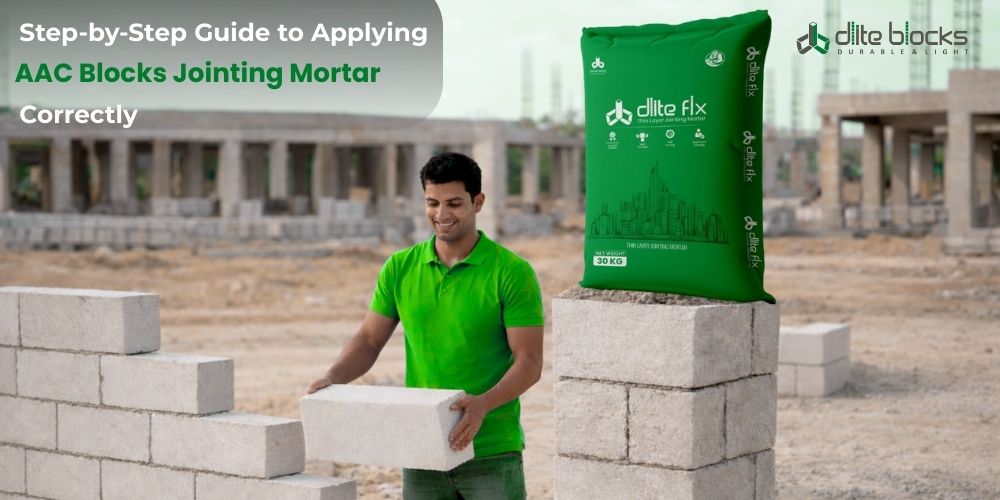
Building strong and durable walls requires the right materials and proper techniques. When working with Dlite Blocks, using the correct aac block jointing mortar is key to achieving a stable, long-lasting structure. Unlike traditional cement mortar, aac block jointing mortar is applied in thin layers, ensures strong adhesion and speeds up construction. This guide will take you step by step on how to apply Dlite Blocks jointing mortar correctly for the best results.
What is AAC Block Jointing Mortar?
AAC block jointing mortar is a ready-to-use adhesive specially designed for Autoclaved Aerated Concrete (AAC) blocks. Unlike conventional cement mortar that requires thick layers of 10–12 mm, this mortar is applied in thin layers of 3–5 mm. It provides better bonding, reduces material waste, and ensures a smooth finish.
Benefits of AAC Block Jointing Mortar
- Strong Bonding Strength – Creates a high-strength connection between AAC blocks, preventing cracks and gaps.
- Faster Construction – Thin layers and quick setting reduce curing time and speed up wall construction.
- Cost-Effective – Less material is required per square meter compared to cement mortar.
- Thermal Insulation – Works with AAC blocks to reduce heat transfer and improve energy efficiency.
- Water Resistance – Prevents seepage, ensuring long-lasting walls.
- Reduced Shrinkage – Minimizes cracking over time.
- Eco-Friendly – Lower cement usage reduces environmental impact.
Materials and Tools Needed
Before starting, gather all materials and tools:
Materials:
- AAC block jointing mortar (choose reliable aac block jointing mortar manufacturers)
- Clean water
- Dlite AAC Blocks
Tools:
- Mixing bucket or mechanical mixer
- Notched trowel
- Rubber mallet
- Spirit level
- Brush or cloth for cleaning
Step 1: Surface Preparation
Clean the AAC blocks to remove dust, dirt, and loose particles. Slightly moisten the blocks to prevent rapid absorption of water from the mortar. This ensures better adhesion.
Step 2: Mixing the Mortar
- Pour clean water into a container.
- Gradually add the aac block jointing mortar powder in a 3:1 ratio (three parts mortar, one part water).
- Mix thoroughly with a mechanical stirrer or hand trowel until smooth and lump-free.
- Let the mixture rest for 5 minutes, then re-mix before use.
Tip: Only mix as much mortar as you can use in 1–2 hours.
Step 3: Applying the Mortar
- Use a notched trowel to apply a thin layer (3–5 mm) evenly on the block surface.
- Place the next Dlite Block on the mortar and gently tap with a rubber mallet.
- Ensure all vertical and horizontal joints are properly aligned using a spirit level.
Step 4: Cleaning and Alignment
Immediately remove excess mortar that squeezes out from joints. Check each block for proper alignment before continuing to the next layer. Repeat the process until the wall is complete.
Step 5: Curing
Unlike traditional cement mortar, aac block jointing mortar requires minimal curing. Light water sprinkling after 24 hours can improve durability, but generally, it sets quickly on its own.
Best Practices
- Use high-quality aac block jointing mortar from trusted jointing mortar suppliers.
- Maintain correct water-to-mortar ratio.
- Apply thin, even layers only.
- Avoid mixing large batches that may set before use.
- Always check alignment and level after placing each layer.
Common Mistakes to Avoid
- Adding too much water weakens the bond.
- Applying uneven or thick layers causes cracks.
- Skipping cleaning of block surfaces reduces adhesion.
- Ignoring alignment checks leads to crooked walls.
Conclusion
Using Dlite Blocks with high-quality aac block jointing mortar ensures strong, durable, and thermally efficient walls. By following this step-by-step guide, you can build walls that are crack-free, aligned, and long-lasting. Always source your materials from trusted aac block jointing mortar manufacturers or jointing mortar suppliers for consistent results.
Strong walls begin with the right bond, and the correct mortar makes all the difference. With proper preparation, careful application, and attention to detail, Dlite Blocks and aac block jointing mortar provide a reliable solution for modern masonry construction.