
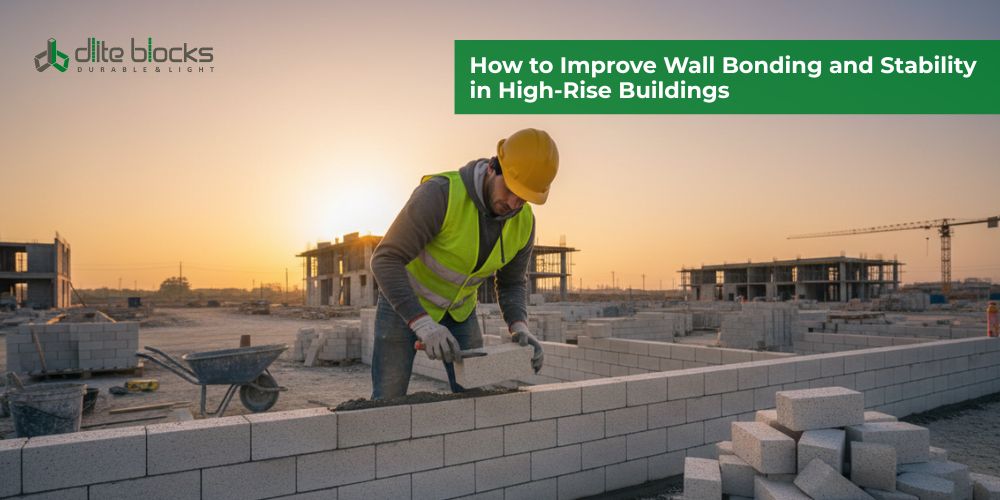
Building a high-rise is exciting—but let’s be honest—it’s not easy. We know that the taller the building, the more careful we need to be about every wall, block, and joint. If the walls aren’t bonded properly, cracks, gaps, and weak spots can appear over time. And that can affect the whole structure! That’s why we always focus on strong wall bonding. In this blog, we’ll share how we improve wall bonding and stability in tall buildings, and how products like AAC blocks and jointing mortar from Dlite Blocks make a big difference.
Why Wall Bonding Matters
When we talk about wall bonding, we mean how well one block sticks to the next. In high-rises, this is super important because our walls face heavy loads, wind pressure, temperature changes, and movement. When the bonding is strong, the walls stay stable. When it’s weak, cracks and water leakage show up—and nobody wants that. The trick is using the right materials and following the right techniques from the start.
How We Use AAC Blocks for Stronger Walls
We love using AAC blocks, or Autoclaved Aerated Concrete blocks, in modern construction. They’re lightweight, strong, and super easy to handle. A trusted AAC block manufacturing company like Dlite Blocks gives us high-quality blocks that improve wall safety and performance. Here’s why we rely on AAC blocks for our projects:
- Lightweight design: AAC blocks are lighter than traditional bricks, so they put less pressure on the walls, helping the structure stay stable.
- Uniformity: Each block is perfectly shaped and sized, making walls smooth, even, and easier to align.
- High bonding surface: The texture helps jointing mortar stick well, giving stronger bonding.
- Fire resistance: Safety first! AAC blocks resist fire for long periods, which is crucial in high-rises.
- Thermal and sound insulation: They keep buildings cooler and quieter, reducing stress on the structure while making interiors more comfortable.
Thanks to these benefits, AAC blocks help us build walls that are safer, stronger, and longer-lasting.
Why We Choose Dlite AAC Blocks
When it comes to a reliable AAC block manufacturing company, Dlite is our go-to. Their blocks have controlled density, perfect shape, and great durability. We trust Dlite because their products reduce cracking, improve wall stability, and give us consistent results every time.
The Importance of Jointing Mortar
Wall bonding isn’t just about the blocks—it’s also about the mortar that holds them together. We prefer ready-mix mortar from professional AAC block jointing mortar manufacturers like Dlite Blocks instead of mixing cement and sand on-site. Their mortar gives us:
- Strong adhesion
- Faster wall construction
- Thin, neat joints
- Less wastage
- Fewer cracks
When we use AAC blocks with jointing mortar from trusted AAC block jointing mortar manufacturers, the walls become stronger and last longer. Ready-made mortar is far more consistent than on-site mixes, which is why we stick to it.
Our Tips for Better Wall Bonding
When we build high-rise walls, we follow a few simple but super effective steps to make sure they stay strong and stable:
- Pick high-quality AAC blocks: We always go for blocks from a trusted AAC block manufacturing company. Good blocks are uniform, durable, and form a solid wall. Cheap or low-quality blocks can crack or absorb too much water, which weakens bonding.
- Use the right jointing mortar: Instead of mixing cement and sand on-site, we use ready-mix mortars from experienced AAC block jointing mortar manufacturers. This gives us better grip, faster setting, and neat, thin joints that last longer.
- Keep blocks clean: Dust can reduce bonding, so we make sure every block is wiped clean before applying mortar.
- Apply mortar evenly: A consistent, thin layer helps the blocks stick properly and prevents cracks from forming later.
- Align the blocks properly: Straight, level walls are much stronger. We always use a plumb line or spirit level to get everything perfectly in line.
- Cure walls lightly: AAC blocks need less curing, but a light spray of water in the first few days helps the wall settle nicely.
- Avoid sudden load: We never place heavy items on newly built walls. Letting the mortar gain full strength ensures long-term stability.
Stronger Walls Begin With the Right AAC Products and Techniques
Building high-rise walls that last isn’t hard when we use the right materials and techniques. AAC blocks from a trusted AAC block manufacturing company like Dlite Blocks, give us durability, fire resistance, insulation, and excellent bonding. By following these steps, we make construction safer, stronger, and much more reliable—giving walls that stand the test of time.
Contact us today to take the first step toward reliable, long-lasting construction.
Frequently Asked Questions !
1. What materials ensure strong wall bonding in high-rise buildings?
Ans: Using high-quality AAC blocks and professional jointing mortar significantly improves wall strength and long-term stability.
2. How does jointing mortar affect wall stability?
Ans: Correctly applied jointing mortar fills gaps, enhances adhesion between blocks, and prevents cracks in high-rise building walls.
3. Can wall bonding prevent structural damage in high-rises?
Ans: Proper wall bonding distributes load evenly, reduces stress on walls, and helps prevent cracks or structural failures.
4. How often should high-rise walls be inspected for bonding issues?
Ans: Regular inspections during construction and after completion ensure mortar integrity, block alignment, and long-term wall stability.